


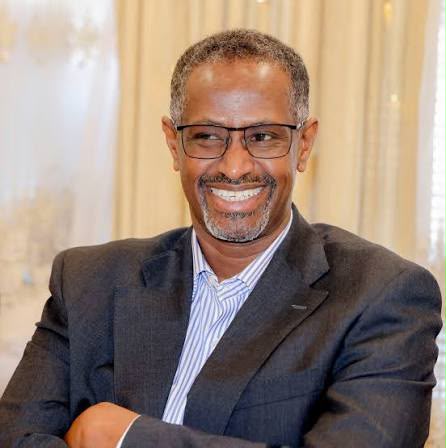
BY: Nuradin Dirie
Over the past seventy-two hours, the pretence that our national transition is moving forward has evaporated.
In New York, speeches are delivered before the United Nations General Assembly celebrating democratic milestones and steady state-building. But back home, the reality is starkly different: the informal talks in Mogadishu between the Federal Government and the opposition have broken down without an agreement, regional leadership has signalled deep constitutional defiance, and the political calendar has ground to an alarming halt.
We have arrived at the inevitable cost of cosmetic politics.
When talks between our national leaders were reduced to a scramble for an unearned joint statement – a diplomatic document intended to project momentum for international consumption while leaving the basic machinery of the vote unaddressed – failure was baked into the process. You cannot manage a sovereign federal republic through public relations. You cannot ask a nation to applaud a procedural truce when nobody agrees on who runs the election, how the ballots are secured, or what law actually governs the state.
Today, the country is held hostage by a dangerous, self-serving standoff between two political dead ends.
On one side stands Villa Somalia’s unilateral sprint. The federal executive continues to insist that a centralised, top-down election can simply be enacted by statutory decree, ignoring the fact that without broad consensus, those laws cannot cross regional borders without coercion. Passing unilateral frameworks through parliament does not create legitimate authority; it creates institutional friction. An election held only in the territories an administration politically controls is not a national ballot. It is the administrative partition of the Somali state.
On the other side stands the opposition’s politics of grievance and brinkmanship. Rushing to write letters demanding unelected interim bodies or hinting at regional disengagement is not statesmanship. Boycott is not a governing philosophy, and the unity of the Somali Republic is not a bargaining chip to be wagered in an elite dispute. Nor can we accept the cynical calls for a “rapid election” within a few unverified months – a rushed process that bypasses logistical and security integrity only guarantees armed confrontations and contested results the day after.
An executive cannot compel loyalty from an unwilling federation, and regional leaders cannot build lasting security in isolation from the center. Both sides have run out of road: the center cannot govern by decree, and the regions cannot survive by permanent withdrawal.
The Third Way: An Audited Institutional Transition
Somalia does not belong to an incumbent administration determined to manage its own renewal, nor does it belong to a coalition of regional actors waiting for the state to stumble. The path through this crisis requires neither surrender nor secession; it requires the cold, unyielding discipline of The Third Way.
To break this impasse before it spills into violence, national leadership must immediately unite behind four operational actions:
1. Unconditional Return to the 2012 Constitutional Baseline
Legitimacy cannot be manufactured through contested term extensions or electoral overhauls passed mid-stream. Until a genuine, inclusive nationwide review brings every Federal Member State along through authentic Wada-tashi, the 2012 Provisional Constitution remains our only legal covenant. Any transition arrangement must draw its authority strictly from this foundation.
2. A Custodial Transition Security Board
An election conducted under the suspicion of politicised force will never be accepted. The incident in Doolow was an unmistakable warning: sovereign defence assets and international defence partnerships must remain firewalled from domestic contestation. Operational oversight of security for the transition – protecting candidates, securing venues, and managing movement – must be placed in an independent, multi-stakeholder transition security council. When security is trusted, political cooperation becomes possible.
3. Audited Benchmarks Instead of Arbitrary Calendars
We must end the dishonest debate between “quick elections” and “unilateral extensions.” Both are formulas for disaster. The transition must be measured by technical, verifiable milestones:
- An audited voter or delegate identification mechanism agreed upon by all parties.
- A professionally vetted, non-partisan electoral administration.
- An independent dispute resolution tribunal with binding authority to adjudicate grievances.
The calendar must serve the integrity of the process – not the political survival of any faction.
4. A Binding De-escalation Standstill
All unilateral political and security manoeuvres must stop immediately: no further contested statutory shifts from Mogadishu, no administrative disengagement from regional states, and a complete freeze on the tactical repositioning of security forces intended to project political leverage.
A Duty to the Republic
To my colleagues in leadership across the federal government, the member states, and the opposition: the time for posturing has expired.
The international partners who sustain our security transitions are exhausted by this endless cycle of brinkmanship. More importantly, the Somali people – who carry the daily burden of economic fragility and the existential threat of violent extremism – deserve an institutional covenant, not another backroom deal signed over cold tea.
We do not need more communiqués designed for foreign consumption. We need the courage to submit to rules that are bigger than any single leader. Let us put the decrees and the boycotts aside, return to the constitutional table, and build a transition worthy of the Republic.