


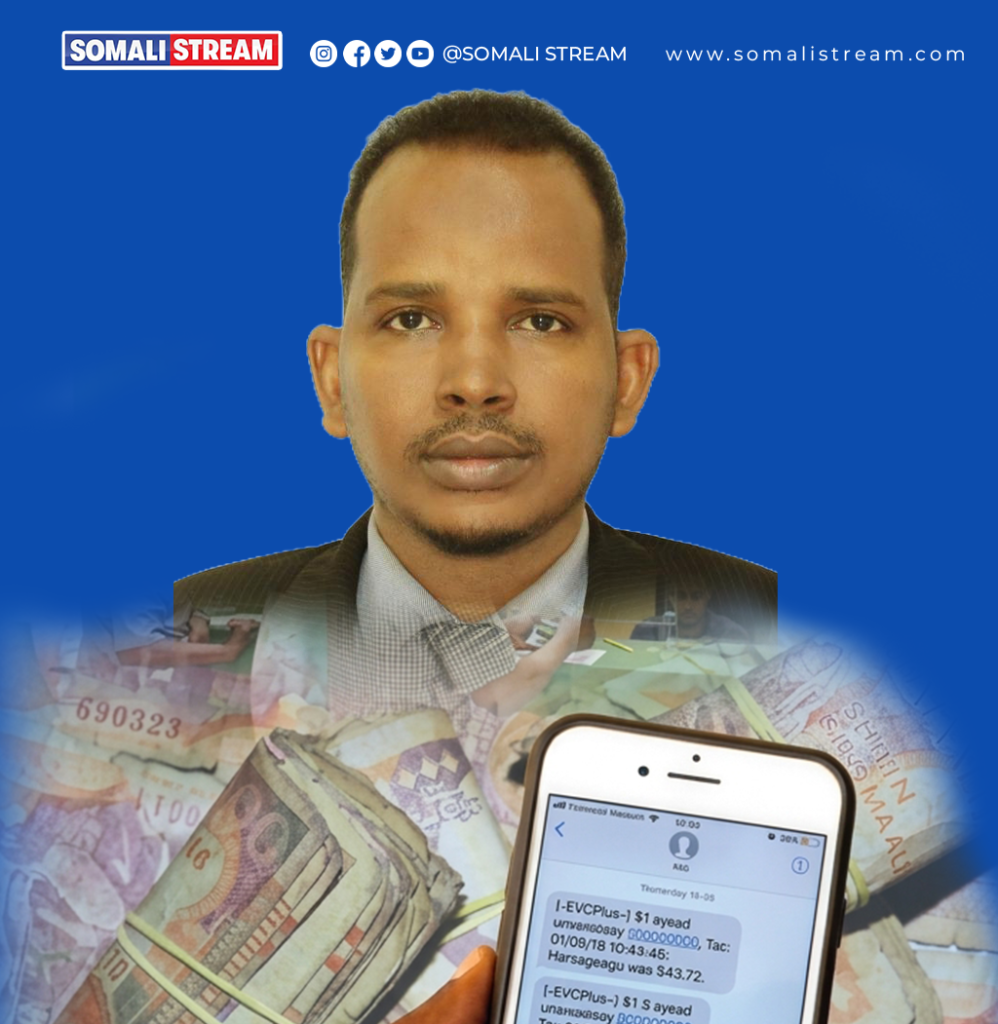
In cities such as Mogadishu, Baidoa, Kismayo, Hargeisa and Garowe, a morning cup of spiced tea, a short taxi ride and a bulk import of grain for local retail are paid for by tapping at the screen of a simple feature phone. Well before “cashless society” became an iconic fashion in the global finTech ecosystem, Somalia organically pioneered one of the world’s most ubiquitous digital payment economies—driven not by Silicon Valley abundance but by everyday monetary necessity. Decades of institutions not functioning, of currency wearing out, of Somali shilling banknotes being counterfeited on a massive scale meant that doing business with cash was often fraught with problems. Moreover, rapid private sector expansion in telecommunications connected urban centers and pastoralist corridors alike. Out of that intersection emerged a financial ecosystem unlike almost any other: a largely cashless economy anchored in U.S.-dollar-denominated mobile wallets running over basic Unstructured Supplementary Service Data (USSD) menus.
The scale of this digital transformation is striking. In 2025, the total value of transactions reported by providers in the mobile money market reached US$13.3 billion, as reported by the World Bank’s Somali financial governance report. This figure was more than double the corresponding figure for 2021 of US$7.1 billion. Together, providers in the wider payments market today complete 155–160 m of transactions per month, with a total value of approximately US$2.7 billion. From utility bills and school tuition to street-level retail, diaspora remittances, and humanitarian cash transfers, mobile money has become the primary financial bloodstream of the nation. Nonetheless, the very peculiarities of the market, which fueled this rapid adoption (mainly zero-fee transfers), now pose critical questions for business profitability, capital investment, and long-term operation sustainability.
Mobile Wallets Function like Everyday Cash
In emerging markets, mobile money is typically an incremental bridge between physical cash and formal bank accounts. In Somalia, mobile wallets are everyday cash in the form of United States (US) dollars. This is because Somalia’s currency, the Somali Shilling, has, over decades, lost value and thus eroded public confidence. The majority of notes in circulation are very low in value, worn and of 1,000 shilling denominations. As a result, Somalia’s economy organically dollarized. Mobile money operators capitalize on these market peculiarities by denominating balances and transfers almost absolutely in U.S. dollars.
Critically, these platforms have removed key friction points for digital payments and enable the use of the most basic handsets to make instant transactions via simple USSD codes. Furthermore, person-to-person transactions and even small value merchants carry no direct
transaction fees . As a result, the cost of fifty cents for a cup of tea or a multi-thousand dollar commercial transaction are treated equally and are made instantly on the mobile wallet of a retailer or account holder, without the logistical burden of carrying, counting, or safeguarding bundles of physical banknotes. Thus, a mobile wallet is a checking account, POS and daily purse for households and merchants alike.
Telecommunications Companies are Central to Financial Services
A defining structural peculiarity of Somalia’s retail financial landscape is that telecommunications companies (rather than commercial banks) occupy the center of retail finance. Licensed mobile money operators reflect a market heavily anchored by major telecom-linked service providers alongside emerging bank-affiliated entrants. Historically, in terms of market leadership, leading mobile money operators such as Hormuud’s EVC Plus have led in specific geographic regions such as south-central Somalia. Telesom’s ZAAD is the most commonly used mobile money service provider in Somaliland, followed by Golis Telecom’s Sahal, which leads in Puntland. In addition to these regional telecom powerhouses, cross-regional platforms such as e-Dahab (affiliated with Somtel of Dahabshiil’s money transfer services provider) and bank-affiliated Wallet such as Premier Wallet, which are linked to commercial banking services providers and remittance services providers, enable mobile payments to be remitted internationally through their accounts.
This telecom-led financial architecture created unmatched distribution advantages, as telecom companies leveraged their large customer base by cross-selling voice, data and financial services over the SIM of their customers with scale and speed nationwide. They were able to rapidly register millions of customers to mobile money accounts via their existing SIM registration databases and by utilizing their vast network of cellular masts and associated airtime retailers. Additionally, the mobile money product became a key customer retention product for the telecoms companies to lock and retain customers on their networks for voice and data services.
The Market Grew Before Formal Oversight Was Established
Unlike other jurisdictions where central banks granted mobile payment providers a license under strict prudential rules from the start, Somalia’s mobile money industry developed organically. Owing to a lack of regulatory capacity on the part of government, the industry grew very quickly in a largely unregulated environment to fill the gap left by retail banking, allowing mobile money operators to innovate quickly and fill an urgent void left by the absence of formal retail banking.
While this bottom-up evolution of the mobile money architecture and the growth accomplished by mobile money operators in an unregulated environment also generated several structural problems. In the absence of uniform statutory requirements, e-money issued by mobile money service providers is not necessarily fully covered by liquid and separately maintained reserves. Additionally, there are no formal dispute resolution mechanisms, no standardized
information and no appropriate legal protection in cases of default by mobile money service providers. Although money can be easily moved within a service provider’s network of agents in a country, cross-service provider transfers between different service providers are still difficult.
Business Profitability: Funding Innovation in a Low-Fee Market
While zero-fee transactions fuel mass adoption, they also create a subtle strategic paradox for mobile money operators. The critical question that arises from this is how to sustain robust business profitability when the price of the core consumer product is at zero. For years, telecom-led operators treated mobile money largely as a loss leader or retention tool—monetizing indirectly through reduced subscriber churn, increased airtime and data consumption, floating income, and selective merchant or bulk-disbursement fees.
However, as the payment market in Somalia develops, indirect monetization alone is not enough to sustain the growth of payment services. The infrastructure of payment services requires ongoing, massive investments. New payment services’ core systems, data centers, state-of-the-art anti-fraud measures, and anti-money laundering/combating financing of terrorism (AML/CFT) compliance units—all of these need to be established and funded to ensure service sustainability and to obtain the assistance of local and international corresponding banks and financial institutions.
Without clear, sustainable profit margins on financial services themselves and without mobile money platforms start to generate clear and sustainable margins for their providers, existing shareholders face diminished incentives to reinvest, and new domestic and international investors will hesitate to commit fresh capital. Moving toward sustainable unit economics does not mean abandoning affordability for low-income users. Revenue from value-added financial services such as different tiers of merchant acquisition, digital microcredit, savings and insurance products delivered through mobile money and payroll/supply-chain services for enterprises can contribute to generating healthy profitability for mobile money providers. Healthy profitability is not the enemy of financial inclusion; it is the financial engine that pays for technological innovation, network expansion, and world-class risk management.
Operational Sustainability: Protecting a National Lifeline
In Somalia, operational sustainability is far more than a corporate metric—it is a matter of national economic security. Since physical cash cannot be easily substituted for mobile money on a large scale, any prolonged technical outage, liquidity bottleneck, or cyber disruption in a major mobile money network immediately halts commerce across entire cities and regions.
This systematic dependence on the mobile money ecosystem extends well beyond domestic users. Millions of Somalis depend on mobile money to receive remittances from family and friends
abroad, while humanitarian organizations and development agencies use the platforms to distribute cash in the fastest, traceable way possible during emergencies such as droughts and economic crises. For diaspora Somalis, local shopkeepers, and those living in rural communities, mobile money is a critical public good provided by private companies.
Ensuring operational sustainability therefore demands institutional discipline across three fronts: technical resilience through redundant data centers and reliable telecom connectivity; disciplined liquidity management across urban and rural agent networks so that physical cash-in and cash-out points remain solvent during peak demand; and robust governance that separates telecom operations from regulated financial balance sheets.
Conclusion
Somalia’s mobile money market is among the most compelling examples of grassroots financial innovation in the modern global economy. By turning basic mobile phones into dollar-denominated wallets, Somali brought digital commerce to millions of people who would otherwise remain financially excluded. However, with the value of transactions increasing to tens of billions of dollars each year, greater pressure is placed on all parties to sustain the achievement of financial inclusion through the mobile money channel. This includes allowing operators to make reasonable returns to invest in cutting edge and robust infrastructure. To be sustainable, financial inclusion must be balanced with sound business profitability and operational sustainability.
Professor Dr. Mohamed Ibrahim Nor
