


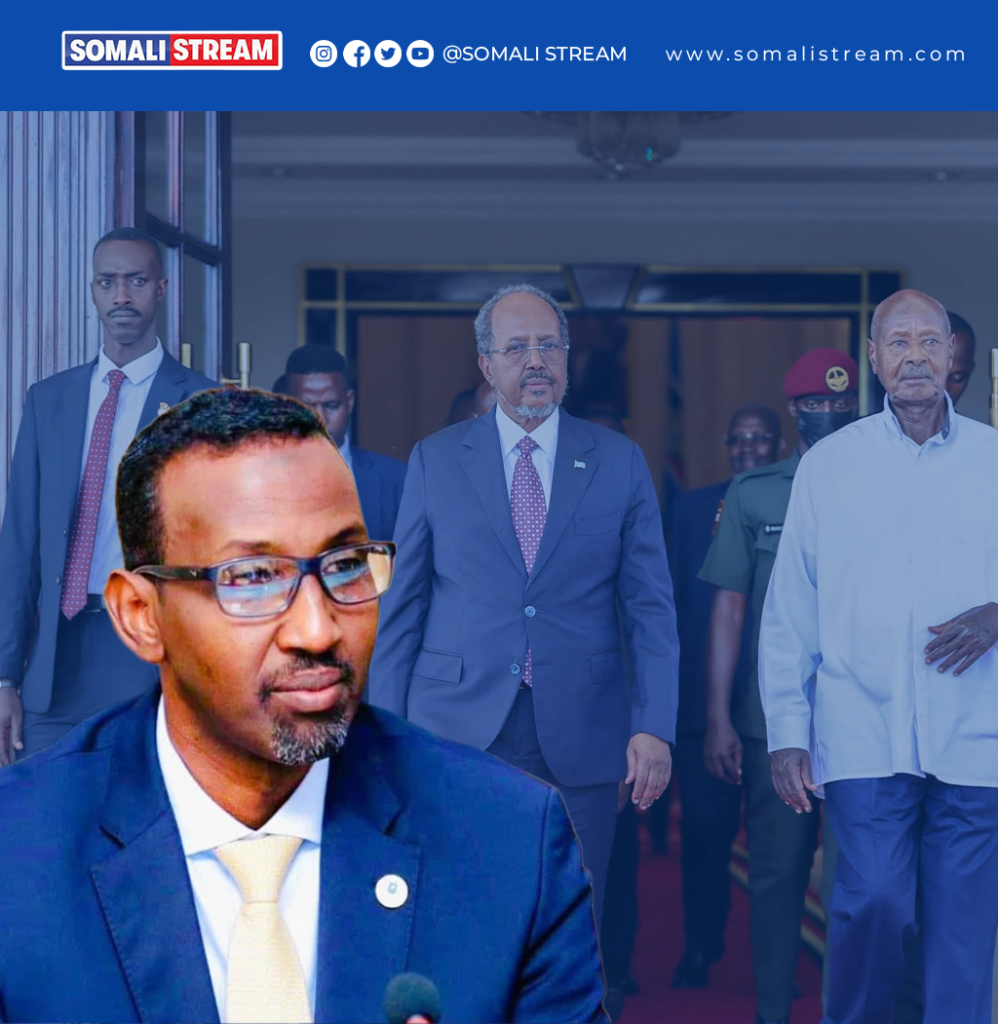
An Analysis of Leadership Credibility, Constitutional Accountability, and the Urgent Need to Rebuild National Trust in Somalia.
POLITICAL PRINCIPLES IN OPPOSITION AND POWER
Political leadership is ultimately judged not only by the principles leaders proclaim while seeking power, but also by their willingness to uphold those same principles once they assume office. When political positions shift according to political convenience, particularly on matters of constitutional governance, electoral mandates, and national reconciliation, public confidence and institutional credibility are placed at risk.
Since his re-election on 15 May 2022, Somali President Hassan Sheikh Mohamud has faced growing questions about the consistency between the political principles he defended while in opposition and the policies pursued during his second presidency.
While in opposition, Hassan Sheikh strongly criticized attempts to extend political mandates, introduce unilateral constitutional changes, and expand executive authority without broad political consensus. His opposition to the attempted two-year presidential term extension in April 2021 was a prominent example of his stated commitment to constitutional governance and democratic accountability.
During his second presidency, however, his administration has supported constitutional changes and the application of extended political mandates that critics regard as comparable to measures he previously opposed.
These developments raise a fundamental question: Are political principles being upheld consistently, or are they being adjusted according to the political interests of those in power?
Political leaders are entitled to reconsider their positions when circumstances change. Political flexibility can be necessary in addressing complex national challenges. However, reversals involving constitutional safeguards and democratic principles require credible justification, transparency, and public accountability.
EXTERNAL MEDIATION: FROM REJECTION TO POLITICAL NECESSITY?
President Hassan Sheikh Mohamud’s apparent shift in his approach to external mediation presents another significant question of political consistency.
According to diplomatic sources, Ugandan President Yoweri Kaguta Museveni previously offered to mediate between President Hassan Sheikh and his domestic political opponents. President Hassan Sheikh reportedly declined these initiatives, expressing reservations about external involvement in Somalia’s internal political disputes.
Against this background, his apparent willingness to seek President Museveni’s mediation now raises legitimate questions about the circumstances and motivations behind this change of position.
The emerging diplomatic engagement could reflect growing domestic political pressures or a constructive recognition that facilitated dialogue has become necessary. Determining which interpretation is more accurate will depend on the objectives, inclusiveness, and eventual outcomes of the mediation process.
The central question remains: Why President Hassan Sheikh seeking external mediation now, having reportedly rejected earlier opportunities for facilitated dialogue and political reconciliation?
Uganda’s considerable contribution to Somalia’s security, institutional recovery, and state-building deserves recognition and appreciation. Its sacrifices in supporting Somalia’s stability should never be overlooked.
Diplomatic engagement with regional partners is both legitimate and important. President Museveni’s potential role in facilitating dialogue should not be regarded negatively.
The issue is not the legitimacy of Ugandan mediation, but the consistency of the Somali President’s position and the political circumstances that appear to have made such mediation necessary.
External mediation can create opportunities for negotiations, but it cannot replace the domestic political will required to achieve lasting reconciliation.
THE EROSION OF DOMESTIC POLITICAL TRUST
Somalia continues to face serious disagreements over constitutional amendments, electoral arrangements, presidential and parliamentary mandates, and relations between the Federal Government and Federal Member States.
These disputes raise deeper questions about the effectiveness of national consultation, the credibility of constitutional institutions, and the capacity of political leaders to resolve their differences through constructive dialogue.
A functioning political system requires more than the formal existence of government institutions. It demands predictable constitutional rules, mutual confidence, accountability, and a shared commitment to resolving disagreements peacefully.
When meaningful consultation is neglected, manageable political disagreements can develop into prolonged constitutional and national crises.
Political legitimacy cannot be sustained through constitutional authority alone. It must also be reinforced through transparent governance, institutional credibility, and public confidence.
The apparent need for external mediation should therefore prompt a broader examination of why Somalia’s domestic mechanisms for political consultation and conflict resolution have struggled to produce meaningful agreements.
Although responsibility for rebuilding political trust rests with all Somali political stakeholders, those entrusted with the highest constitutional offices bear a particular responsibility to create an environment conducive to dialogue, compromise, and national cooperation.
THE DANGERS OF CONCENTRATED DECISION-MAKING
The deterioration of domestic political trust cannot be separated from broader concerns about the concentration of political authority and the inclusiveness of national decision-making.
When major national decisions are confined to a narrow circle selected primarily based on family connections, personal relationships, or political loyalty, rather than professional expertise, competence, and experience, institutional independence, administrative transparency, and public confidence are undermined.
Such a governing approach risks weakening institutional safeguards, discouraging independent advice, and limiting the diversity of perspectives necessary for sound national decision-making.
When opportunities for constructive domestic engagement diminish, political mistrust deepens, and external mediation may become necessary to facilitate dialogue that should have been possible through national institutions and established political mechanisms.
Effective leadership requires the ability to listen to uncomfortable truths, engage constructively with political opponents, and draw upon professional expertise beyond the President’s immediate circle.
The strength of a presidency should not be measured by its ability to concentrate authority, but by its capacity to strengthen institutions, accommodate differing perspectives, and build consensus across political and social divisions.
Somalia’s prolonged struggle to rebuild its state institutions makes the preservation of institutional independence particularly important. Sustainable statehood requires accountable leadership and inclusive decision-making rather than excessive reliance on personal authority.
NATIONAL RECONCILIATION MUST BEGIN AT HOME
Somalia’s political challenges cannot be resolved through unilateral decisions, temporary political arrangements, or diplomatic initiatives that exclude significant national stakeholders. While regional and international mediation may help create conditions for constructive engagement, lasting solutions must be founded on a genuinely Somali-owned reconciliation process.
Dialogue must extend beyond ceremonial meetings, public declarations, and general appeals for unity. It must be founded on a clearly defined agenda, mutually acceptable procedures, and practical agreements addressing constitutional legitimacy, electoral arrangements, presidential and parliamentary mandates.
The process must also establish credible implementation mechanisms, agree timelines, and guarantee that political commitments will be respected.
Reconciliation cannot succeed if compromise is expected from only one side. Both the government and its political opponents must demonstrate a willingness to make reasonable concessions and place national interests above individual political ambitions.
External mediation should support this process rather than substitute for it or become an instrument for securing temporary political advantages.
CONCLUSION: POLITICAL CREDIBILITY BEGINS WITH CONSISTENCY
Somalia is passing through a critical period in which constitutional uncertainty, political mistrust, and security challenges demand responsible leadership and genuine national cooperation.
President Hassan Sheikh Mohamud’s apparent reversal on President Museveni’s mediation raises a fundamental question: Does this change reflect a genuine commitment to national reconciliation, or is it primarily a response to mounting political pressures?
The answer will ultimately be determined not by diplomatic engagements or public declarations, but by the President’s willingness to embrace inclusive dialogue, meaningful compromise, and constitutional accountability.
Political leaders cannot reasonably expect the public to trust democratic and constitutional principles that appear to change whenever political power changes hands. The same standards of constitutional restraint, accountability, and political fairness must apply whether a leader occupies the presidency or sits in opposition.
While external mediation may facilitate dialogue, the primary responsibility for resolving Somalia’s political disputes rests with Somali leaders themselves.
Political authority is temporary, but the consequences of political and constitutional decisions can endure for generations.
Somalia does not need political victories achieved at the expense of national unity. It needs political consistency, constitutional integrity, credible institutions, and genuine national reconciliation.
The End
Amb. Ali Mohamed Mohamud (Cagabarur)
Diplomat and Political Analyst
Former Somali Ambassador to Uganda
Former Chargé d’Affaires at the Somali Embassy in Pakistan
