


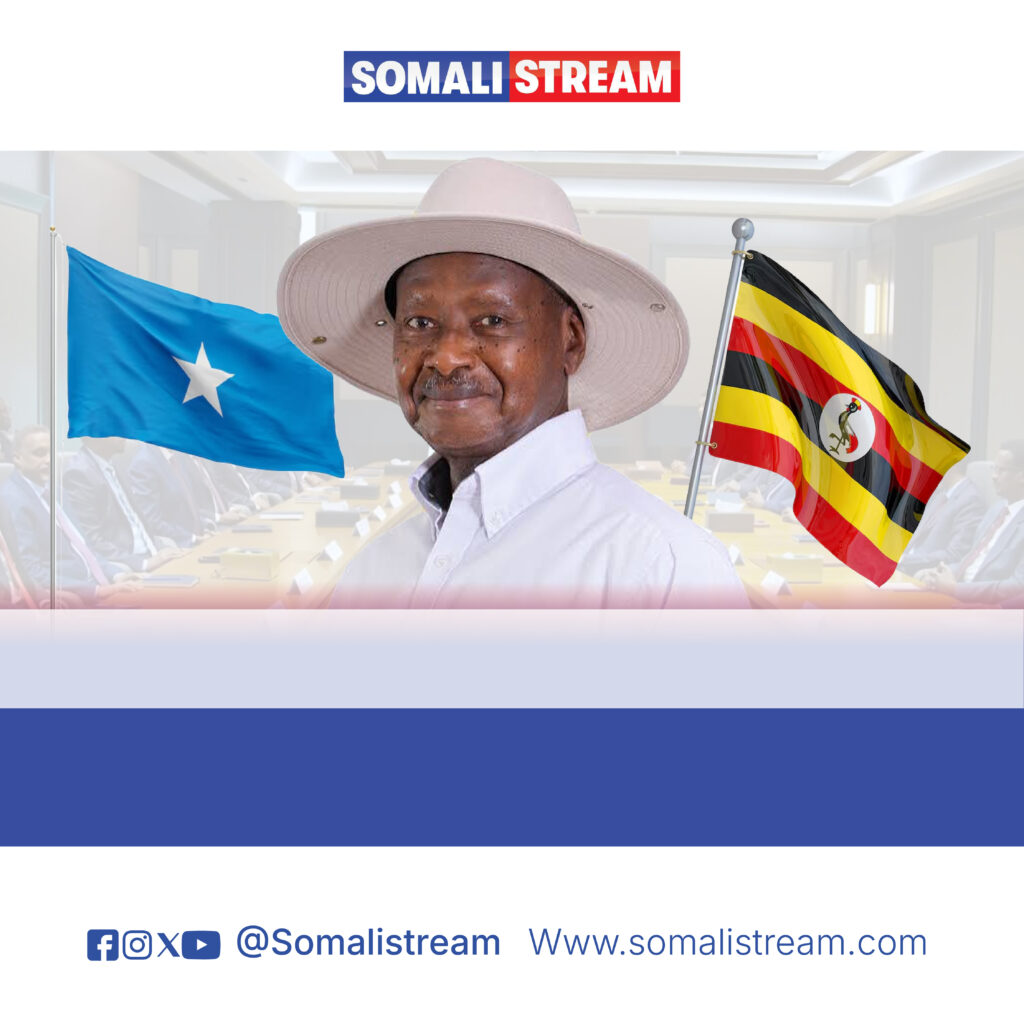
Uganda’s President Yoweri Museveni is poised to take centre stage in efforts to break Somalia’s deepening political deadlock, with plans for a visit to Mogadishu confirmed following high-level talks with outgoing Somali President Hassan Sheikh Mohamud in Uganda.
The development marks a significant diplomatic opening for Somalia, where opposition groups have boycotted mediation efforts led by Hassan Sheikh, leaving the country’s political leadership facing mounting pressure to find a negotiated way out of the impasse.
According to diplomatic accounts familiar with the discussions, Museveni is expected to facilitate efforts to bring Somalia’s divided political actors, including opposition groups, around the negotiating table. Hassan Sheikh is understood to have agreed to the proposed mediation, while expressing a preference for Mogadishu as the venue for the dialogue.
The Ugandan leader’s forthcoming visit gained further significance on Monday when the two presidents issued a joint communiqué confirming that Hassan Sheikh had formally invited Museveni to Somalia, an invitation the Ugandan president accepted.
The dates, the communiqué stated, would be agreed through diplomatic channels.
Beyond the proposed mediation, the two leaders placed political reconciliation at the heart of their discussions, stressing the need for Somalia’s Federal Government, Federal Member States and other stakeholders to strengthen their relationships through dialogue.
In a notable passage, the joint communiqué stated that the presidents had:
“The need for the Federal Government of Somalia with Federal Member States and all stakeholders to enhance relationship through reconciliation, fostering good governance and peace building to ensure security, stability and economic development of the whole country.”
Museveni also commended Hassan Sheikh, his government and the Somali people for their “commitment, resilience and efforts made in stabilization of Somalia.”
The diplomatic initiative comes at a particularly delicate moment for Hassan Sheikh, whose attempts to convene opposition talks have encountered resistance, with key political figures refusing to participate in a process they have not embraced.
For Museveni, the potential mediation would build on Uganda’s nearly two-decade military and diplomatic engagement in Somalia. Ugandan forces have played a central role in successive African Union missions, while Kampala has maintained close political and security ties with Mogadishu.
The two presidents also called for intensified operations against Al-Shabaab and more predictable, sustainable funding for the African Union Support and Stabilization Mission in Somalia (AUSSOM), underscoring the security dimension of their discussions.
Yet the political challenge may prove considerably more complicated than the military one. Bringing Somalia’s competing political factions into the same room will require more than diplomatic assurances; it will demand confidence in the mediator, an agreed framework and a willingness by all sides to negotiate.
Museveni’s acceptance of the invitation to Mogadishu now offers a potential new avenue for engagement.
Whether his intervention can translate into a credible national dialogue and ultimately ease Somalia’s political confrontation, remains to be seen.