


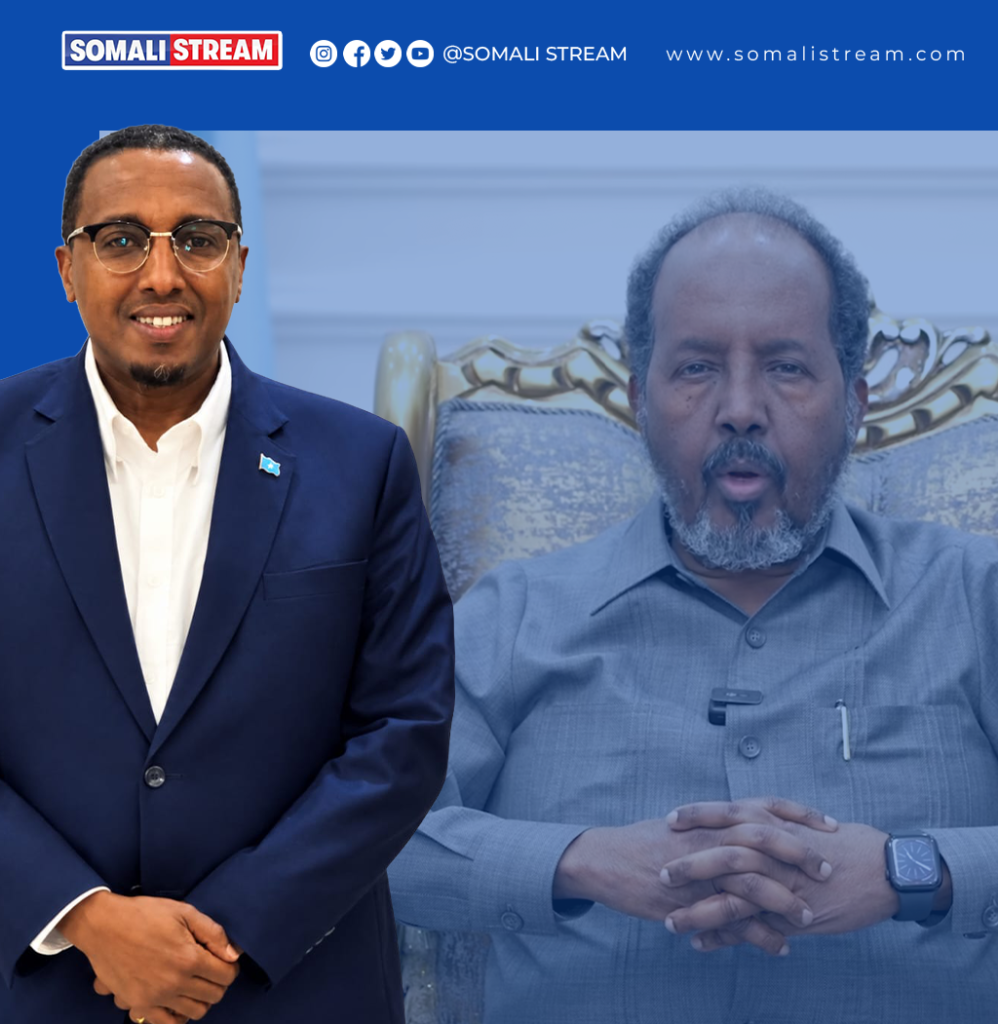
An invitation to negotiate is a modest achievement. It establishes that a meeting has been offered, not that a disagreement has been addressed. President Hassan Sheikh Mohamud presents himself as available for dialogue. But his opponents have attended before. They have offered proposals, challenged constitutional changes and returned to negotiations. Another invitation cannot be judged as though the country has no memory. The chairs are familiar. So are the questions left outside.
Nils Brunsson, a Swedish organisational theorist, developed the idea of Organized Hypocrisy to describe inconsistencies between institutional words, decisions and actions. Here the contradiction is concrete: consultation is offered while disputed arrangements advance. Opponents are invited to discuss a house whose foundations are already being poured.
They have come before
In July 2023, the president met former national leaders to discuss elections and completion of the provisional constitution. Participants issued their own communiqué. Their engagement did not begin with his latest invitation; disagreement did not begin with their latest refusal.
The warning about consent was equally clear. Addressing the Security Council on 19 October 2023, UN special representative Catriona Laing called for inclusive dialogue and consensus on constitutional reform, including term extensions. In February 2024, she again urged electoral agreement. Amendments passed the following month amid political opposition. Further changes followed in March 2026. Enactment did not produce agreement.
Nor has the opposition merely complained. Somali Stream described the competing electoral proposals in July 2026: the Somali Future Council proposed a single-day vote under the existing 4.5 power-sharing formula, overseen by two commissions, one federal and one for the states. The government favoured a party-based model administered by a single commission. These were concrete alternatives, not an absence of ideas.
Those proposals deserve scrutiny, particularly the retention of clan-based allocation. But they were alternatives, not silence. The president may debate their merits. He must address the legal questions behind them. A proposal does not vanish because it complicates his account of who is obstructing progress.
The calendar before the conversation
On 15 October 2026, the electoral commission announced parliamentary elections for 15 April 2027 and a presidential election for 15 May. The president’s invitation to November talks followed on 26 October. The timetable preceded the consultation meant to resolve disagreement about the process.
What could negotiations change? If the dates, institutions and constitutional assumptions remain open to agreement, explain how. If not, opponents are being asked to endorse arrangements they contest. The photograph would show everyone; the decision might still belong to one side.
The commission’s independence is disputed. Its members passed through cabinet and parliamentary approval before presidential appointment. The commission’s independence cannot be separated from the presidency’s role in shaping the constitutional framework and appointing its members. The concern is presidential control over the rules of the contest and the body administering it. Another invitation to talks does not answer that concern.
Trust under arms
Political memory includes armed confrontation. In June 2026, opposition leaders accused government forces of attacking their Mogadishu residences. October brought renewed reports of troops and armoured vehicles near their homes. The authorities invoked security concerns. Another invitation could not resolve the distrust surrounding those deployments.
Federal troops took Baidoa by force, ousting Laftagareen. He continues to claim the South West presidency, and loyal forces subsequently took several towns, most without fighting. He remains a territorial stakeholder, not merely a displaced politician. His removal did not resolve the contest over authority. Opposition among Hiiraan leaders and armed groups has also deepened Hirshabelle’s political and security fracture.
Federal and Jubaland forces fought at Raskamboni before Mogadishu confirmed its withdrawal. In Puntland, regional forces seized a Galkayo base held by fighters whose commanders had aligned with Mogadishu. These were different confrontations, with different initiators. They should not be collapsed into a single allegation. Together, however, they show political disputes becoming struggles between armed authorities.
These are reasons for credible guarantees, not reasons to abandon negotiations. Security, representation and enforcement must be addressed. The table cannot be insulated from the force used beyond it. Trust does not return because an invitation arrives on official stationery.
What would change this time?
The latest invitation also comes after a judicial challenge to the convener’s mandate. On 5 November, the Supreme Court held that term extensions were unlawful and existing mandates had expired. The government rejected the ruling. UN human-rights experts condemned the chief justice’s dismissal the preceding day. The dispute concerns not only the meeting’s terms, but its convener’s authority.
The opposition has tested the invitation. Its leaders have attended, argued and proposed alternatives. Yet disputed arrangements have advanced without an agreed settlement. Why should another meeting produce a different result unless the president changes what he will negotiate? The burden is no longer simply on his opponents to attend. It is on him to show what attendance can change.
The opposition also owes citizens workable safeguards and a credible route to elections, not indefinite bargaining over its leaders’ prospects. Its conditions must face scrutiny. But accountability cannot mean demanding concessions from one side while treating the other’s decisions as accomplished facts.
Acknowledge the proposals, publish the disagreements and identify what can be reconsidered. Explain the constitutional authority being exercised and how an agreement would be enforced. Organized hypocrisy can preserve the appearance of consultation while agreement recedes. Institutions, regions and citizens bear the cost. A new invitation must offer more than another performance of the old assurances. The public needs rules that survive their authors and a settlement that opponents can accept without surrendering their right to question those rules.
The president may command the podium. He cannot require the audience to forget what it has heard.
Awale Ali Kullane is a Somali diplomat and political analyst who writes on institutions and political leadership in the Horn of Africa. Find him at www.linkedin.com/in/awale-kullane-2632a5388
