


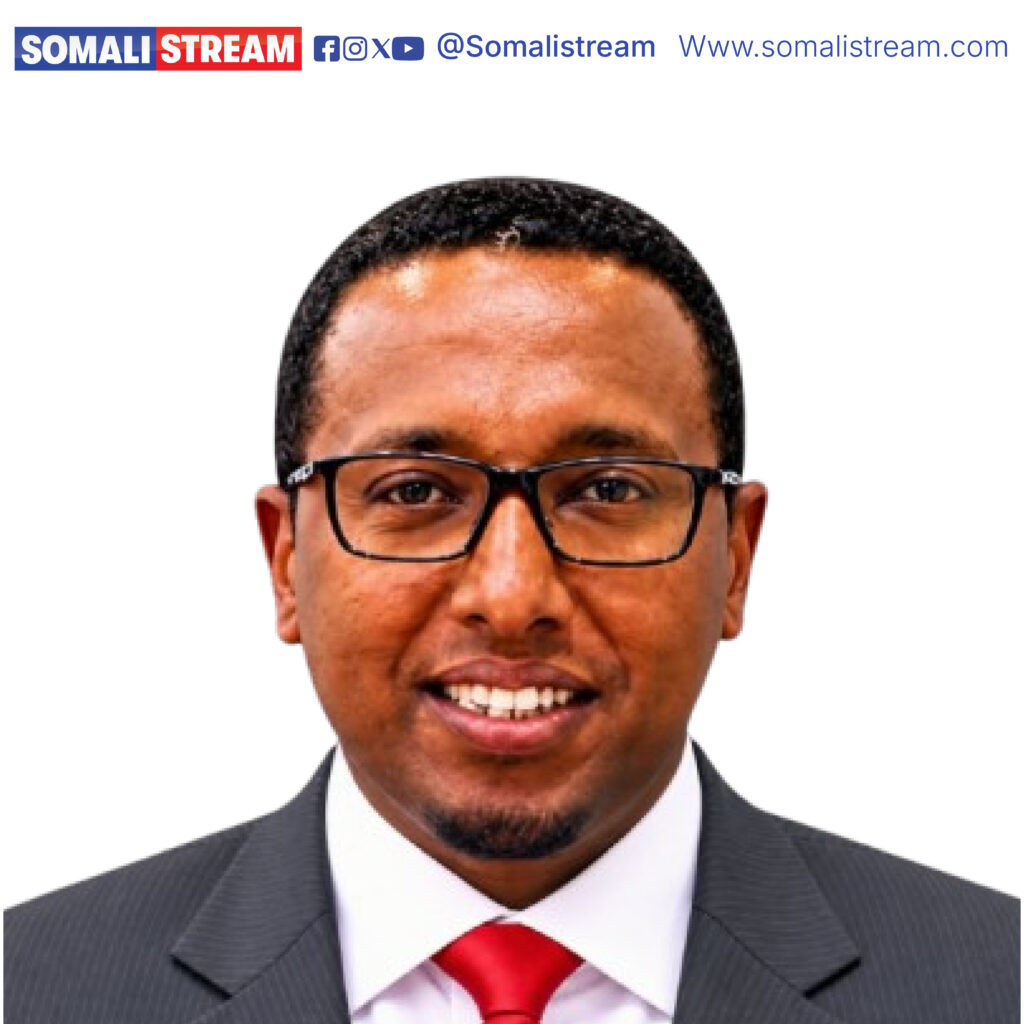
BY: AMB. Awale Kullane
The Call
On 17 November, President Hassan Sheikh Mohamud went on national television and called on Somalis to stand together against foreign interference. “The greatest enemy is not the one who comes from outside,” he said. “The greatest enemy is our division.” He closed with a promise: “Somalia is one. It was one. And it will remain one forever.”
He is right, and the warning deserves a hearing. In plain words, the President was telling the nation that the sun is hot, and asking everyone to come and sit under the tree. One detail spoils the picture. The axe that has been cutting that tree is still in his hand.
The Tree
In the Somali countryside, when the sun is at its hottest, people walk to the tree and sit under it together, whoever they are. Long before Somalia had courts, elders also gathered beneath it and settled disputes by the xeer, the customary law that the anthropologist I. M. Lewis called a pastoral democracy. The man with the most camels could still lose under the tree, and he accepted the verdict, because he would need the tree tomorrow.
The Somali state is meant to be such a tree. Its branches are a constitution agreed together, member states that are heard and an opposition answered with talks. Its trunk is a court that is obeyed. When the branches are whole, the tree protects everyone. When they are cut, the sun comes through.
The Branches He Cut
The first branch was the agreed constitution. In March 2026, a new constitution was signed into law without broad agreementfrom member states and the opposition, and it stretched the President’s term from four years to five. This is how a mandate the court says ended in May came to be presented as law.
The second branch was the member states. Puntland withdrew its recognition of the federal government in 2024, and Jubaland cut ties the same year. South West rejected the new constitution in March 2026, and within two weeks federal troops took Baidoa and pushed its president out. He still claims the office, and the state remains divided. In Hirshabelle, plans for a separate Hiiraan administration are gathering pace. Three states have walked out, and two are divided. Of the original member states, only Galmudug still stands whole beside the federal government.
The third branch was the opposition. In June, troops were sent into the neighbourhoods where Sheikh Sharif and Hassan Ali Khaire were staying, and the capital endured heavy fighting. Each cut let more sun through. A foreign hand finds it far easier to divide a country whose own leaders no longer agree on the rules.
The Trunk He Could Not Cut
Then the axe reached the trunk. A Chief Justice can be removed only on a proposal from the judicial council, approved by both houses of Parliament. None of that happened. On 4 November, a presidential decree attempted to remove the Chief Justice, Bashe Yusuf Ahmed. The next day, the court declared the decree null and void and ruled that the President’s mandate had ended in May. A replacement was sworn in anyway, and UN experts called him a “purported” Chief Justice.
The government replied that there was no judicial council to propose the removal, because it has not yet been established. It was President Hassan Sheikh Mohamud who dissolved that council by decree in 2022. A safeguard the President removed himself cannot become his excuse for acting alone. The trunk held.
Somalia is not the first to see this. In 2020, after Malawi’s courts annulled the President’s re-election, his government tried to push the Chief Justice into early retirement. The courts blocked it, the government withdrew the notice, and the election went ahead.
The President Who Put Down the Axe
Africa has also shown the better path. In 2024, Senegal’s President Macky Sall postponed the presidential election, a delay that would have kept him in office beyond his term. The Constitutional Council struck it down, and Sall announced he would “fully implement the decision.” His own coalition’s candidate lost, and Sall called it “a victory for Senegalese democracy.” Senegal did not break. It came out stronger.
The political scientists Steven Levitsky and Daniel Ziblatt call this forbearance, “deliberate self-restraint”, the choice not to use every power within reach. Put simply, forbearance means putting down the axe.
The Irony Comes Home
If the President wants unity, he does not need a speech. He can put the contested constitution back on the table for agreement, honour the court’s ruling, rebuild the judicial council he dissolved and agree with everyone on how elections will be held. The opposition faces its own test: the day the same court rules against it, it must accept the verdict too. The world will not wait beside its busiest sea lanes. Somalis can settle this at their own table, or watch others settle it for them.
A tree does not grow back because a leader commands it. It grows back when the cutting stops. President Hassan Sheikh Mohamud cannot call Somalis to sit under the tree while the axe is still in his hand. The first step towards unity is his: put down the axe.
Under the tree, the elders would say it in two words: Faaskadhig.
Awale Kullane is a Somali diplomat and political analyst who writes on institutions and political leadership in the Horn of Africa. Find him at www.linkedin.com/in/awale-kullane-2632a5388