


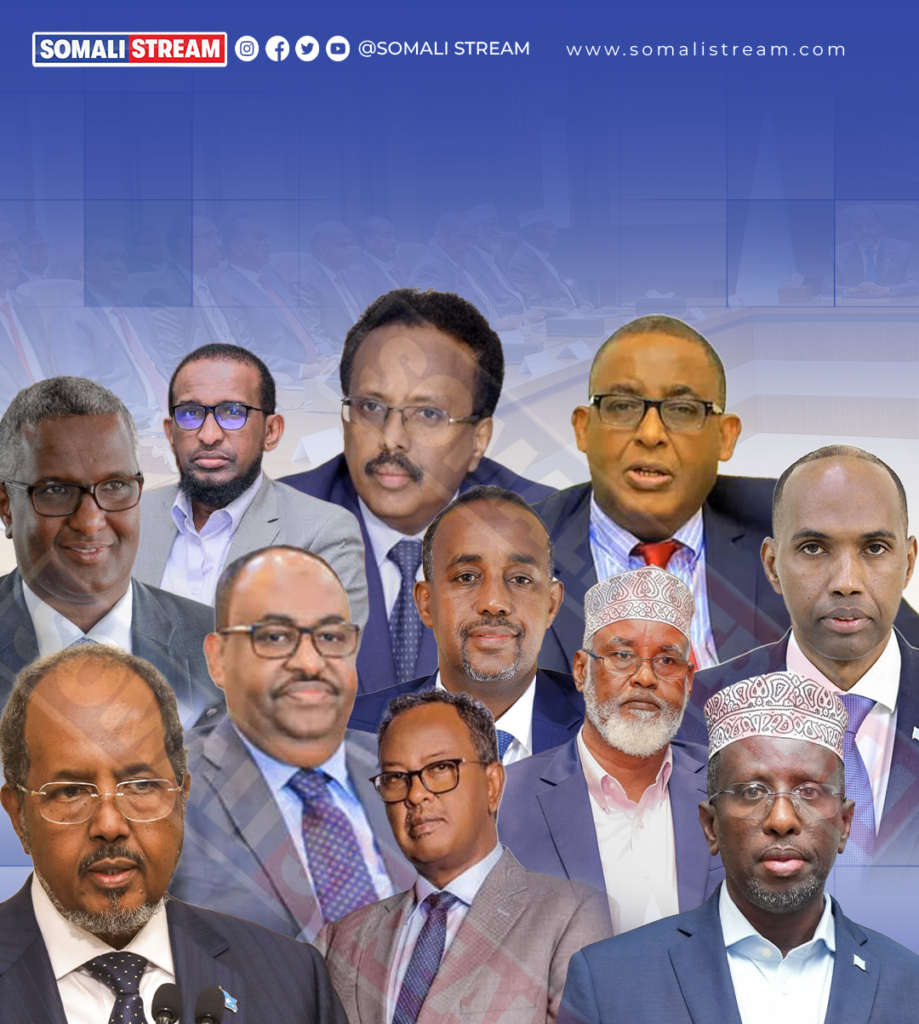
The collapse of Somalia’s latest political dialogue initiative has exposed a deeper crisis of political legitimacy, with opposition leaders demanding clarity over the President’s electoral ambitions and regional powers increasingly drawn into the dispute.
The latest attempt by outgoing President Hassan Sheikh Mohamud to convene Somalia’s political stakeholders has collapsed after opposition leaders rejected his invitation to talks.
At the heart of the dispute is a fundamental question: has the President abandoned his controversial plan for a one-person, one-vote electoral system, or does he still intend to pursue it without a political agreement?
For the opposition, that question must be resolved before they engage in any form of dialogue.
How the talks unravelled
According to details of the proposed meeting, international partners had urged opposition leaders to engage with the President, despite the expiry of his constitutional term and the legal questions surrounding his continued tenure.
They also shared a proposed agenda and timetable for the discussions. The plan envisaged signing, on the first day, the political declaration that had failed to secure agreement on 3 September. This would have been followed by the establishment of a technical body, known as the Democracy Task Force.
The proposed task force would have been responsible for overseeing the technical preparations and implementation of the electoral process, including the establishment of an electoral commission and the development of electoral procedures.
But the opposition rejected the proposed framework.
Its leaders argued that they could not enter negotiations with a President whose term had expired and whose continued tenure, they maintained, had been challenged by a Supreme Court ruling.
They also called for the talks to be broadened to include all opposition groups, alongside the administration of South West State President Abdiaziz Hassan Mohamed Laftagareen and the political movement in Beledweyne.
These demands effectively shifted the debate from the technical arrangements for elections to the more fundamental question of who has the authority and legitimacy to determine Somalia’s political future.
Turkey’s growing leverage
The dispute is also acquiring a regional dimension.
Turkey, one of Somalia’s most important security partners, has reportedly warned President Hassan Sheikh that continued military support cannot be taken for granted in the absence of a political settlement.
If confirmed, the warning would represent a significant shift in the diplomatic pressure surrounding Mogadishu.
Ankara has invested heavily in Somalia’s security institutions and military capacity. Its support is therefore an important strategic asset for the Federal Government.
The reported message also underlines a wider concern among international partners: Somalia’s political confrontation risks undermining the security gains that external support has helped sustain.
Uganda prepares to intervene
Meanwhile, Yoweri Museveni’s Uganda is reportedly preparing to convene a new meeting on Somalia’s political crisis.
President Hassan Sheikh, having become aware of the emerging diplomatic efforts and the possibility of a new regional initiative, has reportedly sought a meeting with Ugandan President Yoweri Museveni.
Kampala’s potential involvement could open another diplomatic channel, but it also presents a challenge for the Somali President.
A regional initiative involving multiple political stakeholders could make it harder for Mogadishu to control the terms and framework of negotiations.
What happens next for Hassan Sheikh?
The collapse of the talks leaves President Hassan Sheikh facing three interconnected challenges.
First, he must address the question of political legitimacy.
Opposition leaders are unlikely to accept a dialogue process that begins with the assumption that his administration can unilaterally determine the electoral roadmap. Without clarity on the constitutional and political basis of the transition, technical discussions about electoral institutions are unlikely to gain traction.
Second, he faces mounting diplomatic pressure.
Turkey’s reported warning and Uganda’s emerging initiative suggest that key regional partners are increasingly concerned about the absence of a political settlement. The President may find that maintaining external support requires greater willingness to compromise at home.
Third, he must decide whether to pursue his electoral agenda through negotiation or risk deepening the confrontation.
Continuing without a broad political agreement could further alienate opposition groups and federal member state leaders, making an already difficult transition more contentious.
The bigger question
The central issue is no longer simply whether Somalia should adopt a one-person, one-vote electoral system. It is whether such a fundamental change can be implemented without a political consensus among the country’s principal stakeholders.
The failure of the latest talks suggests that the disagreement is not primarily about meeting dates, committees or technical procedures. It is about power, constitutional legitimacy and the rules governing the country’s political transition.
For Hassan Sheikh, the next move will be decisive. He can seek a broader compromise that brings the opposition and federal member states into a negotiated electoral framework, or continue with an approach that risks turning an electoral disagreement into a wider political crisis.
By: Abdiqani Hamud Abokor
