


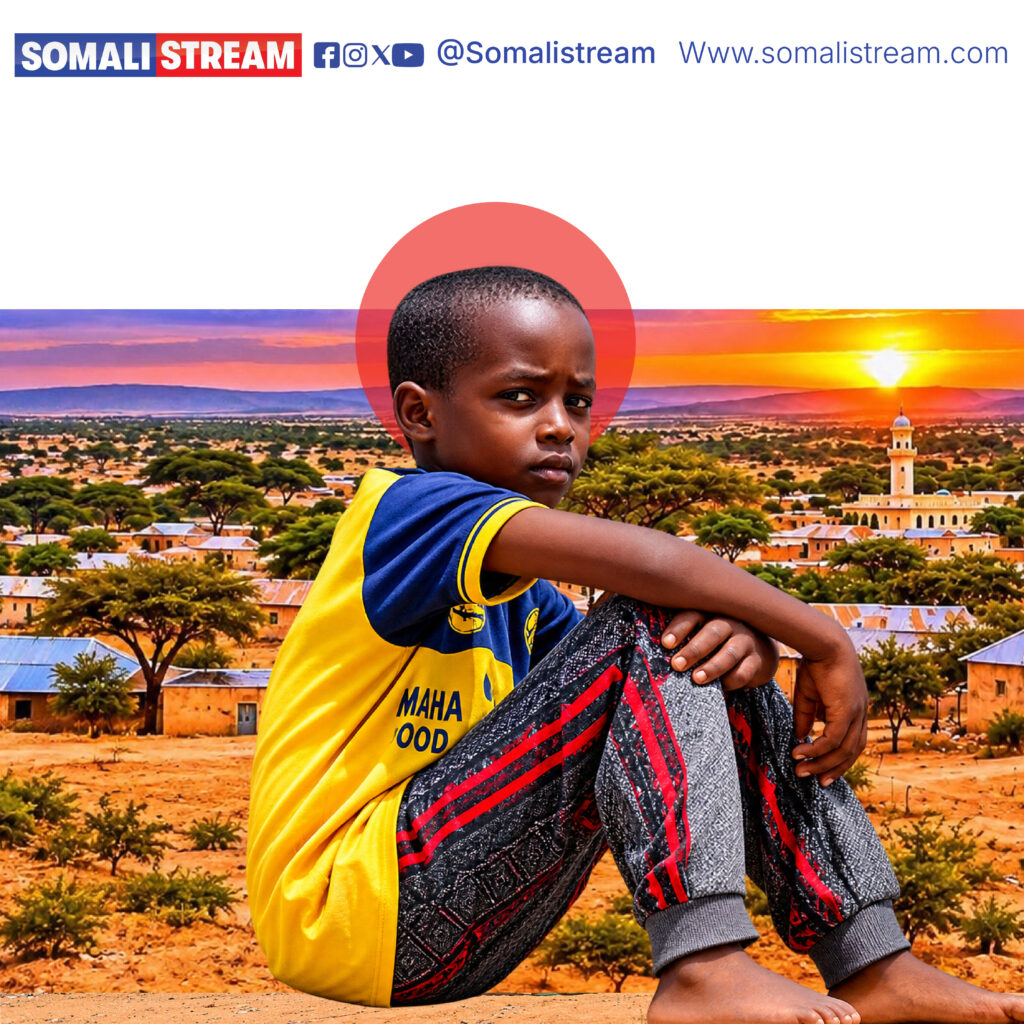
Twenty-three years have passed since the 2003 conflict disrupted life in my hometown of El Wak, Somalia. Yet whenever I think about the children who grew up during those difficult years, one question continues to trouble me: How different would our lives have been if the war had never happened? We came from the same hometown. We shared neighborhoods, schools, friendships, and childhood memories. We knew the same streets, played together, and imagined futures without knowing how suddenly our lives could change.
Then came the conflict, and the lives of many families took different directions. Some crossed the border into Kenya, settling in Wajir and El Wak on the Kenyan side. Others traveled farther, seeking refuge in places such as Dadaab and Kakuma. Families were separated, childhood friendships were interrupted, and an entire generation began growing up in different environments. What was once a community connected by everyday life became a generation scattered across towns, refugee camps, countries, and eventually continents.
Today, when I look back, I realize that war did more than force people to leave their homes. It changed the opportunities available to them, interrupted their education, separated childhood friends, and shaped the direction of their lives. For some children, growing up in Kenyan towns meant having access to local schools, family connections, and opportunities to build a future. For others, life in refugee camps brought different challenges and possibilities. My cousin Mohamoud is one example. He continued his education in Hagadera refugee camp in Dadaab, graduated, and eventually moved to Canada. His journey reminds me that even under difficult circumstances, education can open doors and give young people opportunities to rebuild their futures. Another childhood friend, Mustafa, eventually made his way to Alaska in the United States
When I think about how far our generation has traveled, I find it remarkable that children who once shared the same hometown are now living thousands of miles apart. These journeys make me reflect on how differently our lives unfolded. Some of us continued our education. Others entered the workforce, started families, or moved from one country to another in search of stability and opportunity. We may have started life in the same place, but the circumstances that followed shaped our futures in different ways.
What interests me most is not simply where people ended up, but how the experiences of displacement influenced the people they became. How many childhood dreams were interrupted? How many young people had to begin their education again in unfamiliar environments? How many families spent years trying to rebuild the lives they had left behind? And perhaps most importantly, how many of us still carry memories of a hometown that shaped our earliest understanding of friendship, belonging, and community?
Twenty-three years later, many of those children are now adults living in different parts of the world. Some may have achieved things they never imagined during those difficult years. Others may still be struggling with the consequences of displacement. Yet despite the distance between us, our childhood memories remain part of a shared experience. I often wonder whether the children who grew up alongside me remember the same streets, friendships, and moments that I do.
Do they ever think about how different life might have been if our childhood had not been interrupted by conflict? For me, these questions are not simply about remembering the past. They are about understanding how war shapes generations long after the fighting has ended. The consequences of conflict cannot be measured only by the number of people displaced or the homes destroyed. They can also be seen in interrupted educations, separated friendships, missed opportunities, and the different directions that young people’s lives take.
When I returned to my hometown last year after 22 years away, I was reminded that the consequences of war do not simply disappear with the passage of time.
A community can lose an entire generation of teachers, professionals, entrepreneurs, and future leaders to displacement. Their children may grow up far from the hometowns of their parents, knowing those places mainly through stories and memories.
The damage can continue long after the original conflict has ended.
That is why these stories deserve to be told.
I hope that by sharing this reflection, others who grew up during Somalia’s civil war will also tell their stories. Every hometown has its own memories. Every generation has experiences worth remembering. And behind every story of displacement are individuals whose lives might have unfolded differently under more peaceful circumstances. Twenty-three years later, I remain connected to the people and memories of my childhood, even though life has taken us to different corners of the world.
About the Author
Mahad Mohamed Sheikh is a Somali-American writer and Political Science student at Metropolitan State University in Minnesota, USA. His interests include history, politics, migration, and the lasting effects of conflict on communities and future generations.
