


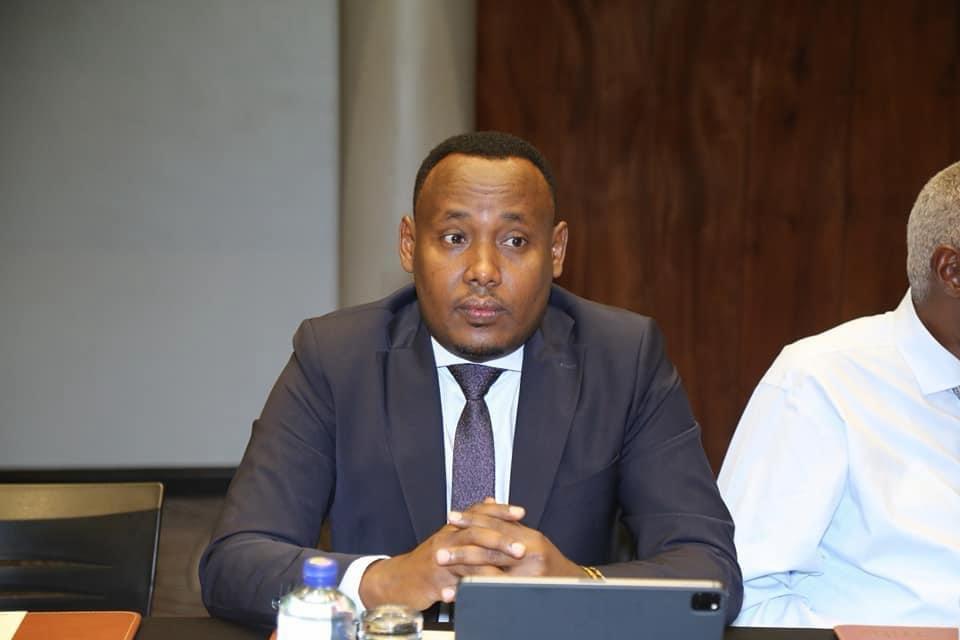
BY:Abdifatah Mahad
Somalia’s path to recovery must remain guided by a government that is accountable, upholds the rule of law and promotes the public interest. However, there have been concerns about the performance of the government of President Hassan Sheikh Mohamud in these areas. This article addresses five key governance issues; public appointments in family networks; foreign control of strategic resources, public land appropriation and forced evictions; private control of public revenues streams; and the militarisation of domestic politics.
The Presidency is not an Avenue for Advancing Family Enterprise
Public appointments in all of the working democracies are often based on merit, ability, transparent procedures and the overarching public interest. However, the President Mohamud has unabashedly encouraged the appointment of his family members to powerful positions within his government. Some of these appointments include his daughter Jihan (foreign-affairs adviser and rumoured to be the defacto foreign affairs minister) in 2023; the Council of Ministers approved his son-in-law Adam Roble as Director General of the Somali Development and Reconstruction Bank; his son Abdifatah Hassan also serves as the appointed Chief of the Presidential Guard; Zubeida Sheikh Mohamud (the president’s sister) was also appointed to a diplomatic advisory role in 2025; and finally, Abdiqani Hassan Sheikh Mohamud (another son) was also linked to land grabbing and seizures while his spouse was appointed Director General of the Somali Bureau of Standards. It’s not necessarily illegal to have family members in government, but when they are in key and important positions over and over again, it becomes more than just family members exercising their citizenship rights. It asks a more basic question – for whose benefit is this much concentrated power really being provided for? All of these appointments signal that ‘privilege’ is linked to the proximity to the presidency in terms of political, diplomatic, financial and security appointments.
In short, under Hassan Sheikh Mohamud, the presidency has become an avenue for advancing family business. This centralization of unbridled neoptism within the presidential family has undermined any public trust in credible and impartial institutions, which are still in their infancy in the country. The conclusion is thus very clear: the Mohamud government has permitted close ties between families and the state’s central strategic power. This has led to the erosion of the very institutions his regime is constitutionally and politically supposed to strengthen.
Foreign Control Over Strategic Resources
A government is not only obligated to defend the territorial integrity of its state, but also to protect the strategic economic resources of the nation and to ensure their use in the interests of all its people. Somalia’s reported agreement with Turkey’s OYAK raises serious questions in this respect. In the agreement, SOMTURK was given wide powers in the issuance of fishing licences, registration of vessels, monitoring and enforcement in Somalia’s territorial waters and exclusive economic zone. Under the SOMTURK arrangement, Somalia’s fisheries have been handed over to a Turkish pension fund with limited expertise on fishery matters (Kenez, 2025). Further, Turkey also operates Aden Adde International Airport and Port of Mogadishu via infamous firms like Favori LLC and Albayrak Group, respectively; and has signed numerous agreements on hydrocarbons and defence cooperation. This brings about a basic governance failure. Strategic national resources should be used for enhancing Somali sovereignty and state capacity. On the contrary, President Mohamud’s administration has put in place and implemented several revenue sharing agreements with foreign firms whose transparency, accountability and distribution of benefits remain contested.
Militarized Land Appropriation
There is a correlative responsibility of a government to respect individual property rights, follow due process and not forcibly dispossess vulnerable citizens of their legal dwellings. Somalia’s recent experience in Mogadishu shows that the responsibility is far from being fulfilled. Under the Mohamud regime, security forces including the military have been used to evict residents from both government-owned and deeded lands. There are no proper notices and compensation for evictions. IDPs, who had fled conflict and drought, have often been among those that have been inhumanely evicted. That is, the president is leading a state-driven humanitarian displacement of more than 760,000 people (Yusuf, 2025). The forced appropriation has affected several strategically located public properties in Mogadishu like the firefighting center and the former zoology centre. At times the evictions have become violent with clashes over the Horseed and Tarabuunka iconic pieces of the city, where four people lost their lives. Cleared public land was subsequently transferred to wealthy developers connected to political elites (Nor, 2025). Military force must not be used as a means of contesting land administration. Rather, the state should not be the instrument by which the people are arbitrarily dispossessed.
Private Control of Public Revenue
The Mohamud regime has instituted an aggressive wave of unchecked privatisat on in Somalia. Privatization can be a means to development provided it is transparent and is to the benefit of the public interest. It is however a governance issue, when strategic public assets and revenue streams are given to private hands rather than the state without accountability mechanisms. The President Mohamud, by explicit and implicit acts or omissions, has made it easier to sell strategic state assets and public lands without following the existing legal and financial procedures (a by-pass of the Auditor General and Ministry of Finance, respectively).
Kenez (2025) estimates that the Mohamud regime has allowed public properties (strategic assets, buildings, and land) worth $800 million to $1 billion to be openly sold. Any proceeds i.e revenue generated from these deals was not flowing into state treasury either.
Further, Empire Company (a private firm linked with President Mohamud) has centralized control of national travel revenue, passport fees, and e-visa systems. The company takes more than a substantial share of Somalia’s immigration and travel revenue streams, thereby reducing Somalia’s sovereign income. Somalia is also implementing outsourcing of tax collection, through Waayeel Consulting under President Mohamud. However, this firm is ownership is linked to the same family web owning MGS Soft Inc., whose contract was terminated due to corruption allegations. Politically connected networks have prospered from these, and government revenues have been split or diverted from public institutions. They are stewardship maladies that are central. A President charged with the task of rebuilding Somalia’s institutions should be consolidating public funds and building the capacity of the state to function transparently, rather than presiding over an institution where public wealth is increasingly in the hands of private and political interests.
Dealing with Political Dissent
President Mohamud’s government has raised serious doubts over its democratic credentials. Somalia’s security forces, especially the Somali National Army (SNA), have increasingly been involved in political confrontation. The main task of the SNA is to safeguard the sovereignty, territorial integrity and security of the Federal Republic of Somalia from internal and external threats. President Mohamud’s government, however, deployed an estimated 3,500 troops around the Somali capital of Mogadishu to quell political dissent, taking soldiers who would otherwise be useful against Al-Shabaab on political duty.
This is a case of using the SNA as a government bulldozer instead of being the supposed citizen’s guardian and protector. On 3rd September, 2026, there was an assassination attempt on the life of the retired General Mahad Abdirahman Aden in Doolow who had opposed the Federal Governments approach in South West State. Mahad pointed out that his assassination attempt involved senior officials and Turkish-supported military capabilities. This is a case of Mohamud’s regime capitalizing on Somalia’s strategic partnership with Turkey to muscle out opposition in internal political confrontation matters. There is an increasingly dangerous convergence of military power, political rivalry and foreign security assistance from Turkey under President Mohamud’s administration.
Somalia’s state building project is headed in the wrong direction under President Mohamud. Political coercion, family patronage, contested land dispossession and militarised evictions, private control of public revenue streams, and foreign control of strategic resources point to an ever recurring concerns mismanaged public power and national wealth. Administrative flaws are not the entirety of the challenges facing Somalia. Rather, they indicate the deficits at the very top of political leadership. A President who is tasked with the reconstruction of Somalia should be the protector of the rule of law, public resources, citizens’ rights and institutional integrity. The need of Somalia is not just a policy shift, but an extensive institutional cleansing and renewal process starting at the head of government level, where public offices are expected to serve the Somali state and not private, familial or political interests.
REFERENCES
Kenez, L. (2025). Turkey’s controversial military fund gains sweeping control over Somalia’s fisheries. Nordic Monitor. https://nordicmonitor.com/2025/12/turkeys-disputed-military-fund-gains-sweeping-control-over-somalias-fisheries/
Nor, M.S (2025). Somalia: Is President Mohamud selling off public land to tycoons? African Report. https://www.theafricareport.com/390992/somalia-is-the-government-selling-off-public-land-to-tycoons-via-massive-land-grabs/
Somali Guardian (2025). Somalia’s President Accused of Mobilizing 3,500 troops to silence Opoosition.https://www.somaliguardian.com/news/somalia-news/somalias-president-accused-of-mobilising-3500-troops-to-silence-opposition/
Wardheer News (2026). General Mahad Wounded in Doolow Strike as Turkey’s Somalia Role Comes Under Fire. https://wardheernews.com/general-mahad-wounded-in-doolow-strike-as-turkeys-somalia-role-comes-under-fire/
Yusuf, A. (2025). Return Stolen Lands, Three Former Somalia Presidents Tell Hassan Sheikh. Horn Observer. https://hornobserver.com/articles/3461/Return-Stolen-Lands-Three-Former-Somalia-Presidents-Tell-Hassan-Sheikh