


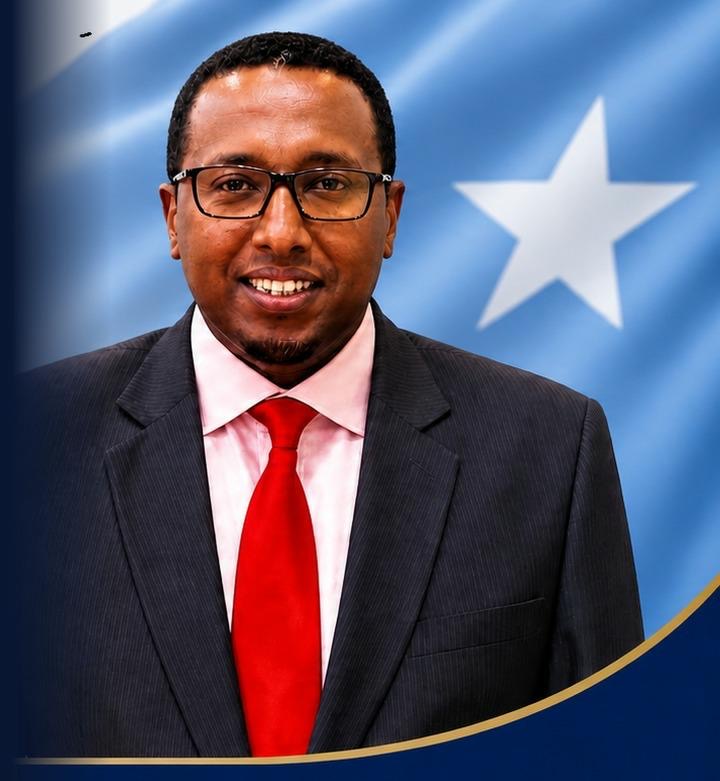
By Ambassador Awale Kullane
In the last weeks before Constantinople fell in 1453, the stories the city told about itself became darker. Its senior clergy, who were not local church leaders but officers of the state with similar authority to a member of parliament in the federal government of Somalia today, were remembered as still deep in dispute while Ottoman cannon breached the walls of Constantinople. The church leaders were reported to be debating whether angels could dance on the pin of a needle, and whether angels were male or female.
In the same weeks, church silver and gold was said to have been stripped and melted to pay for the defence. What historians can verify and what the city passed down as memory do not fully agree. What is not in dispute is the outcome. The walls came down, the empire ended, and the city that had spent a millennium being called Constantinople began its life as Istanbul.
Six centuries later, the image is unfair to the leaders of Constantinople, who governed the Byzantine Empire, and precise about the Somali government of August 2026.
While Al Shabaab captured Teedaan in Hiiraan on 2 August, closing the road between Beledweyne and central Somalia and putting the militants closer to Beledweyne than at any point since 2021, per Kaab TV’s reporting from Somali security officials on the ground, Villa Somalia’s public argument was about the calendar and the constitution. While the AU Support and Stabilisation Mission prepared to lose its UN logistics platform on 31 December after Washington announced on 1 July that it would not renew UNSOS financing, the government’s political calibration was on how to convert a rewritten constitutional framework into a term extension. While Puntland’s president signed a direct security cooperation agreement with the United States in Bosaso on 2-3 August, and a 12-member US congressional and AFRICOM delegation prepared to visit Jubaland, Puntland and Somaliland ahead of the US-AU Kampala summit, the federal government treated bilateral facts on the ground as background noise to a domestic argument about one-person-one-vote.
The clerics of Constantinople had at least the excuse that the walls had held for a thousand years. Somalia’s federal architecture is barely twenty. And unlike the Byzantines, our governing class has been warned. Repeatedly. On the record.
Since 2025 the signal from international partners has been consistent, and consistent signals from partners who used to disagree with each other are the kind a serious government reads carefully. Washington, Brussels, London, Addis Ababa and successive UN envoys have said, in their own diplomatic registers, the same three sentences. Somalia’s security problem cannot be solved without a political settlement. That settlement requires consensus with the federal member states. That consensus cannot be manufactured by rewriting the rules under which consensus is measured. When Washington circulated its 1 July note verbale on UNSOS, it named the reason in its own words. “Internal rivalries and political infighting,” not troop numbers, not logistics gaps, was the reason it would not renew.
Villa Somalia’s response has been to treat the warnings as noise and the elections as proof that the noise can be ignored. On 10 June, an indirect ballot in the South West state parliament produced an 88 to 1 vote for the federal government’s preferred candidate and was announced as a democratic milestone. On 25 July, the National Independent Electoral and Boundaries Commission announced that Hirshabelle would vote on 20 August, giving twenty-six days between announcement and polling day. Galmudug’s vote, first set for May, was postponed three times before it was held on 30 July. The International Foundation for Electoral Systems recommends eighteen to twenty-four months of operational planning between the start of preparations and polling day for a credible election. The elections are being announced as if they are the answer. They are what happens when consensus is no longer available.
Meanwhile the country the government presides over is a different country from the one described in the government’s statements. Puntland has withdrawn recognition and is now signing its own security agreements with Washington. Jubaland walked out of the National Consultative Council eighteen months ago and is now being visited by a US congressional delegation. Somaliland is included on the same delegation’s route. Al Shabaab has retaken positions across Middle Shabelle and Hiiraan without major clashes, because Somali forces that were stationed there since 2023 withdrew before the militants arrived. WFP has named Baidoa’s nutrition crisis as worsening, with paediatric malnutrition admissions at Bay Regional Hospital doubling between March and April. And the country’s international finance is being cut by a partner who has publicly said why.
None of this is being addressed by the government as the emergency it is. What is being addressed, in press releases and briefings, is the schedule of an electoral process running under a Provisional Constitution that was amended in March 2026 without the referendum Chapter 15 requires, and a Parliament whose own mandate expired on 14 April 2026. On 2 August, the acting Speaker of the House of the People appointed a nine-member committee to organise the internal election of a new Speaker, a vote that has become the government’s most visible public undertaking of the month. Whether a chamber whose own mandate has expired can lawfully elect its own new leader is now being debated on the floor of that chamber as if the outcome mattered to the country.
There is a version of Somali politics that is possible in August 2026 and that has been possible since the beginning of the current term. It is the version the partners have been describing. Convene the federal member states. Reopen the constitutional question with them at the table, not with them locked out. Agree an electoral timetable that all sides can accept, even if it requires more time than the current one. Concentrate the security effort on the front lines Al Shabaab is now on, not on the front lines Villa Somalia has opened against South West, Baidoa, Ras-Kamboni and Puntland. Meet Washington’s stated concern with the change it has stated it wants. Meet the AU’s stated concern with the same change.
That is what a government looks like when it decides it has run out of time to argue about the walls.
Constantinople’s clerics were arguing over a settlement history had already made. Somalia’s government is arguing over the internal Speaker’s vote of a parliament whose own mandate expired four months ago. The walls of the federal project are being breached in Hiiraan, in Bosaso, in Baidoa, and in every capital that has now stopped waiting. And the government’s answer, as of today, is another announcement about the vote.
• • •
Awale Kullane is a former Somali Ambassador to Sweden and China, and former Deputy Permanent Representative of Somalia to the United Nations. He previously served as Chief of Staff in the Office of the Prime Minister. He writes on Horn of Africa geopolitics, constitutional affairs, and regional security.
