


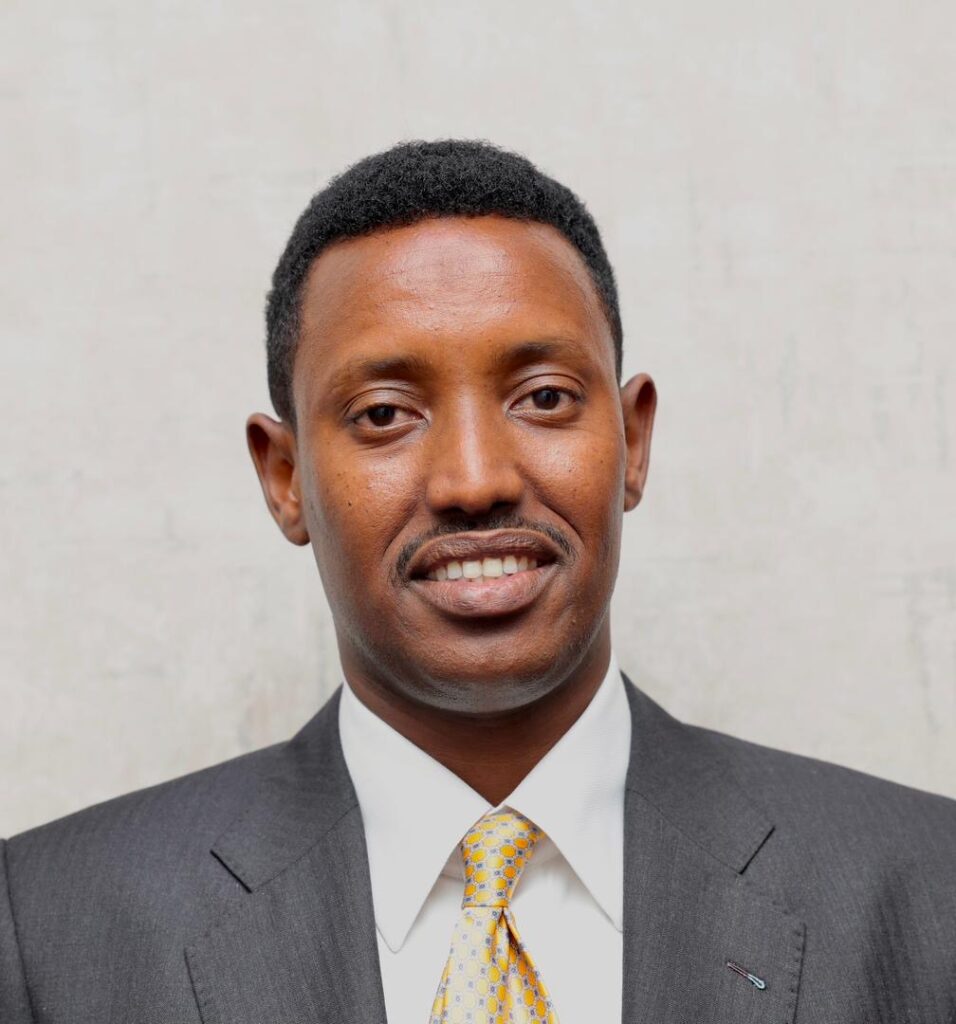
By Abdirahman Mustaf
History often judges governments not by the promises they make, but by the institutions they build, the stability they preserve and the confidence they restore in the state. Four years after the formation of the DanQaran Government under Prime Minister Hamza Abdi Barre, its supporters argue that the administration has sought to do precisely that by placing Somalia’s national interest above all else.
On 2 August 2022, following extensive consultations with religious leaders, academics, elders, women, youth representatives and wider civil society, Prime Minister Hamza unveiled his cabinet. The administration adopted the name DanQaran, meaning National Interest, reflecting its commitment to pursuing policies centred on Somalia’s sovereignty, security and long-term development.
The government assumed office during one of the most difficult periods in Somalia’s recent history. The country was battling a devastating drought, recovering from deep political divisions, confronting the persistent threat posed by Al-Shabaab, grappling with delayed debt relief efforts and seeking to rebuild institutions weakened by decades of conflict.
Rather than pursuing short-term political gains, the administration set out an ambitious programme built upon six strategic pillars: national security, economic recovery, social services, justice, national reconciliation and constructive engagement with the international community, under the guiding vision of A reconciled Somalia at peace with itself and the world.”
Over the past four years, the DanQaran Government has recorded significant progress across each of these priorities.
Security remained the administration’s foremost objective. The government adopted a comprehensive strategy combining military operations, financial disruption of extremist networks and an ideological campaign involving religious scholars and community leaders to counter violent extremism. It also intensified efforts to dismantle financial channels allegedly used by Al-Shabaab while expanding public information campaigns aimed at undermining extremist propaganda.
Somali people also point to improved security in Mogadishu and the recovery of territories previously held by militants as evidence of a more coordinated national security strategy.
On the economic front, one of the administration’s landmark achievements was Somalia’s successful completion of the international debt relief process, opening new opportunities for investment, development financing and economic reform.
The government also prioritised education, recruiting nearly 10,000 teachers and expanding access to public education while investing in new schools across the country. In the energy sector, renewable solar projects were introduced to provide electricity to schools and healthcare facilities, particularly in underserved communities.
Somalia’s international standing also strengthened during the period. The lifting of the decades-long United Nations arms embargo marked a significant milestone in rebuilding national defence capabilities. The country also secured election to the United Nations Security Council as a non-permanent member, joined the African Union Peace and Security Council, expanded its engagement within the East African Community, and continued efforts to consolidate the federal system, including recognising the Northeastern State.
For Somali people, these developments demonstrate what stable government, policy continuity and nationally driven leadership can achieve. They argue that the past four years have not merely been about delivering projects, but about rebuilding confidence in Somali institutions, strengthening governance and restoring the country’s voice on the international stage.
While challenges undoubtedly remain, DanQaran’s fourth anniversary offers an opportunity to reflect on a period that many regard as one of renewed momentum for Somalia. Its central message has remained consistent from the outset: that national unity, effective governance and policies rooted in the interests of the Somali people provide the surest foundation for lasting peace, prosperity and international respect.
Disclaimer: The views and opinions expressed in articles, commentaries, and other opinion pieces published by Somali Stream are solely those of their respective authors and do not necessarily reflect the views, editorial position, or policies of Somali Stream, its management, or editors. Authors are responsible for the accuracy, originality, and integrity of their submissions and any factual claims therein. Somali Stream reserves the right to edit submissions for clarity, accuracy, style, length, and compliance with its editorial standards, without altering the substantive integrity of the author’s argument. Publication does not constitute or imply institutional endorsement by Somali Stream.
