


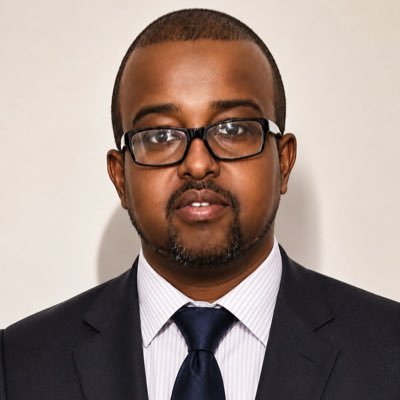
By:Adv. Abdullahi Yabarow
The forthcoming extraordinary summit of African Union troop- and police-contributing countries in Kampala comes at a defining moment for Somalia. With the withdrawal of United States financial and logistical support through the United Nations Support Office in Somalia approaching, African leaders must decide whether and how the African Union Support and Stabilisation Mission in Somalia should continue. Before committing further military resources, however, they should confront a more fundamental question. Can any security mission succeed while Somalia itself remains politically divided?
For more than two decades, international engagement has focused primarily on defeating Al Shabaab through military operations and external assistance. Although these efforts have weakened the group’s operational capacity, they have not resolved the deeper conditions that allow violent extremism to endure. Somalia’s most pressing challenge is no longer simply military. It is the absence of a broadly accepted national settlement capable of commanding confidence across the country. Where governing authority is contested, military gains rarely endure, and armed groups exploit institutional division and political uncertainty to regain influence.
The current constitutional position explains why this matters. President Hassan Sheikh Mohamud was elected in 2022 under a constitutionally prescribed four-year term ending on 15 May 2026. Under the doctrine of lex retro non agit (non retroactivity), constitutional amendments operate prospectively and do not alter an incumbent’s existing mandate. Accordingly, the continued exercise of executive authority beyond 15 May 2026 is ultra vires, meaning beyond the legal authority conferred by the Constitution. With the expiry of both the parliamentary and presidential mandates, the administration became a caretaker government. In constitutional practice, such a government is expected to maintain the ordinary administration of the state and facilitate an inclusive transition, not introduce disputed constitutional or electoral measures without broad national consensus.
The consequences extend far beyond constitutional law. They affect security itself. Political confrontation between the Federal Government, Federal Member States and opposition actors weakens the cooperation needed to confront a common enemy. National attention shifts from defeating violent extremism to managing internal disputes, while trust between institutions steadily erodes. Every period of division creates opportunities for Al Shabaab and Daesh to expand their influence. No counter-insurgency campaign can succeed when the country’s principal political actors remain divided over its future.
Kampala should therefore place political reconciliation at the centre of its support for Somalia. African leaders should make continued military assistance conditional upon a credible political roadmap agreed by Somalia’s principal stakeholders. That roadmap should call for the suspension of contested local and state leadership elections in Galmudug and Hirshabelle until an inclusive political agreement is reached. Many political stakeholders dispute the constitutional authority of a caretaker government to conduct such elections without broad national consensus. Proceeding under these circumstancesrisks deepening political divisions, weakening public confidence in state institutions and diverting attention from the common fight against Al Shabaab and Daesh.
The objective is not to determine Somalia’s political future or favour one political actor over another. It is to create the conditions in which Somalis themselves can negotiate an inclusive settlement and agree transitional electoral arrangements through dialogue and consensus.
That process should rest upon a tripartite framework bringing together the Federal Government, the Federal Member States and the opposition. Together, they should agree a transitional electoral framework, establish an impartial electoral mechanism and restore confidence in constitutional governance.
Elections conducted under an agreed process would produce a government with a fresh democratic mandate and the authority needed to unite the country against violent extremism while strengthening cooperation with regional and international partners.
Military assistance can reinforce legitimacy. It cannot create it.
The decision before African leaders is therefore larger than the future of one military mission. It is a choice between managing the symptoms of Somalia’s instability or helping to resolve its underlying political crisis. African soldiers cannot build political legitimacy for Somalia. Only Somalis can do that through an inclusive political agreement that restores constitutional governance, renews the democratic mandate and unites the country against violent extremism. If the Kampala Summit is to leave a lasting legacy, it should do more than finance another military mission. It should help Somalia build the political foundation upon which lasting security depends.
“Military force may defend a nation, but only constitutional legitimacy can unite it.”
Adv. Abdullahi Yabarow, LL.M., is a Somali legal scholar based in the United Kingdom. His research focuses on constitutional law, governance reform, institutional accountability, and state building in fragile states. He can be reached via email: abdullahiyabarow@gmail.com