


By: Abdurahman Nur
One year after Northeastern State was formed, agreements affecting Lasanod can no longer be negotiated through competing territorial claims alone. Excluding the administration based there risks recreating the instability that produced it.
In 2002, a short drive east of Burao was enough to expose the limits of Somaliland’s authority. Drivers replaced Somaliland licence plates with Somali ones. Somaliland flags disappeared and the blue Somali flag took their place.
Social anthropologist Markus Hoehne, who has studied northern Somalia for more than two decades, recalled that journey at Lasanod Forum 2026 on 29 July, where officials, community leaders and researchers gathered on the eve of Northeastern State’s first anniversary.
Northeastern State emerged from a war that caused extensive loss of life and injuries, alongside mass civilian displacement. Amnesty International found that Somaliland forces had indiscriminately shelled Lasanod, damaging homes, schools, mosques and the general hospital.
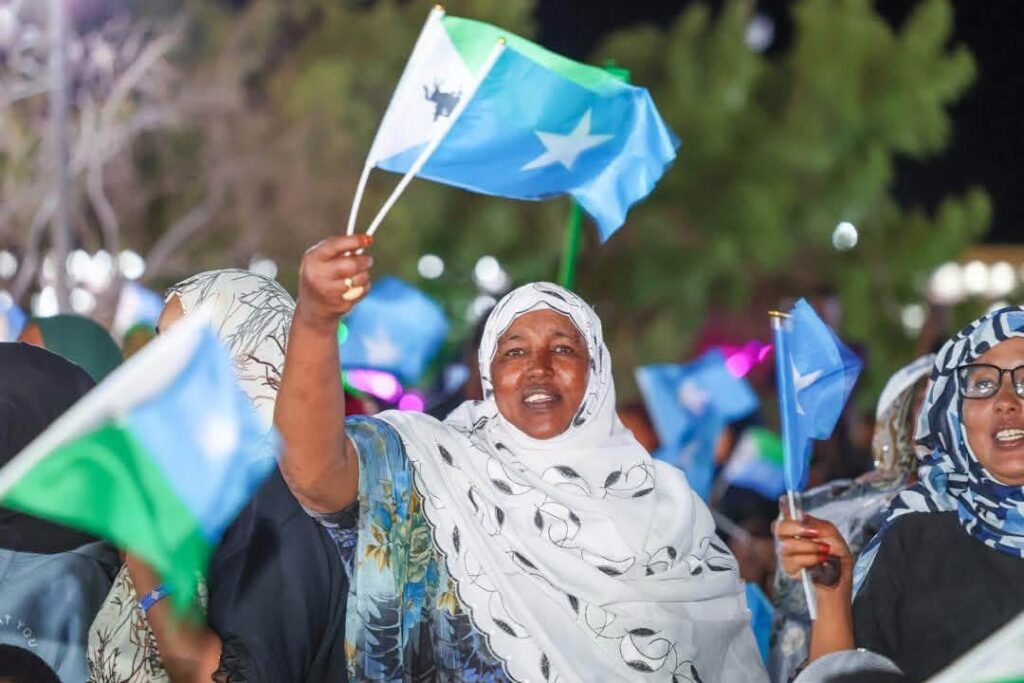
The fighting ended Somaliland’s control of the region. Delegates in Lasanod adopted a constitution for Northeastern State and declared its formation within Somalia’s federal system on 30 July 2025. Abdulqadir Ahmed Aw-Ali, known as Firdhiye, was elected president the following month. In January 2026, President Hassan Sheikh Mohamud formally declared Northeastern State a full federal member state.
Somaliland grounds its territorial claim in the borders of the former British protectorate and decades of separate institution-building. That history explains Hargeisa’s position, but it cannot by itself determine the political status of communities that reject its authority.
Disputes remain, especially in eastern Sanaag. But Somaliland and Puntland will now have to deal with Northeastern State if either wants an agreement that can hold on the ground. Family ties and intermarriage already provide a foundation for peace.
Finance Minister Abdighani Hirad described the region as receiving only a fraction of the development and humanitarian assistance intended for it, with much of that assistance controlled through Hargeisa. Local businesses and the diaspora nevertheless financed utilities, hospitals, roads and educational projects. Had the same projects been funded through an international aid programme, they would be cited as evidence of impact. Lasanod shows that capital organized through local networks can produce results.
Suleiman Abdi Dualeh, chair of the region’s Peace and Reconciliation Committee, warned that younger members of the diaspora cannot be expected to invest on attachment alone. They will need sound financial institutions, transparent accounts and rules they can trust.
His warning points to a wider challenge for Northeastern State. The administration must manage the ordinary disputes that wartime solidarity can temporarily postpone: taxation, appointments, contracts and where public money is spent. Somaliland’s early governments depended on local revenue and had to bargain with the businesses and communities financing them. Later external investment made it easier for power to concentrate in Hargeisa and for outlying communities to be ignored. Northeastern State should seek outside support, but not in a way that allows officials to stop answering to the people who built and financed it.
President Firdhiye said Northeastern State’s proximity to the Red Sea and Bab el-Mandeb gave it a responsibility to keep navigation peaceful and open to international trade. Northeastern State would not initiate conflict, he said, but would answer an attack. That restraint becomes harder to preserve when an external power strengthens forces that still claim territory governed from Lasanod.
In January 2024, Ethiopian Prime Minister Abiy Ahmed and Muse Bihi signed an unreleased MOU reportedly offering Ethiopia a 50-year lease over 20 kilometers of coastline for naval and commercial access, alongside possible Ethiopian recognition of Somaliland’s independence.
The MOU was never simply about Ethiopian access to the sea. It depended on overriding opposition in Awdal while treating Somaliland’s claimed borders as politically settled. President Firdhiye praised the Federal Government and Somali public for confronting it, and argued that one intended outcome was to erase the existence and political will of the people of the North East.
Israel’s recognition, the first by a UN member state, met widespread international rejection and gave diplomatic weight to Somaliland’s territorial claim, including Lasanod.
Somaliland’s defence minister later confirmed that Israel was training its police and military, while denying that an Israeli base existed or was under negotiation. Hoehne warned that recognition and possible future military involvement around Berbera could destabilize northern Somalia.
Officials in Lasanod and Mogadishu must now consider whether Israeli training is giving Somaliland’s forces capabilities that could alter the balance along disputed frontiers. Reports of talks over a Turkish naval facility in Northeastern State remain unconfirmed, but they show how quickly Israeli support could be answered by a second foreign presence.
Northern Somalia does not need a militarised frontier running through communities connected by trade, family and intermarriage.
The Gulf has already shown the cost of hosting forces engaged in another country’s war. Iran targeted US military facilities across Gulf states after American strikes, injuring civilians, damaging infrastructure and repeatedly closing Hormuz. An adversary may treat intelligence-sharing, missile interception or logistical support as participation in a conflict even when no offensive strike is launched from the base.
The Houthis have declared any Israeli presence in Somaliland a military target. Hargeisa may try to confine Israeli involvement to training, surveillance or intelligence, but it cannot control how the Houthis classify those activities or where retaliation lands. Somali civilians could face an external attack while Israeli support was also altering the balance inside an unresolved Somali dispute.
Northeastern State has changed the political map. Lasanod can no longer be treated as the eastern edge of Somaliland’s project or the western extension of Puntland’s. Any settlement that excludes the administration now based there begins with one of the defects that helped produce the last war.
The 2023 war was devastating even without rival foreign powers backing its opposing sides. Their involvement would make another confrontation harder to contain and far less likely to remain local.
