


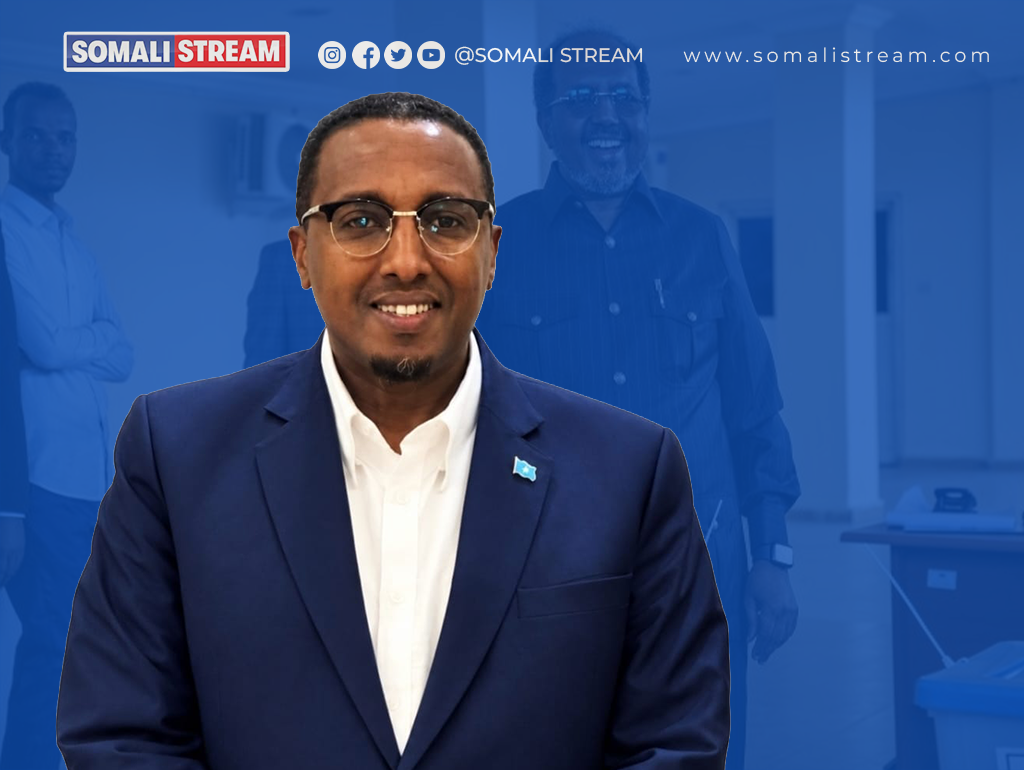
On 25 October 2026, President Hassan Sheikh Mohamud addressed the nation and called the elections in South West, Galmudug, Hirshabelle and Banadir “a success in which the Somali people participated”. Then he invited his rivals to talks. The states were never the destination. They were the rehearsal. The government’s own plan moves from local to state elections, “culminating in general elections”, and The Standard reports that the president now feels vindicated enough to recommend the same model for the presidency. The real question is where he intends to take what he learned in the states.
The Rehearsal
Each state taught a lesson. In South West, the state assembly re-elected South West’s President on 28 March, the federal government rejected the vote, and two days later federal forces took Baidoa and ousted him. With the strongest rival pushed out, President Hassan Sheikh Mohamud’s party won 51 of the 95 seats in the state assembly in May. On 10 June that assembly elected the leader the JSP pushed as state president with 88 of the 90 votes cast, against one for his only challenger. He was the sitting Speaker of the federal parliament, and he kept that chair throughout the race, despite critics who called it an inherent conflict of interest. He gave up the speakership on 20 June, ten days after he had won. Galmudug taught a second lesson. Towfiiq challenged the July vote, and on 24 August the Supreme Court annulled it for breaching the electoral law. Then the party that won in court was left off the ballot for the rerun. The commission said only that Towfiiq had not applied. It published no register, no notice of what parties had to file, and no written decision. Towfiiq said it was ready to run and learned of its exclusion on social media. The president’s party went on to win 67 of 89 seats.
The contrast says everything. The JSP’s candidate in South West was allowed to run while holding one of the highest offices in the country. Towfiiq, which had won in the Supreme Court, was struck off on the commission’s word alone. For the president’s party, the rules bend. For its rivals, they do not. The lesson was plain: a court can rule against the process, and the process can quietly undo the ruling.
On 15 October, before Galmudug or Hirshabelle had even chosen a president, the commission his government appointed fixed the federal dates: Parliament on 15 April 2027 and the presidency on 15 May 2027. Nothing at home stopped it, and nothing from abroad forced a pause. From Villa Somalia, that looked like a green light. The political scientists Anna Grzymala-Busse and Pauline Jones Luong (2015) offer a simple test for any set of rules. Some rules are built to “protect the gains of early winners”: whoever takes power first shapes the rules so that they keep it. Other rules offer “guarantees for the losers”: those who lose today know they will have a fair chance to win tomorrow, so they accept defeat and stay in the game. The two scholars warn that under the first kind of rules, “a loss of power can become irreversible”. In plain words, once you are out, you may never get back in. That is exactly what South West and Galmudug rehearsed. The president’s party won first, and the rules kept it winning. Its strongest rival in South West was pushed out by force, and the party that won in court in Galmudug was struck off the ballot.
Consultation Is Not Negotiation
In the week the dates were set, President Hassan Sheikh Mohamud told lawmakers that past agreements with the opposition on how elections are run “will not happen this time” and that it was not possible to return to indirect elections. Ten days later his tone changed. He invited his rivals to a “consultative forum” from 14 to 18 November, while the government rejected international mediation. The opposition asked for a negotiation and was offered a consultation on a road already chosen, since the constitution, the commission and the model were declared a success in the same speech. And the federation is divided. Puntland rejected the process from the outset. It has stayed out of the national talks since December 2022, has never signed their agreements, and says it will not accept a process “designed solely by Villa Somalia”. Jubaland went along for a while. It signed the early agreements and broke with Mogadishu only in late 2024, once the electoral laws were passed. South West is in conflict. Its President, ousted from Baidoa, saw his forces take five towns in Bay in October, after which the JSP leader in Baidoa reportedly conceded that “only Baidoa remains in our hands”. Hirshabelle is in conflict too. A voter registration centre was attacked in September, killing one person, and the state’s own vice president refused to accept the result. A success that four of five member states contest is not a success. It is a crisis.
The Signals He Chose Not to Read
The international community was not silent. It spoke in its own language. For years, partners hurried to welcome state outcomes, from Hirshabelle in 2017 to Galmudug in 2020, when, according to the Heritage Institute, they congratulated the new leader within hours. In 2026, I could not find a single welcome from Somalia’s partners for the new state leaders. The talks they mediated in May ended on 15 May, the day the original term expired, and diplomats rarely race a deadline they believe no longer applies. On 1 June, nineteen partners urged all sides to “swiftly reach consensus on an election roadmap”, and days later the UN said their repeated warnings were “obviously” not heeded. What was missing was the volume of 2021, when a term extension drew threats of sanctions and visa restrictions. In a divided world, partners spoke more quietly, and in Mogadishu quiet was read as consent.
The political psychologist Margaret Hermann (2014) observes that leaders who challenge the limits around them arrive “with an agenda”, gather “true believers”, and for them events “are not perceived as important or relevant unless they pertain to or affect the implementation of their agenda.” The signals were sent and filtered out. Danielle Resnick (2018) adds that opposition parties in Africa already compete on an “uneven playing field” against incumbents. In Somalia, the president founded the party, his government appointed the commission and wrote the rules, and federal forces decided who stayed in Baidoa.
The Road Not Yet Taken
There is still time, though not much. The November talks could become real if the commission, the timetable and the model were genuinely on the table, if partners were welcome as mediators, and if the talks were held on neutral ground agreed by all sides. That would cost President Hassan Sheikh Mohamud some control. Refusing could cost Somalia its next election. He tested the method on the states, declared it a success and set a date for the presidency. If he carries the same rules and the same refusal to listen into May 2027, Somalis will be entitled to ask the question in this article’s title. The trajectory already gives the answer. Baidoa is contested by force, Hiiraan is restless, and some voices there now speak of armed options. Two member states have already walked away. In my judgement, this road does not end in an election. It ends in conflict.
That is why Somalia’s partners cannot afford to speak quietly now. Silence today will create a problem that no one will be able to fix tomorrow. Prevention costs less than repair, and prevention means mediation, with partners playing the full role the moment requires. The government said mediation would infringe Somalia’s sovereignty. The opposite is true. Mediation will not cost Somalia its sovereignty. It will help preserve it.
Awale Kullane is a Somali diplomat and political analyst who writes on institutions and political leadership in the Horn of Africa. Find him at www.linkedin.com/in/awale-kullane-2632a5388
