


Introduction
South West State occupies a strategically and politically vital position in Somalia. Its territory includes some of the country’s most productive agricultural areas, important trade corridors and major population centres. It has also carried an exceptionally heavy burden of conflict, displacement, drought, poverty and political instability.
Today, South West stands at a dangerous crossroads. Political disagreements between the Federal Government and South West political actors have increasingly assumed a security dimension, creating the risk that constitutional and electoral disputes are being resolved through coercion rather than dialogue. The central question, however, is larger than who controls Baidoa or which political faction prevails. It is whether Somalia can make federalism function as a genuine constitutional system of shared government rather than a contest for centralized power. The answer demands a return to constitutionalism, political dialogue, credible elections and a clearly defined division of responsibilities between the Federal Government and Federal Member States.
Federalism Must Mean Constitutional Partnership
Somalia cannot build a successful federal state if federalism exists only in constitutional language while it is perceived that political authority remains concentrated at the centre. The Constitution establishes two levels of government—the Federal Government and the Federal Member States—and sets out principles of federalism based on mutual cooperation, public confidence and assigning power to the level at which it can most effectively be exercised.
The Federal Government has legitimate national responsibilities, particularly in matters constitutionally assigned to it, while Federal Member States possess their own constitutional institutions and responsibilities. The allocation of powers and resources must therefore be governed by constitutional rules, negotiated agreements and institutional mechanisms—not unilateral political interpretation or the use of force.
Article 54 of the Provisional Constitution specifically envisages agreement between the Federal Government and Federal Member States on the allocation of powers and resources, while reserving specified national matters to the Federal Government.
Federalism requires restraint at the federal level and responsibility at the state level.
The Federal Government should therefore respect the legitimate constitutional authority of Federal Member States to manage their own political and electoral processes within the applicable constitutional and legal framework. Where a Federal Member State has the authority to organise its elections, that authority should not be undermined through political pressure, administrative interference or the deployment of security forces.
This is not an argument for unchecked regional autonomy. Federal Member States must equally respect the Constitution, democratic standards, judicial processes, financial accountability and the rights of their citizens. The principle should be clear: The Federal Government must not use its national authority to extinguish constitutionally assigned state authority, and Federal Member States must not use their autonomy to escape constitutional accountability.
That is the essence of a functioning federation. The Upper House of the Federal Parliament, which represents the Federal Member States, has an explicit constitutional role in safeguarding the federal system. It should therefore play a more active role in resolving disputes between the centre and the states and protecting the constitutional balance of the federation.
The Immediate Priority: End the Militarisation of Politics
The most dangerous feature of the South West crisis is the transformation of political disagreement into armed confrontation. Political disputes should never become military contests. Once political competition is militarised, institutions are weakened, civilians are displaced and the space for compromise rapidly disappears. There is no sustainable political settlement that can emerge from the barrel of a gun. Military superiority may temporarily determine who controls territory, but it cannot manufacture political legitimacy, public confidence or institutional stability. The immediate priorities should therefore be:
- An immediate cessation of hostilities;
- Protection of civilians and civilian infrastructure;
- Unhindered humanitarian access;
- Political guarantees for all legitimate actors;
- The prevention of revenge attacks and clan mobilisation; and
- A return to constitutional and political dialogue.
Security forces must serve constitutional institutions and the public interest—not individual politicians, political factions or clan interests.
Elections Must Be the Mechanism for Political Change
Somalia cannot consolidate democracy if every election is treated as an existential struggle in which losing office means losing security, influence and political survival. A democratic system must create the confidence that one can lose an election today and legitimately compete again tomorrow. That requires credible electoral rules and guarantees that political opponents will not be persecuted, state institutions will not be weaponised, public resources will not be used as political instruments, and electoral disputes will be resolved through judicial or agreed constitutional mechanisms rather than violence.
For South West State, Federal Member State, and for the country as a whole, the priority should therefore be an agreed and credible electoral roadmap. Where the Constitution and applicable laws assign electoral responsibilities to the Federal Member State, the Federal Government should respect that constitutional space. Its role should be to facilitate, support and ensure compliance with national constitutional standards—not to determine political outcomes. Equally, the state authorities must guarantee inclusive participation, transparency and credible electoral administration.
Credible elections should be the principal arena for political competition.
Clarifying the Division of Responsibilities
The South West crisis demonstrates why Somalia urgently needs greater clarity concerning the respective responsibilities of the Federal Government and Federal Member States. At the national level, responsibilities constitutionally assigned to the Federal Government should remain national responsibilities, including matters such as foreign affairs, national defence, citizenship and monetary policy. Other areas require cooperation and negotiated allocation between the two levels of government.
At the state level, Federal Member States should retain meaningful authority over their institutions, local administration, service delivery, development priorities and other responsibilities assigned to them by the constitution. Shared responsibilities—including security, natural resources, taxation, infrastructure and development—require structured intergovernmental agreements rather than unilateral decisions. Somalia therefore needs a binding intergovernmental framework that clearly defines:
- exclusive federal powers;
- Federal Member State powers;
- concurrent/shared responsibilities;
- revenue and resource arrangements;
- security responsibilities;
- electoral responsibilities;
- mechanisms for resolving constitutional disputes; and
- procedures for intergovernmental consultation.
Without such clarity, every disagreement risks becoming a constitutional crisis.
South West Needs Political Reconciliation, Not Political Domination
A durable settlement cannot be built around one individual or one political faction. The process should include Federal Government representatives, South West political actors, traditional elders, women, youth, religious leaders, civil society, business representatives and other legitimate stakeholders.
Traditional elders can play an important role in mediation and reconciliation, particularly in preventing clan mobilisation and restoring community trust. But traditional mechanisms should complement—not replace—constitutional institutions. The objective should be a time-bound political settlement leading to legitimate elections, not another arrangement for indefinitely extending political mandates. The guiding principle should be: Transition to elections, not transition away from elections.
Security Must Be Professional and Politically Neutral
Federalism cannot survive if security institutions become instruments of political competition. South West requires security institutions that are professional, disciplined, representative, accountable and politically neutral. Federal and state authorities must establish clear mechanisms for security coordination, particularly during electoral transitions. Political disagreements must never create security vacuums that Al-Shabaab can exploit. Somalia cannot defeat Al-Shabaab effectively while its own political institutions remain divided and its security forces are drawn into political confrontation. Indeed, the greatest strategic beneficiary of conflict between Somali political institutions is not one Somali faction or another—it is the extremist organisations that seek to weaken the state altogether.
Humanitarian and Economic Recovery Must Be Central
Behind every constitutional dispute are ordinary citizens whose lives are affected by insecurity and political instability. South West has enormous agricultural potential and could become a major contributor to Somalia’s food security. Investment should therefore prioritise irrigation, water management, agricultural roads, storage, livestock, agricultural finance, small and medium enterprises and modern farming techniques.
Infrastructure should be regarded not simply as an economic investment but also as a security and state-building instrument.
Education must likewise become central to the region’s future. Universities, vocational institutions and research centres should be connected to the needs of the regions comparative advantage. Young Somalis must be offered an alternative to unemployment, displacement and armed mobilisation.
A South West Peace and Federalism Compact
A practical settlement could be built around ten commitments:
- Immediate cessation of hostilities.
- Protection of civilians and humanitarian access.
- Respect for the constitutional division of powers.
- Recognition of the legitimate constitutional role of Federal Member States in their political and electoral affairs.
- An inclusive and credible electoral roadmap.
- Political neutrality of security institutions.
- Independent mechanisms for resolving electoral and constitutional disputes.
- Transparent revenue-sharing and public financial management.
- Meaningful participation of women, youth, elders and civil society.
- A binding commitment to constitutional, peaceful and democratic political change.
Federalism Must Become a Reality
The South West crisis presents Somalia with a choice between two futures. One is continued confrontation: political polarisation, militarisation, displacement, weakened institutions and expanding opportunities for extremist organisations. The other is constitutional federalism: political dialogue, legitimate elections, institutional accountability, professional security forces, economic reconstruction and a genuine partnership between the Federal Government and Federal Member States.
The second path requires courage from all sides.
The Federal Government must recognise that national authority is strengthened—not weakened—when it respects constitutional limits and works in partnership with the states. Federal Member States, in turn, must demonstrate that autonomy means responsible self-government, democratic accountability and adherence to the Constitution.
The centre must not confuse federal leadership with political domination. The states must not confuse federal autonomy with unrestricted discretion.
Somalia needs neither excessive centralisation nor uncontrolled fragmentation. It needs constitutional federalism.
That means clear competencies, accountable institutions, cooperative governance and respect for the political choices of citizens. Most importantly, political disputes must be resolved through institutions rather than force. Baidoa is not simply a political prize. It is home to hundreds of thousands of Somali citizens whose security, livelihoods and future depend upon political leaders choosing responsibility over confrontation. The ultimate victory will not be achieved when one faction defeats another.
The real victory will be a political system in which no Somali faction needs to take up arms to be heard, no Federal Member State fears the arbitrary intervention of the centre, no citizen fears political disagreement, and no government needs force to demonstrate its legitimacy.
That is the federal Somalia its Constitution aspires to build. And that is the Somalia that all Somalis deserve.
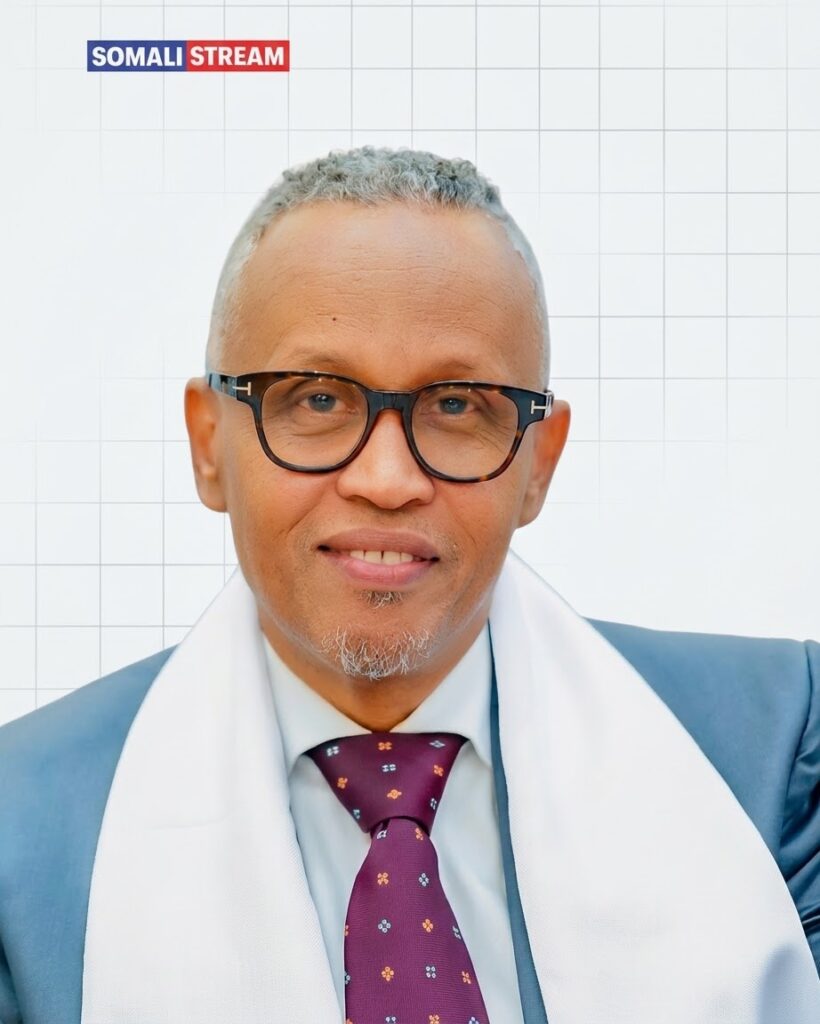
Abdullahi Hamud Mohamed, is the Deputy Chairperson of Xaqsoor Party and Former State Minister of Federal Government.