


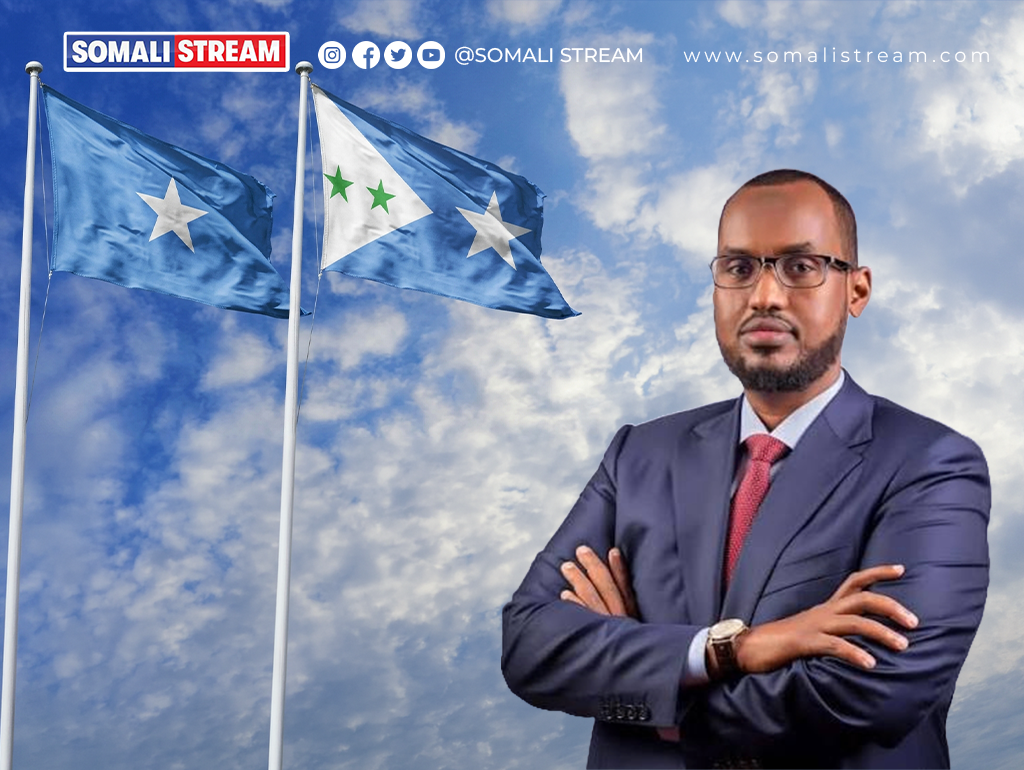
Liban Ahmed Hassan has been elected president of Galmudug State for the next five years, securing 72 votes in a parliamentary election that could carry consequences far beyond the central Somali region he will now lead.
The election result was announced by Hussein Mohamed Nur, Speaker of the Galmudug Parliament. His rival, Abdullahi Dirie, received 14 votes, while three votes were declared invalid.
The result places Liban at the centre of a consequential political moment for Somalia.
His presidency comes as the federal government faces difficult relations with regional administrations and opposition figures, alongside continuing disputes over the country’s political and electoral arrangements.
Yet the significance of his election lies not simply in the number of votes he received or the office he has secured. It also lies in the breadth of political attention his victory has attracted, including congratulations from serving officials, former prime ministers, former Galmudug presidents and members of the federal parliament.
That response could give the incoming president an opportunity to establish himself as a political intermediary at a time when Somalia urgently needs dialogue between competing centres of power.
The challenge is whether Liban can turn that goodwill into a credible national role without compromising his independence or neglecting the people of Galmudug.
A decisive parliamentary victory
Galmudug parliamentarians elected Liban Ahmed Hassan to lead the regional administration for the next five years, according to the result announced by the Speaker of Parliament. The declared figures were:
- Liban Ahmed Hassan: 72 votes.
- Abdullahi Dirie: 14 votes.
- Invalid votes: 3.
The outcome gives Liban a substantial parliamentary mandate at the outset of his presidency. However, the longer-term strength of his leadership will depend on his ability to maintain political support, govern effectively and establish constructive relationships with regional and federal institutions.
The election has also prompted a notable response from across Somalia’s political establishment, with figures associated with different administrations and political traditions acknowledging the result.
The congratulatory messages have come from several prominent Somali political figures, underlining the national interest surrounding the change of leadership in Galmudug.
Ahmed Moalim Fiqi, Somalia’s Minister of Defence, congratulated Liban on his election.
His message highlighted the importance of the new administration’s responsibilities at a time when security and political cooperation remain central concerns for Somalia.
Former Prime Minister Mohamed Hussein Roble also congratulated Liban, as did former Prime Minister Omar Abdirashid Ali Sharmarke.
Former Galmudug presidents Abdikarim Hussein Guled and Ahmed Duale Gelle Haaf also welcomed Liban’s election.
Their messages carry particular regional relevance. Both men have previously occupied the office Liban is preparing to assume and understand the political responsibilities and competing expectations attached to governing Galmudug.
Abdirahman Odawaa, a member of Somalia’s House of the People, also congratulated the newly elected president, adding a parliamentary voice to the expressions of goodwill.
The outgoing Galmudug president, Ahmed Abdi Karie, widely known as Qoorqoor, congratulated Liban Ahmed Hassan on his election. He also extended congratulations to the newly elected vice-president, Abdiweli Ibrahim Aden, who will serve alongside Liban during the administration’s five-year term.
The outgoing president’s message represents an important moment in the transition between administrations. A peaceful and orderly transfer of authority, accompanied by cooperation between outgoing and incoming officials, would help establish confidence in Galmudug’s institutions and give the new leadership a stronger foundation for its work.
Taken together, the messages demonstrate that Liban’s election has attracted attention across a broad section of Somalia’s political establishment. The more important test, however, will be whether that goodwill develops into practical cooperation on governance, security and the national electoral question.
A president with an opportunity to bridge political divisions
Liban’s political opportunity rests partly on the possibility that he can maintain relationships with both the federal government and figures outside its immediate political circle.
Somalia’s federal system has been shaped by recurring disagreements over the distribution of authority, constitutional arrangements and the rules governing elections. These disputes have frequently complicated relations between Villa Somalia and the federal member states.
In such an environment, a regional president who can communicate with competing political camps may be particularly valuable.
For President Hassan Sheikh Mohamud, Liban could become a useful interlocutor in efforts to restore dialogue with regional leaders and opposition figures. For the opposition, he could provide a channel through which concerns over the country’s political future can be raised with the federal leadership.
But the distinction between a mediator and a political messenger is crucial.
Liban will need to demonstrate that he can convey difficult messages to both sides, encourage meaningful compromise and resist pressure to become an instrument of any single political faction.
The regional challenge: relations with Puntland
Galmudug’s position also gives its new president an important regional responsibility.
Its relationship with neighbouring Puntland is shaped by geography, trade, security and social ties, particularly in and around Gaalkacyo. Cooperation between the two administrations can help support stability and commercial activity, while political confrontation can complicate local relations and broader regional security.
For Puntland President Said Abdullahi Deni, Liban’s election presents an opportunity and a political challenge.
The two leaders may have differing views on federal authority and the electoral arrangements governing Somalia. Yet their administrations have practical reasons to maintain communication and manage disagreements constructively.
Recognising a new regional leader does not necessarily require endorsing every aspect of the process through which he was elected. It can also reflect an understanding that neighbouring administrations must work together despite political differences.
Liban could use his position to encourage that distinction, strengthening regional dialogue while protecting Galmudug’s interests.
Whether he succeeds will depend on his ability to avoid being drawn into the wider competition between the federal government and regional political opponents.
A test for Villa Somalia
Liban’s election also raises a broader question about the federal government’s approach to regional leadership. Political support from Mogadishu can help a regional administration establish itself, but federal backing alone cannot guarantee durable local legitimacy or effective government.
Experiences elsewhere in Somalia have demonstrated the difficulties that can arise when changes in regional leadership are accompanied by significant political resistance.
The situations in South West State and Hirshabelle have illustrated how disputes over authority can persist even after a new administration has taken office.
Galmudug now has an opportunity to demonstrate that a leadership transition can be followed by wider political engagement and effective administration.
For Villa Somalia, the lesson is that the success of a regional president should not be measured solely by his relationship with the federal leadership. It should also be assessed through his ability to govern his region, maintain constructive relations with political opponents and contribute to national stability.
If Liban is expected merely to endorse the federal government’s political agenda, his potential value as an intermediary will be diminished. If he is allowed to develop an independent voice, he could help create space for negotiations that might otherwise be difficult to initiate.
The national electoral question
The most consequential challenge facing Somalia remains the need for a credible political process through which its competing leaders can resolve disagreements over elections and the constitutional framework.
When the federal government, opposition and regional administrations disagree over the rules of political competition, the dispute becomes larger than the immediate question of who holds office. It becomes a question of whether the country’s institutions can command confidence across political divisions.
Liban could contribute to efforts to restore a consultative forum in which federal and regional leaders, alongside opposition representatives, can discuss the electoral framework and agree on a workable way forward.
Such a process would need to address substantive disagreements, not simply produce public declarations of unity.
The parties would need to establish common ground on electoral arrangements, institutional responsibilities and the mechanisms through which disputes can be resolved. Any agreement would also need sufficient political acceptance to endure beyond the immediate interests of the leaders negotiating it.
Liban cannot deliver such an agreement alone. But he could help bring political actors together and encourage them to consider compromise before disagreements become more difficult to manage.
For President Hassan Sheikh, this could provide an opportunity to rebuild relationships with political actors whose cooperation is essential to a durable settlement.
For the opposition, it could offer a route to negotiations without requiring it to abandon its concerns at the outset.
For Somalia, it could help shift political competition away from recurring confrontation and towards a more predictable institutional process.
A five-year mandate, with expectations to match
Liban Ahmed Hassan begins his presidency with a substantial parliamentary victory and a series of congratulatory messages from prominent figures across Somalia’s political landscape.
The new administration will be judged on its ability to meet the expectations of Galmudug’s population, strengthen public institutions, support security and economic cooperation, and maintain constructive relations with neighbouring administrations.
Its national influence will depend on whether it can contribute meaningfully to resolving the political disputes that continue to challenge Somalia’s federal system.
The immediate priority should be to consolidate the transition, engage political constituencies across Galmudug and establish clear priorities for the administration. From there, Liban can begin to demonstrate whether his presidency will be defined by regional governance alone or by a broader contribution to national political reconciliation.
His opportunity is considerable, but so are the risks.
If he becomes too closely identified with one political camp, he could lose the confidence of those who might otherwise engage with him. If he focuses exclusively on national mediation, he could disappoint Galmudug’s own citizens. And if the expectations surrounding his election are not matched by practical results, the goodwill now expressed by senior figures could prove short-lived.
The most successful course would combine effective regional government with principled engagement in national politics.
Liban does not need to agree with every political faction to become a credible intermediary. He needs to show that he can listen to them, challenge them when necessary and help identify a settlement that no single side could impose alone.
His election has created an opportunity for Galmudug to play a constructive role in Somalia’s political future.
