


Abstract
Somalia became the eighth Partner State of the East African Community (EAC) in March 2024. It joined a bloc that already operates a Common Market Protocol providing for free movement of labor and mutual recognition of qualifications. This article assesses whether Somalia’s human capital is ready for those obligations. It combines human capital theory with Balassa’s stages of economic integration to argue that the gains from accession depend on human capital readiness and that the demands of readiness rise sharply at the common market stage. The study uses a desk-based descriptive and analytical design. It draws on twelve education, health and labor indicators from the World Bank World Development Indicators, the World Bank Human Capital Index (HCI) and a thematic review of Somalia’s national human capital baseline and the institutional literature on accession. Adult literacy stood at 54.00 percent in 2022. Gross secondary enrollment was 3.86 percent for boys and 2.71 percent for girls in 2023. Under-five mortality was 106.10 per 1,000 live births in 2022 and labor force participation was 33.90 percent in 2023. Somalia is the only Partner State without an HCI value. It also lacks a National Qualifications Framework, the institutional basis for joining EAC mutual recognition agreements. South Sudan, the closest precedent, needed about eight years after accession to join one such agreement. The article identifies three priority gaps: the secondary and technical education pipeline, qualification recognition infrastructure and statistical capacity. It proposes phased actions for the Federal Government of Somalia, the EAC Secretariat and development partners. The study contributes the first assessment of Somalia’s human capital measured directly against its EAC Common Market obligations.
Keywords: human capital; regional economic integration; East African Community; Somalia; Common Market Protocol; mutual recognition; fragile states
JEL classification: F15; J24; O15; O55
Highlights
- Somalia joined the EAC at the common market stage, where human capital demands are highest.
- Gross secondary enrollment was below 4 percent for both boys and girls in 2023.
- Somalia is the only EAC Partner State without a Human Capital Index value.
- No National Qualifications Framework yet exists to support mutual recognition of qualifications.
1 Introduction
Human capital, the stock of knowledge, skills and health embodied in a population, is widely recognized as a central source of economic growth. The World Economic Forum (2016) argues that a nation’s human capital endowment can matter more for long-term success than almost any other economic resource. In the Sustainable Livelihoods Framework, human capital is one of five capitals, alongside natural, financial, physical and social capital, that jointly shape a household’s or a nation’s capacity to sustain its livelihood (Heritage Institute for Policy Studies [HIPS] & City University of Mogadishu, 2020).
For Somalia, human capital cannot be separated from more than three decades of civil conflict, state collapse and recurrent humanitarian shocks. The national baseline study by HIPS and City University of Mogadishu (2020) drew on more than 1,000 stakeholder consultations, 190 key informant interviews and 80 focus group discussions across the Federal Member States between July 2018 and November 2019. It found that Somalia’s human capital indicators remain among the weakest in the world. Nearly half the population cannot read or write. Gross primary enrollment stood at about 32.7 percent in 2019 and secondary enrollment at 18.4 percent. Youth unemployment was estimated at 75 percent. Somalia would need about 97,700 additional physicians, nurses and midwives by 2030 to approach universal health coverage targets. Weak regulation, fragmented federal governance and chronic underinvestment in technical and vocational education and training (TVET) compound these deficits.
It is against this backdrop that Somalia’s accession to the East African Community (EAC) must be understood. Somalia applied in July 2022. The EAC Heads of State Summit admitted it as the eighth Partner State on 24 November 2023 (AllAfrica, 2023). Somalia deposited its instrument of ratification in Arusha on 4 March 2024 and became a full member (East African Community [EAC], 2024a). Admission required Somalia to show adherence to the criteria in Article 3 of the Treaty for the Establishment of the EAC, including good governance, democracy, the rule of law and potential contribution to regional integration (AllAfrica, 2023).
Membership places Somalia in a bloc with a combined gross domestic product of about USD 305.3 billion, intra-EAC trade growth of 11.2 percent and a common market of more than 300 million people (Indian Council of World Affairs [ICWA], 2024). The International Monetary Fund (IMF, 2024) identifies several channels of gain for Somalia: trade diversification, faster state-building and fiscal reform, stronger incentives for consensus between the Federal Government of Somalia (FGS) and the Federal Member States (FMS) and access to EAC capacity-building support. The IMF ties these gains explicitly to human capital. It notes that sustaining macroeconomic stability under climate shocks and regional competition will require substantial investment in infrastructure, human capital and agriculture. It also estimates that raising education access to the level of Low Human Development countries and closing gender gaps in education could raise real GDP by close to 40 percent over 25 years.
Integration is not automatically beneficial. Free movement of labor, goods, capital and services under the EAC Common Market Protocol exposes Somali workers, students and professionals to direct competition with counterparts from Kenya, Uganda, Tanzania, Rwanda, Burundi, South Sudan and the Democratic Republic of Congo. Most of these economies have more mature education systems, more diversified labor markets and longer-established professional quality-assurance frameworks (Aidid, 2024). Without a deliberate national strategy to raise the skills, health and productivity of its population, Somalia risks asymmetric gains. The benefits of integration could accrue to better-prepared Partner States while Somali labor remains confined to low-value, informal segments of the regional economy.
1.1 Problem and research questions
Existing analyses of Somalia’s EAC membership focus mainly on trade, security and institutional dimensions. They give little systematic attention to how human capital deficits will shape Somalia’s ability to compete under free movement of labor and services. Research on Somalia’s human capital, in turn, does not engage with the specific labor mobility and qualification recognition requirements of EAC membership. This article addresses that gap. Its general objective is to assess Somalia’s human capital readiness for EAC integration and to recommend measures to strengthen it within the 2024 to 2029 accession transition period. It asks four questions:
- How do Somalia’s current education, health and labor indicators compare with available EAC benchmarks?
- To what extent does Somalia meet Common Market Protocol requirements on labor mobility and qualification recognition?
- Which priority human capital gaps most limit Somalia’s competitiveness in the EAC labor market and what opportunities and risks follow from them?
- What sequenced policy actions can close these gaps within the EAC integration roadmap?
1.2 Contribution
The article makes three contributions. First, it is the first study to assess Somalia’s human capital directly against its EAC Common Market obligations, linking two literatures that have so far developed in isolation. Second, it combines human capital theory with Balassa’s (1961) stages of integration to frame a stage-entry mismatch: Somalia entered the EAC at the common market stage, where human capital and institutional demands are highest, rather than at the free trade stage. Third, it treats the absence of Somali data, including the lack of any HCI value, as evidence of a readiness deficit in its own right. It then uses South Sudan’s accession experience to set a realistic benchmark for how long qualification recognition may take.
The article proceeds as follows. Section 2 sets out the theoretical framework and reviews the literature. Section 3 describes the data and methods. Section 4 presents the results. Section 5 discusses them against the theory and the comparative evidence. Section 6 sets out policy implications and Section 7 concludes.
2 Theoretical framework and literature review
2.1 Human capital theory
The study rests first on human capital theory, whose modern form is credited to Schultz (1961) and Becker (1964). The underlying idea is older. Smith (1776) described the acquired and useful abilities of a nation’s inhabitants as a form of fixed capital realized in the person. Schultz (1961) argued that spending on education, training and health should be analyzed in the same way as investment in physical capital, since it raises the future productive capacity of individuals and nations. Becker (1964) formalized education and training as deliberate investments made in anticipation of higher productivity and earnings.
Endogenous growth theory extended this reasoning. Lucas (1988) and Romer (1990) treat the accumulation of human capital as a direct driver of long-run growth, because a more skilled population generates and absorbs new knowledge and technology more effectively. Following Goldin (2016), this study defines human capital as the stock of knowledge, skills, health and social and personality attributes embodied in a population’s capacity to work and produce value. The definition spans education, health and labor market readiness, the three domains assessed here.
The theory carries a direct implication for accession. Removing tariff and non-tariff barriers to trade, capital and labor does not by itself generate benefit. The returns to market access depend on the productive capacity of the population that must compete within that market (World Economic Forum, 2016).
2.2 Regional economic integration
The second strand is the theory of regional economic integration, most influentially set out by Balassa (1961). Balassa treated integration as both a process and a state of affairs and distinguished five progressive stages. A free trade area abolishes tariffs and quotas among members. A customs union adds a common external tariff. A common market extends free movement to labor and capital. An economic union harmonizes national economic policies. Total economic integration unifies monetary, fiscal and social policy under a supranational authority.
The EAC has followed this sequence. It established a Customs Union in 2005 and a Common Market in 2010, signed a Monetary Union protocol in 2013 that is not yet operational and envisages political federation as the final stage (ICWA, 2024). Somalia therefore joined a bloc already operating a Common Market Protocol. From accession it must progressively implement free movement of labor, services and capital and the right of establishment, rather than entering at the less demanding free trade stage (EAC, 2024a).
2.3 Synthesis: the stage-entry mismatch
Together the two theories yield the article’s central proposition. Balassa’s framework implies that the demands placed on an acceding state rise sharply at the common market stage. Free movement of labor exposes domestic workers directly to regional competition. Mutual recognition of academic and professional qualifications requires a functioning and credible national qualifications system, precisely the system Somalia’s own human capital strategy identifies as absent (HIPS & City University of Mogadishu, 2020). Human capital theory adds that the returns to this exposure depend on the skills and health of the workforce. The economic benefits of integration for an acceding state are therefore conditional on its human capital readiness. Integration without adequate investment risks asymmetric outcomes in which better-endowed Partner States capture most of the gains.
This proposition defines the conceptual framework. EAC accession is the independent variable, covering market access, free movement of labor and mutual recognition obligations under the Common Market Protocol. Somalia’s human capital, disaggregated into education, health and labor market readiness, is the mediating variable. Realized economic and developmental outcomes from integration form the dependent variable. The same accession event can thus produce very different outcomes depending on the pace and adequacy of complementary human capital investment.
2.4 Human capital and integration outcomes
A substantial empirical literature links human capital to growth and to a country’s capacity to benefit from trade and market integration. Growth-accounting studies find that education raises labor productivity and contributes directly to output growth. Romer (1990) treats the stock of human capital as an input into new ideas and technologies that sustain growth. European Union enlargement, the most studied case of common market accession, shows that acceding states with weaker initial human capital and institutions experienced more uneven outcomes, including outward migration of skilled labor to wealthier members, commonly described as brain drain (Krieger-Boden & Soltwedel, 2013). The HIPS and City University of Mogadishu (2020) baseline warns of a similar dynamic for Somalia: free movement of labor can produce unfavorable competition for a country with underdeveloped education and training systems unless deliberate investment accompanies accession.
2.5 Comparative precedent: South Sudan
South Sudan, which acceded in 2016, is the case most comparable to Somalia. Both are post-conflict, fragile states that joined after Kenya, Uganda, Tanzania, Rwanda and Burundi had built more mature economies and institutions. A policy analysis of South Sudan’s accession argued that the country needed to concentrate scarce resources on education and health to build a healthier and more productive workforce. It concluded that human capital, rather than natural resource endowment, would decide whether South Sudan could diversify and benefit from membership (Sauvé, 2012).
South Sudan’s later record shows both the promise and the slow pace of this path. In October 2024 it became the sixth Partner State to accede to the EAC Mutual Recognition Agreement (MRA) for engineers, under which Partner States recognize professional registrations granted by one another and so ease cross-border mobility (EAC, 2024b). Joining a single professional mobility instrument took about eight years after accession. This indicates the scale and duration of the institutional and human capital groundwork the common market demands of a fragile, late-acceding state.
2.6 Skills mismatch and labor market readiness
A related literature examines the persistent gap between what African education systems produce and what labor markets demand. It argues that closing this gap requires competence-based, industry-aligned training standards (Rayer et al., 2023). Somalia’s baseline research corroborates this. It identifies the absence of a demand-driven TVET system and of reliable labor market information to guide educational and vocational choices as first-order constraints (HIPS & City University of Mogadishu, 2020). For the sectors most relevant to Somalia, namely agribusiness, livestock and fisheries value chains, health services and construction, the same source concludes that skills development must be demand-led and data-driven if it is to improve labor market and regional competitiveness.
2.7 Somalia’s human capital and accession literature
The most comprehensive assessment of Somalia’s human capital remains the HIPS and City University of Mogadishu (2020) baseline and strategy, summarized in Section 1. In labor, it attributes high youth unemployment in large part to the absence of a National Qualifications Framework (NQF) and to weak alignment between training outputs and employer demand. Its recommendations include a national qualifications authority, demand-driven TVET reform, English proficiency standards aligned to international benchmarks such as TOEFL or IELTS and national internship programs. The IMF (2024) complements this by quantifying the growth payoff of closing education access and gender gaps, which provides an empirical anchor for the proposition in Section 2.3.
A smaller literature addresses accession itself. The EAC Secretariat (EAC, 2024a), ICWA (2024) and Aidid (2024) trace its political and procedural course from application in July 2022 to full membership in March 2024. They identify trade diversification, access to a large common market and closer security cooperation as the main expected benefits. Aidid (2024) also flags the risk that free movement will expose Somali workers to competition from Partner States with more mature education and quality-assurance systems. Yet this literature treats human capital as a background risk rather than as the variable that determines the success of accession.
2.8 Research gap
The literature establishes that human capital shapes how far a country can benefit from regional market access (Balassa, 1961; Becker, 1964; Romer, 1990; Schultz, 1961). It also documents Somalia’s deficits in education, health and labor in detail (HIPS & City University of Mogadishu, 2020). The two bodies of work have not been joined. Studies of Somalia’s accession (Aidid, 2024; EAC, 2024a; ICWA, 2024; IMF, 2024) focus on trade, security and institutions, while the human capital literature does not engage with EAC labor mobility and qualification recognition requirements. No existing study assesses Somalia’s human capital against its EAC obligations or uses a comparable accession case to project a realistic path. This article fills that gap.
3 Data and methods
3.1 Research design
The study uses a desk-based, descriptive and analytical design built on secondary qualitative and quantitative data. Three considerations shaped this choice. First, a comprehensive primary baseline of Somalia’s human capital was recently completed (HIPS & City University of Mogadishu, 2020), so duplicating that effort was neither necessary nor feasible. Second, accession was finalized only in March 2024. The relevant evidence therefore consists mainly of treaty and protocol documents, institutional assessments and macroeconomic analyses rather than data that household or firm surveys could capture in the study period. Third, security and access constraints acknowledged in the baseline study continue to limit new primary data collection in several regions. The design is descriptive in documenting Somalia’s indicators and EAC requirements. It is analytical in using the framework in Section 2 to examine the relationship between the two.
3.2 Data sources
The study draws on three categories of secondary data. The principal qualitative source is the Human Capital Development Strategy for Somalia (HIPS & City University of Mogadishu, 2020), used for its baseline findings and recommendations. It is supplemented by the IMF Selected Issues paper on Somalia (IMF, 2024), official EAC Secretariat communications (EAC, 2024a, 2024b) and analyses by ICWA (2024) and Aidid (2024).
Quantitative indicators come from the World Bank World Development Indicators (WDI) Somalia country extract, dataset code API_SOM_DS2 (World Bank, 2024b). The extract reports about 1,496 indicators for 1960 to 2023. Twelve indicators were retained across the three domains: five for education, three for health and four for labor. Table 1 lists each with its WDI code. Human Capital Index values for the seven other Partner States come from the World Bank Human Capital Data Portal (World Bank, 2024a). The theoretical framework draws on human capital theory (Becker, 1964; Lucas, 1988; Romer, 1990; Schultz, 1961) and integration theory (Balassa, 1961).
3.3 Data collection procedure
Data collection proceeded in three stages. In the first, the HIPS and City University of Mogadishu (2020) strategy and the IMF (2024) paper were reviewed in full to extract indicator values, policy findings and statements relevant to the research questions. In the second, the WDI extract was screened against keyword filters for the three domains. The twelve indicators retained were then extracted by their WDI codes. In the third, institutional sources on accession (Aidid, 2024; EAC, 2024a, 2024b; ICWA, 2024) were reviewed to establish the timeline, the legal obligations and the comparative precedent of South Sudan.
3.4 Analysis
The quantitative analysis is descriptive. For each indicator the most recent non-missing value between 2010 and 2023 was selected, so reference years differ across indicators. Extraction, reshaping and plotting were done in R using the readxl, dplyr, tidyr and ggplot2 packages; the extraction code is given in Appendix A. Somalia’s position relative to the EAC is assessed through the HCI, the only composite measure with values for the other seven Partner States. A time-series or trend analysis was not attempted because most Somali indicators have only one or two observations across 1960 to 2023, too few for meaningful trend estimation.
Qualitative material was analyzed thematically against the research questions. The analysis sought recurring findings, points of consensus and gaps between the human capital and accession literatures. Readiness against the Common Market Protocol was assessed by mapping each core requirement to the available evidence (Table 2). Quantitative findings were triangulated against the baseline study wherever both sources report a comparable measure.
3.5 Data limitations
Somali coverage in the WDI is sparse relative to other Partner States. The HCI has no value for Somalia in any year. Most education indicators, including net enrollment and learning poverty, have observations for only one or two years, typically 2019, 2022 or 2023. The study treats this sparsity as substantive evidence. It corroborates the baseline finding that national statistical infrastructure is critically underdeveloped, which bears directly on Somalia’s capacity to meet EAC monitoring, reporting and recognition requirements. The quantitative results should be read as point-in-time snapshots rather than trends. Because membership took effect only in March 2024, no post-accession data on its effects were available, so the forward-looking analysis relies on comparative precedent, chiefly South Sudan.
4 Results
Somalia’s indicators are weak in every domain, it has no HCI value and it does not yet meet the core Common Market Protocol requirements on qualification recognition and reporting. Table 1 reports the most recent value for each of the twelve indicators and Figure 1 displays them by domain. Reference years differ because Somali reporting is uneven (Section 3.5).
Table 1. Somalia’s most recent available human capital indicators
| Domain | Indicator | WDI code | Year | Value |
| Education | Adult literacy rate (%) | SE.ADT.LITR.ZS | 2022 | 54.00 |
| Primary enrollment, male (% gross) | SE.PRM.ENRR.MA | 2023 | 23.10 | |
| Primary enrollment, female (% gross) | SE.PRM.ENRR.FE | 2023 | 19.24 | |
| Secondary enrollment, male (% gross) | SE.SEC.ENRR.MA | 2023 | 3.86 | |
| Secondary enrollment, female (% gross) | SE.SEC.ENRR.FE | 2023 | 2.71 | |
| Health | Under-five mortality (per 1,000 live births) | SH.DYN.MORT | 2022 | 106.10 |
| Maternal mortality ratio (per 100,000 live births) | SH.STA.MMRT | 2020 | 621.00 | |
| Births attended by skilled health staff (%) | SH.STA.BRTC.ZS | 2019 | 31.90 | |
| Labor | Labor force participation rate (%) | SL.TLF.CACT.ZS | 2023 | 33.90 |
| Youth unemployment, ages 15 to 24 (%) | SL.UEM.1524.ZS | 2023 | 33.85 | |
| Total unemployment (%) | SL.UEM.TOTL.ZS | 2023 | 18.94 | |
| Labor force, female share (%) | SL.TLF.TOTL.FE.ZS | 2023 | 31.17 |
Note. Most recent non-missing value between 2010 and 2023. Source: World Bank (2024b), WDI Somalia extract API_SOM_DS2.
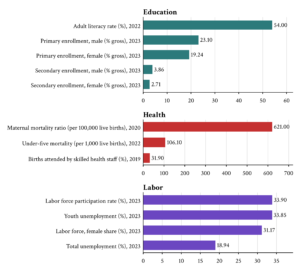
Figure 1. Somalia’s human capital snapshot by domain, latest available data. Source: World Bank (2024b).
4.1 Education
Adult literacy stood at 54.00 percent in 2022, so close to half of adults cannot read or write. This is broadly consistent with the baseline finding of literacy below 50 percent before 2020 (HIPS & City University of Mogadishu, 2020) and suggests limited improvement since. The sharpest pattern is the collapse between primary and secondary levels. Gross primary enrollment was 23.10 percent for boys and 19.24 percent for girls in 2023, while gross secondary enrollment was 3.86 and 2.71 percent. Secondary enrollment is therefore about one sixth of the primary level for boys and one seventh for girls. Most children who enter primary school do not progress to secondary education.
These WDI values are lower than the baseline’s 2019 figures of 32.7 percent for primary and 18.4 percent for secondary enrollment. The gap may reflect differences in source, definition and population estimates. It also reinforces the case for a unified national data system. Either source shows that the pool of secondary-educated Somalis is small. This matters because the mobility and recognition provisions of the Common Market Protocol presuppose a secondary- and tertiary-educated workforce for skilled and professional categories.
4.2 Health
Health indicators point to substantial health-related constraints on productivity. Under-five mortality stood at 106.10 deaths per 1,000 live births in 2022. The maternal mortality ratio was 621 deaths per 100,000 live births in 2020, among the highest recorded globally. Only 31.90 percent of births were attended by skilled health staff in 2019. These figures corroborate the baseline finding that the shortage of health workers undermines both health outcomes and the wider human capital base. They are also consistent with its estimate that about 97,700 additional health professionals are needed by 2030 (HIPS & City University of Mogadishu, 2020).
4.3 Labor
Labor force participation stood at 33.90 percent in 2023. Roughly two thirds of the working-age population was therefore outside the labor force as measured, neither working nor seeking work. Youth unemployment was 33.85 percent and total unemployment 18.94 percent. The youth figure is well below the 75 percent reported in the baseline for 2019. The divergence is partly attributable to method: the WDI series is modeled by the International Labour Organization, while the baseline rests on consultations and survey evidence. On either measure youth unemployment is a persistent, first-order challenge. Women made up 31.17 percent of the labor force, a wide gender gap consistent with the IMF (2024) finding that closing gender gaps in education and participation is a major source of unrealized growth.
4.4 Somalia relative to other Partner States
Kenya records the highest HCI in the bloc at 0.55, followed by Tanzania at 0.40, Burundi at 0.39, Uganda and Rwanda at 0.38 each and the Democratic Republic of Congo at 0.37. South Sudan records the lowest among existing members at 0.30 (World Bank, 2024a). Somalia has no HCI value for any year (Figure 2).
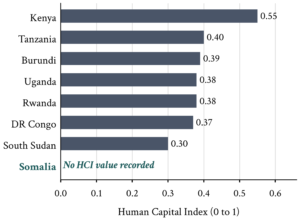
Figure 2. Human Capital Index: Somalia compared with other EAC Partner States. Source: World Bank (2024a).
The missing value cannot be read as a score below South Sudan’s, since the index is not computed. It is nonetheless a finding. It shows that Somalia’s statistical infrastructure has not reached the data threshold the World Bank requires to compute a composite score. Somalia is the only Partner State in this position. Combined with the component indicators in Table 1, the evidence places Somalia at or near the bottom of the bloc. It enters the common market stage with demonstrated capacity well below what that stage demands.
4.5 Readiness against the Common Market Protocol
The Common Market Protocol, in force since 2010, requires Partner States to implement free movement of labor, the right of establishment and mutual recognition of academic and professional qualifications progressively (ICWA, 2024). Table 2 maps the core requirements examined in this study to the evidence.
Table 2. Somalia’s readiness against core Common Market Protocol requirements
| Requirement | Evidence | Readiness |
| Mutual recognition of academic and professional qualifications | No National Qualifications Framework (HIPS & City University of Mogadishu, 2020); no institutional mechanism to implement MRAs such as the engineers’ MRA (EAC, 2024b) | Not yet met |
| Free movement of skilled and professional labor | Gross secondary enrollment of 3.86% (male) and 2.71% (female) in 2023; adult literacy of 54.00% in 2022 | Severely constrained |
| Monitoring, reporting and benchmarking | No HCI value in any year; most education indicators observed in only one or two years | Not yet met |
| Time to participate in recognition instruments | South Sudan needed about eight years after accession to join one MRA (EAC, 2024b) | Long preparation period likely |
Three findings follow. First, without an NQF Somalia lacks the mechanism through which agreements like the engineers’ MRA could apply to Somali professionals. Second, low secondary and tertiary enrollment means a thin pipeline of graduates able to meet the qualification thresholds such agreements require. Third, South Sudan’s experience offers a realistic benchmark. Starting from a weaker evidenced position, Somalia should expect an equal or longer preparation period before its professionals can benefit from mutual recognition.
4.6 Priority gaps
The results converge on three priority gaps that most limit Somalia’s competitiveness in the EAC labor market (research question 3):
- The secondary and technical education pipeline. Secondary enrollment below 4 percent for both sexes caps the number of Somalis eligible for skilled mobility, whatever happens to primary enrollment.
- Qualification recognition infrastructure. The absence of an NQF blocks participation in mutual recognition and leaves Somali credentials unverifiable across the region.
- Statistical capacity. Without the data to compute an HCI or track core indicators, Somalia cannot meet EAC reporting obligations, target investment or demonstrate progress to partners.
The health workforce shortage cuts across all three. It lowers productivity directly and competes for the same scarce public and donor resources.
5 Discussion
5.1 The stage-entry mismatch confirmed
The results support the proposition set out in Section 2.3. Somalia’s human capital position is a binding constraint on its ability to turn EAC market access into realized benefit. Human capital theory predicts that market access yields returns only where a productive, skilled population can exploit it (Becker, 1964; Schultz, 1961). The evidence shows that this condition is not yet met. Literacy reaches only about half of adults, secondary enrollment is below 4 percent and two thirds of working-age people are outside the labor force.
Balassa’s (1961) framework explains why the constraint binds so tightly now. Had Somalia joined at the free trade stage, its main obligations would have concerned tariffs and quotas. It joined at the common market stage instead, where free movement of labor and mutual recognition of qualifications make the quality and certification of the workforce central. The demands of the stage Somalia entered exceed its demonstrated capacity on every dimension examined. This mismatch, rather than low human capital alone, is what distinguishes Somalia’s accession from a generic development challenge.
The findings also refine how the human capital and accession literatures relate. The accession literature treats human capital as a background risk (Aidid, 2024; ICWA, 2024). This study shows it is better understood as the mediating variable that determines whether accession produces convergence or asymmetry. The same treaty obligations could generate gains or losses for Somalia depending on the pace of complementary investment.
5.2 Data absence as evidence
A methodological implication concerns how missing data are read. In most cross-country work a missing value is a gap to be imputed or excluded. Here it carries information. Somalia is the only Partner State without an HCI value. Most of its education indicators have one or two observations across more than six decades. This sparsity is itself a measure of state capacity. It corroborates the baseline’s finding of critically weak statistical infrastructure (HIPS & City University of Mogadishu, 2020) and has a practical consequence: Somalia cannot yet meet the monitoring and benchmarking obligations that EAC membership entails. Researchers assessing other fragile acceding states could usefully treat data coverage as a readiness indicator in its own right.
5.3 Lessons from South Sudan and the European Union
South Sudan’s experience suggests that progress is possible but slow. A fragile, late-acceding state can move toward EAC benchmarks, but joining even one professional recognition instrument took about eight years (EAC, 2024b). Sauvé’s (2012) early warning that South Sudan should focus scarce resources on education and health applies with equal force to Somalia. Given Somalia’s weaker evidenced starting point, a comparable or longer timeline is the realistic expectation.
The European Union’s enlargement points to a further risk. Acceding states with weaker human capital saw skilled workers emigrate to wealthier members (Krieger-Boden & Soltwedel, 2013). For Somalia, free movement could have a similar effect on its small pool of qualified professionals, including health workers already in short supply. Free mobility may therefore deepen the very gaps that limit Somalia’s gains unless retention and training expand together.
5.4 Opportunities
The scale of the deficit also implies a large potential return. The IMF (2024) estimates that closing Somalia’s education access and gender gaps could raise real GDP by close to 40 percent over 25 years. Returns to such investment are likely to be larger at Somalia’s starting point than in more developed Partner States, where marginal gains are smaller. EAC membership also opens access to regional technical assistance, capacity-building programs and harmonization support (IMF, 2024). These could speed up the NQF and the demand-driven TVET reforms the baseline strategy recommends (HIPS & City University of Mogadishu, 2020). Finally, agriculture, livestock and fisheries are important to Somalia and to several Partner States. Targeted, sector-specific skills development could let Somalia build competitiveness in defined niches while broader indicators improve.
5.5 Risks
Three risks stand out. First, free movement may expose Somali workers to better-educated competitors from Partner States such as Kenya without a matching rise in Somali qualifications. Somali labor could then be confined to low-value, informal segments of the regional economy, as Aidid (2024) warns. Second, weak data coverage may prevent Somalia from meeting EAC monitoring, reporting and benchmarking obligations, which could slow its integration into regional programs. Third, the scale of investment implied by the gaps, such as the estimated 97,700 additional health workers needed by 2030 (HIPS & City University of Mogadishu, 2020), may outpace domestic and donor resources. Without a substantial and sustained increase in financing, Somalia may not converge toward other Partner States within the period in which integration gains are usually realized.
The outcome is not predetermined. It depends on the pace and adequacy of policy action in the years immediately after accession, which is the subject of Section 6.
6 Policy implications
The findings point to seven actions, four for the Federal Government of Somalia and three for the EAC Secretariat and development partners. Table 3 sequences them against the 2024 to 2029 transition period named in the study’s objective. Foundational actions come first because later ones depend on them.
Table 3. Recommended actions by lead actor and indicative sequence
| No. | Action | Lead actor | Gap addressed | Indicative sequence |
| 1 | Establish a National Qualifications Framework | FGS | Qualification recognition | Phase 1: start of transition period |
| 2 | Strengthen national statistical systems, including the data behind the HCI | FGS | Statistical capacity | Phase 1: start of transition period |
| 3 | Extend World Bank and EAC data collection instruments to Somalia | EAC Secretariat and partners | Statistical capacity | Phase 1: start of transition period |
| 4 | Provide phased technical assistance for qualification recognition and quality assurance | EAC Secretariat and partners | Qualification recognition | Phase 1 to Phase 2 |
| 5 | Expand secondary education and TVET ahead of further primary gains alone | FGS | Education pipeline | Phase 2: within transition period, continuing beyond 2029 |
| 6 | Target skills in agriculture, livestock and fisheries value chains | FGS | Education pipeline and labor competitiveness | Phase 2: within transition period |
| 7 | Calibrate the pace of Common Market Protocol implementation for Somalia | EAC Secretariat | All three gaps | Throughout, reviewed against progress |
Note. The sequence is proposed by the author from the dependencies between actions. It is indicative and not drawn from an existing EAC roadmap.
6.1 Federal Government of Somalia
Establishing an NQF is the first priority. It is a precondition for joining EAC mutual recognition instruments of the kind other Partner States have signed (EAC, 2024b). Its design can draw directly on the framework recommended in the national strategy (HIPS & City University of Mogadishu, 2020).
Statistical capacity should be built in parallel. Generating the indicators that underlie the HCI would close the data gap identified in Section 4.4 and allow Somalia to meet EAC monitoring and reporting obligations. It would also give policymakers the evidence needed to target investment.
Education policy should prioritize secondary and technical and vocational expansion over further primary enrollment gains alone. Given the steep drop between primary and secondary levels, the secondary gap is the more binding constraint on producing a workforce eligible for recognition and skilled mobility.
Sector-specific skills in agriculture, livestock and fisheries offer a nearer-term route to regional competitiveness. They allow Somalia to build defined niches while broader indicators improve over a longer horizon.
6.2 EAC Secretariat and development partners
The EAC Secretariat and partners should provide differentiated, phased technical assistance for qualification recognition and quality-assurance systems, drawing on lessons from South Sudan’s accession. They should support the extension of World Bank and EAC data instruments to Somalia so that its progress can be tracked on a comparable basis. Finally, the pace of Common Market Protocol implementation for Somalia should reflect its lower starting position. A calibrated pace would reduce the risk that rapid, unmanaged liberalization of labor mobility displaces Somali workers or drains the country’s small pool of professionals.
7 Conclusion
This article asked whether Somalia’s human capital is ready for the obligations of EAC membership. The answer is that it is not yet ready and that this gap is the principal constraint on Somalia’s ability to benefit from accession. Each research question received a clear answer. On benchmarks, Somalia’s education, health and labor indicators are weak across the board. It is also the only Partner State without an HCI value. On Common Market Protocol requirements, Somalia does not yet meet the conditions for mutual recognition of qualifications or for EAC monitoring and reporting. On priority gaps, the binding constraints are the secondary and technical education pipeline, qualification recognition infrastructure and statistical capacity. On policy, the study sets out seven sequenced actions led by the FGS, the EAC Secretariat and development partners.
The central contribution is to show that Somalia’s challenge is a stage-entry mismatch. By joining at the common market stage, Somalia took on obligations that presuppose a certified, mobile and measurable workforce. Its human capital position therefore matters more and sooner than it would have at an earlier stage of integration. The study also shows that data absence can serve as evidence of readiness and that comparative precedent, here South Sudan, can set realistic expectations for institutional timelines.
Accession should not be viewed solely as a source of risk. The scale of Somalia’s deficit corresponds to an unusually large potential return on investment (IMF, 2024). Membership also offers technical and institutional channels to accelerate it. The years immediately after accession are a critical window. Deliberate, well-targeted investment in that window will decide whether EAC membership becomes a driver of national development or a membership on paper that Somalia cannot use on the ground.
7.1 Limitations
The study has four main limitations. First, it relies on secondary data. Somalia’s indicators come from development partner databases and a baseline study rather than a unified national data system. Some WDI values also diverge from the baseline. Second, most indicators are single-year observations, so the results are snapshots rather than trends. Third, the only EAC comparison available on a common basis is the HCI, which has no Somali value, so the benchmarking is partly qualitative. Fourth, membership is recent, so the forward-looking analysis rests on comparative precedent rather than observed post-accession outcomes.
7.2 Further research
Future research should revisit these indicators once several years of post-accession data exist, to test whether Somalia converges toward or diverges from other Partner States. Household or firm surveys, once security conditions permit, would validate and update the secondary indicators used here. Sector-by-sector analysis of labor mobility outcomes and comparison of individual Somali indicators with Partner State values on the same WDI series would sharpen the benchmarking as Common Market Protocol implementation proceeds.
Declarations
Ethics. The study uses only publicly available secondary data and documents. It involved no human participants, so ethics approval was not required.
Data availability. The WDI and HCI data are publicly available from the World Bank (2024a, 2024b). The full R script used for extraction and visualization is available from the author on request.
Acknowledgments. The author thanks the East African Community Conference 2026 for the platform to present this research. Thanks also go to the government institutions, researchers, organizations and stakeholders whose publications and insights informed the study.
Hawo Dhamac
