


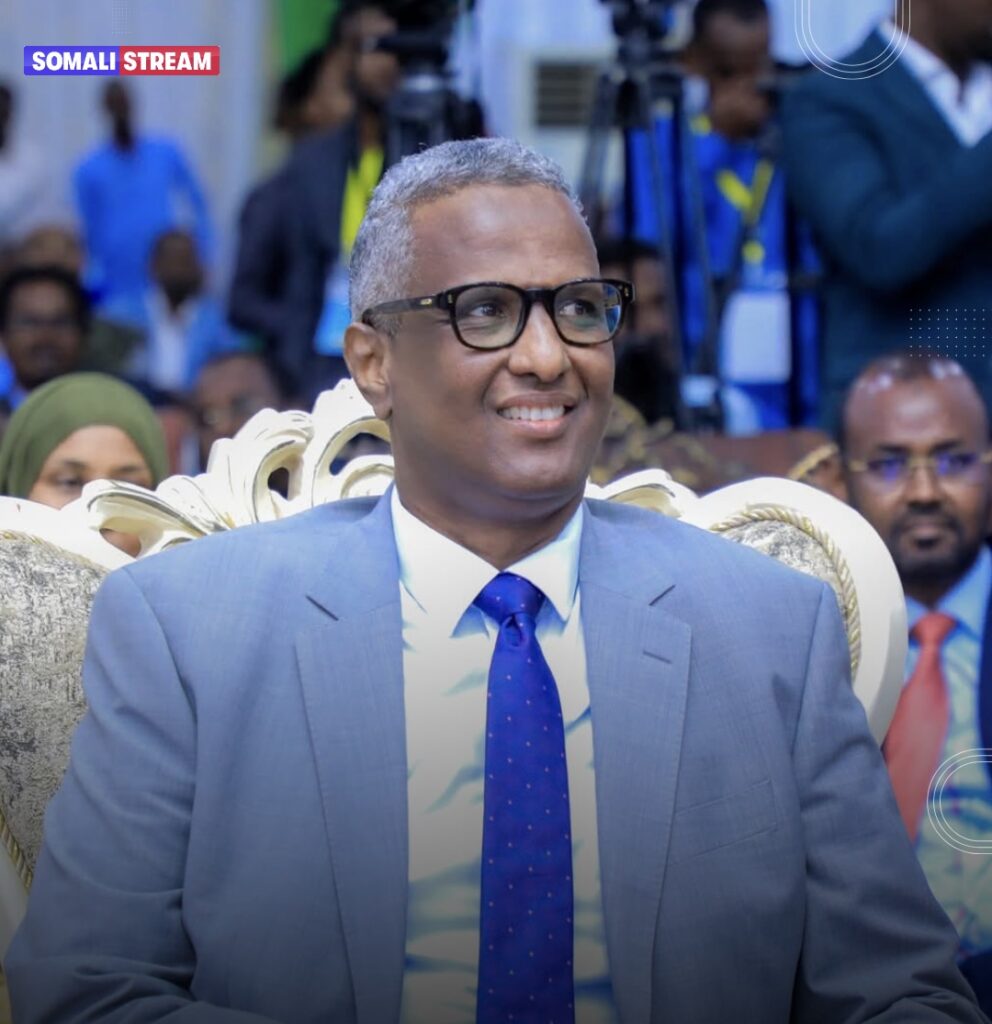
By Abdirahman Abdishakur Warsame
My father and my uncle, may Allah have mercy on them, were among the soldiers of the Somali National Army who fought in the wars between Somalia and Ethiopia in 1964 and 1977. Two of my brothers also served as military officers, and I myself completed two years of National Service training. I come from a family raised on a simple but profound belief: that the military exists to embody the unity, dignity, and defense of the nation.
April 12 is a day of remembrance—but it must also be a day of reckoning. When the Somali National Army was established in 1960, it stood as one of the few institutions capable of transcending clan, politics, and division. It commanded respect. It inspired loyalty. It represented the promise of a unified Somali state.
That promise was broken. The turning point came in 1969, when the army abandoned its constitutional role and became the instrument through which political power was seized. From that moment, it ceased to be a national institution and was recast as a mechanism of personal rule. A system of personalization took root, one that elevated a leader above the law, above institutions, and ultimately above the nation itself.
The consequences were not abstract. They were devastating
The military’s professionalism eroded. It was drawn into wars it could not sustain and internal conflicts it should never have fought. It became entangled in repression, division, and political survival. By the time the state collapsed in 1991, the lesson was unmistakable: when a national army loses its neutrality and independence, it does not merely fail it contributes to the collapse of the state it was meant to protect.
Somalis have lived the consequences ever since state collapse, fragmentation, and national humiliation. That is why the idea of rebuilding the Somali National Army today carries such emotional weight. It speaks to dignity restored, sovereignty reclaimed, and a nation standing on its own feet again.
But sentiment cannot replace structure. The central lesson of our history is clear: a national army cannot be rebuilt on the same foundations that led to its destruction. It cannot be anchored in personalities, patronage, or political expediency. It must rest on law, institutional discipline, constitutional order, and a clear, uncompromising loyalty to the Somali people—not to any individual.
And yet, troubling patterns are re-emerging. What we are witnessing today is not simply the rebuilding of an army, but the gradual re-personalization of it. The narrative being advanced suggests that the revival of the Somali National Army is the achievement of a single leader. State media, political messaging, and public staging increasingly project the image of one man as the architect of a national institution.
This is not merely inaccurate, it is dangerous. No individual builds a national army; it is built by nations, sustained by institutions, and forged through collective sacrifice. When an army is personalized, it is politicized. When it is politicized, it is divided. And when it is divided, it eventually breaks.
We have seen this before.
President Hassan Sheikh Mohamud’s approach reflects this dangerous trajectory. The army has been deployed not strictly as a national force, but at times as a political instrument inserted into regional dynamics, entangled in clan sensitivities, and shaped by patterns of favoritism, factionalism, and patronage. These are not signs of institutional strength; they are early warnings of institutional decay.
To ignore them is to invite repetition. This anniversary must not be reduced to ceremony or propaganda. It must be a moment of honesty. A moment to confront the gap between rhetoric and reality. A moment to ask whether we are building a national army or reconstructing the conditions that once destroyed it.
Somalia stands at a crossroads. We can build an army that is professional, constitutional, and nationally owned—an institution that commands respect because it serves the people. Or we can continue down a quieter, more subtle path toward personalization—one that will, in time, produce the same fractures, the same failures, and the same consequences.
History has already delivered its verdict. The only question that remains is whether we are prepared to listen.