


At the end of April, Somalia’s Minister of Interior, Ali Yusuf Ali Hoosh, publicly announced that the Federal Government had already decided that Speaker Sheikh Aden Mohamed Nur (Aden Madoobe) would become the leader of South West State. Long before — and even after — that declaration, everyone already knew Aden Madoobe was destined for the position. Yet despite this open acknowledgment, the government still proceeded to announce that there would be an “election” for the seat. The obvious question is: who was expected to believe that?
An election, by definition, is a fair, transparent and competitive process. It requires clarity on who the candidates are, which positions are being contested, location and dates the vote will take place, and the rules governing the contest. Credible elections operate within legal frameworks and established democratic procedures before, during, and after voting.
What happened in South West State, however, bore little resemblance to a real election beyond the mere use of the word itself. My conclusions are based not on speculation, but on the outcomes of what we witnessed, heard, and came to know. This article briefly examines what went wrong in the so-called election.
1. Before the Election
Before any credible election takes place, there must be agreement and transparency regarding the competing political parties or organizations, the list of candidates, the campaign process, and the number and identity of eligible voters.
In South West, however, the process moved forward without the public genuinely knowing which candidates represented which parties. No candidate openly campaigned before the people declaring, “I am contesting under this party,” while presenting their agenda to voters. There was no clear distinction regarding where candidates were running or under which officially recognized political organization they sought votes. This confusion created political uncertainty and deepened public distrust toward both the electoral process and Somalia’s fragile multiparty system.
2. Post-Election
Regardless of how events unfolded, once the public was ushered into voting on May 10, the result that emerged was exactly what many had expected from the beginning: the election appeared designed merely to legitimize a prearranged outcome. The Federal Government proudly claimed that South West had held a people-centered democratic election. But can this process truly be described as a public election? Did it satisfy even the minimum standards expected of democratic contests? The responses from rival candidates, participating political groups, election observers, and independent journalists all exposed the alarming weakness of Somalia’s democratic process.
While the country awaited official results, reports emerged that Villa Somalia had dispatched Members of Parliament to negotiate with one of the candidates said to have lost the vote. Financial incentives and political agreements were allegedly offered. If this was truly a legitimate popular election, why was bribery necessary afterward? A fair process should not require secret deals to secure acceptance.
Even more troubling, after the election, the government announced that seven of the participating organizations had formed an alliance in support of Aden Madoobe. But alliances and coalitions belong before the ballot box, not after the results are effectively predetermined. It gave the impression that the election itself was merely political theater.
Despite these concerns, the National Independent Electoral and Boundaries Commission (NIEBC) later announced that it was awaiting a decision from the Supreme Court of the Federal Republic of Somalia to validate the South West election results before proceeding with the next stages of the electoral process. The Commission had initially scheduled the election of the leadership of the South West State House of Representatives for May 18, 2026, but stated that the process could not move forward until the Court issued its ruling, as required under the Electoral Law. According to the Commission, once the decision is received, it will announce the swearing-in schedule for elected members and proceed with the elections for parliamentary leadership and the regional presidency in accordance with the previously published timetable. While the NIEBC reaffirmed its commitment to conducting transparent and lawful elections in line with Somalia’s Constitution and electoral laws, the situation has only deepened public confusion. The contradiction between the Commission’s insistence on awaiting judicial authorization and reports that the Court itself had not formally received an election petition raises even more serious questions about institutional coordination, legal clarity, and the credibility of the entire electoral process.
An election in which the candidates are unclear, public campaigning is absent, and party affiliations remain ambiguous can only be described as:
- A non-transparent election
- A symbolic or cosmetic election
- A process shrouded in ambiguity
- Or an election that failed to meet democratic and multiparty standards
3. What Are the Consequences of Such an Election?
The outcome of such a process was entirely predictable. Somalia has experienced similar political experiments before. There is an old Somali saying: “Elect the man who has already been selected.”
What happened in South West risks discouraging Somalis from believing in the ballot box altogether. Public confidence has been damaged. Although one-person-one-vote elections remain a national aspiration for many Somalis, the memory of South West may push that dream even further away.
Three dangerous consequences are already becoming visible:
1. Legal and Institutional Confusion
When there is no clarity regarding candidacy, constituencies, or voting procedures, legal disputes and political conflict inevitably follow. That is precisely the situation unfolding now, with several political organizations and candidates openly rejecting the process. Meanwhile, the Supreme Court and the Electoral Commission appear trapped in contradictory positions regarding responsibility for the results.
2. A Public Denied Genuine Choice
Citizens cannot make informed decisions when they are denied clear alternatives and recognizable candidates. Democracy cannot function where voters are expected to endorse outcomes they neither shaped nor understood.
3. Loss of Public Trust
An election conducted in this manner erodes trust in democratic institutions. The political tensions currently unfolding are themselves evidence of the damage caused by the South West process.
Despite all these concerns, the May 10 election remains clouded by political uncertainty and institutional confusion. The Electoral Commission, after remaining silent for an extended period regarding the results and the names of the winners, has now claimed it cannot announce the outcome without authorization from the Court.
What is even more astonishing is that the Court itself reportedly stated that no formal complaint or case related to the election had been submitted to it. Such contradictions only deepen suspicions regarding both the electoral process and the independence of the institutions tasked with overseeing it.
Conclusion
An election without transparency, accountability, and clear procedures cannot build either political legitimacy or public confidence. Instead, it risks producing instability, division, and prolonged political disputes.
My experience leads me to believe that the Federal Government may have introduced an entirely new method of assuming power — one that might best be described not as an election, but as a “selection through prior recognition.” If marketed internationally, perhaps it could even be presented as Somalia’s newest political invention.
At this rate, one might even argue that President Hassan Sheikh Mohamud could secure the Nobel Prize far more easily through this innovation than through the expensive nomination campaigns previously pursued on his behalf. As the Somali proverb says: advice cannot be forced upon those unwilling to hear it.
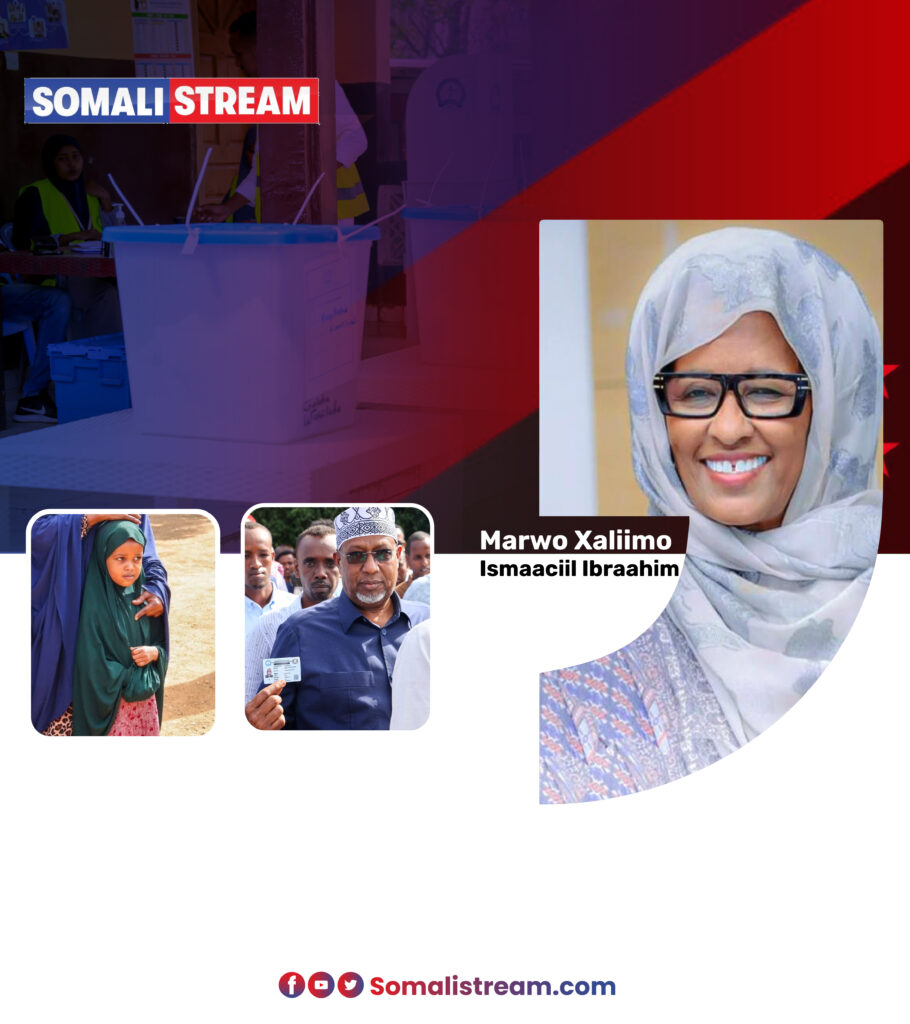
Halima Ismail Ibrahim (Halima Yareey) is the Former Chairperson of Somalia’s National Independent Electoral Commission.