


The EU–Somalia Business Forum 2026, held on 5–6 October under the theme “Invest in Somalia: Unlocking High-Potential Markets,” brought together Somali entrepreneurs, European businesses, investors, government representatives, financial institutions and development partners.
For two days, Mogadishu was not only the capital of Somalia; it became a place where ideas about Somalia’s economic future were exchanged, challenged and presented to the outside world. But beyond the speeches, presentations and networking sessions, I found myself thinking about a much bigger question:
Can Somalia turn the interest of investors into real economic opportunities for its people?
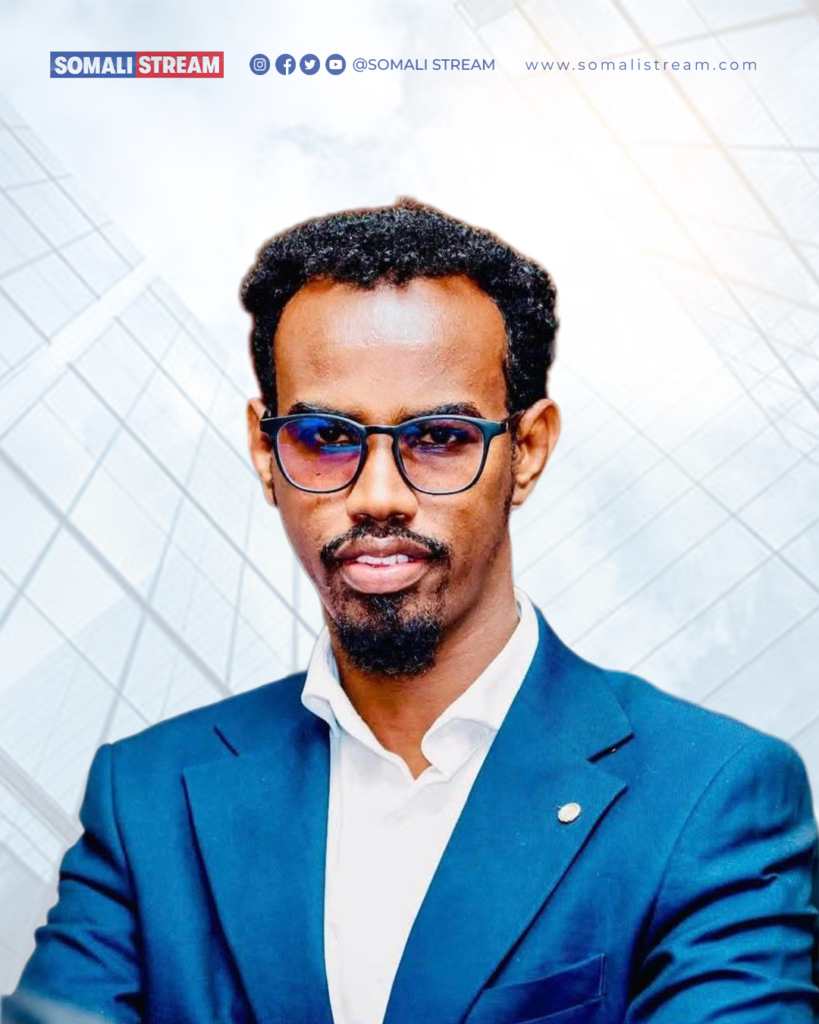
As someone working in media and public relations, I attended the forum with two perspectives. I was there as a participant, but I was also observing the conversations, the people behind them and the image of Somalia being presented to international partners.
What I saw was different from the Somalia that is often described in international headlines. Yes, Somalia continues to face serious challenges. Security concerns, limited infrastructure, access to finance and institutional capacity remain important issues. But inside the forum, another Somalia was visible—a Somalia of entrepreneurs, business leaders, innovators and young people looking for opportunities. That image deserves attention.
Changing the Way Somalia Is Seen
For many years, Somalia has largely been discussed internationally through the language of conflict, humanitarian assistance and political instability.
Those challenges are real. But they are not the complete story. A country is also defined by the people who build businesses, create jobs, develop technology, produce goods and take risks to create a better future. The EU–Somalia Business Forum provided a platform for that side of Somalia to be seen.
Walking through the event, I saw Somali businesses presenting their work and engaging directly with international companies and investors. I saw conversations that were not simply about Somalia’s problems, but about what Somalia could produce, export, develop and build.
That shift in conversation is important. Somalia should not only be viewed as a country in need of assistance. It should increasingly be viewed as a country with markets, businesses, resources, talent and investment opportunities. But changing the narrative is only the beginning.
Agriculture: Turning Resources into Value
Agriculture was one of the areas that caught my attention most strongly. Somalia has significant agricultural potential, as well as livestock and fisheries resources. Yet the country still depends heavily on imported food and products. This creates a fundamental economic question:
Why should a country with land, livestock, fisheries and a young workforce remain so dependent on imports?
The answer is not simply that Somalia needs more farmers. What Somalia needs is a stronger agricultural value chain. That means irrigation, modern farming equipment, agricultural inputs, storage facilities, cold-chain systems, processing plants, packaging, transportation and access to markets. A farmer who produces more but cannot store or sell the product profitably has not yet benefited fully from economic development.
This is why agricultural investment should be understood as more than an opportunity for investors. It can also contribute to food security, employment and local industrial development. Imagine Somali agricultural products being processed, packaged and branded locally before reaching regional and international markets. That would mean more than producing food. It would mean creating value inside Somalia.
Energy: The Foundation of Economic Growth
Another issue that deserves serious attention is energy. For businesses across Somalia, electricity remains expensive and unreliable compared with what many productive industries require.
Yet this challenge also represents an enormous investment opportunity. Somalia has strong potential for renewable energy, particularly solar and wind power. Investment in solar systems, mini-grids, renewable energy projects and clean cooking solutions could transform not only businesses but everyday life.
Affordable electricity can reduce operating costs for companies.
It can allow factories to operate more efficiently. It can support hospitals and schools. It can help farmers with irrigation and storage. It can strengthen digital businesses and small enterprises.
In other words, energy is not an isolated sector. Energy is the foundation upon which many other sectors depend. If Somalia succeeds in attracting long-term investment into affordable and reliable energy, the impact could reach almost every part of the economy.
Somalia’s Digital Advantage
Perhaps one of Somalia’s most interesting economic stories is its digital transformation.
Despite limited traditional infrastructure, Somalis have rapidly adopted mobile money, digital communication and technology-based services.
This demonstrates something important: Somali consumers are already willing to adopt new technology when it solves real problems.
The next step is to move from consumption to production.
The digital economy offers opportunities in finch, e-commerce, digital payments, software development, data services, digital marketing, cybersecurity and technology education.
For me, this area was particularly relevant because of my own background in media and communication. Somalia has a young population that is increasingly connected to the digital world. The question is no longer simply whether young Somalis can use technology.
The bigger question is:
Can they build businesses with it?
A young Somali should not have to be only a consumer of digital content. Young people can become programmers, designers, content creators, digital marketers, entrepreneurs, cybersecurity specialists and technology innovators. The digital economy also has another advantage: it can connect Somali talent to international markets without necessarily requiring everyone to leave the country.
That possibility should not be underestimated.
Trade and Logistics: From Production to Markets
Investment in production means little if products cannot move efficiently.
A farmer can produce high-quality crops, but if there is no reliable transportation, storage or market access, much of that value can be lost. A manufacturer can produce locally, but if importing raw materials is too expensive or exporting finished products is too difficult, competitiveness becomes a challenge.
This makes logistics a critical part of Somalia’s economic transformation. Ports, roads, warehouses, transportation networks and customs systems all play a role in determining whether Somali businesses can compete. Somalia’s geographical position also gives the country an important opportunity.
Located along one of the world’s major maritime routes, Somalia has the potential to become more deeply connected to regional and international trade. But geographical advantage alone is not enough. Infrastructure and efficient systems must turn location into economic value.
Investment Is More Than Money
One of the most valuable aspects of the forum was the opportunity for Somali businesses and international companies to meet directly. Investment is often discussed simply in terms of money. But international investment can bring much more than capital.
It can introduce new technology, management expertise, international standards, professional systems, market access and knowledge transfer. At the same time, investors also need something from Somalia. They need reliable local partners. They need businesses that understand the market, maintain professional standards and operate transparently.
This means Somali companies must also prepare themselves. Having a good business idea is no longer enough. Companies seeking international partnerships need strong governance, transparent financial records, professional management, reliable data, clear business plans and the ability to demonstrate how their businesses can grow.
The opportunity may be opening, but Somali businesses must be ready to enter through the door.
What Investors Need to See
One lesson I took from the forum is that investment requires confidence. An investor may see an attractive market, but still ask difficult questions: Can I trust the business partner? Are the regulations clear? Can contracts be enforced? Is financing available? Is infrastructure sufficient? Are taxation and licensing procedures predictable? Can the company provide reliable financial information? These questions cannot be answered by conferences alone.
They require institutions, businesses and policymakers to work together over the long term. Somalia therefore needs to continue improving its investment environment while Somali businesses improve their own professional capacity.
The responsibility is shared.
Young Somalis Must Be Part of the Story
There is another issue that should not be forgotten when discussing investment: young people. Somalia has a large young population, and economic transformation will ultimately be measured by whether young people can find meaningful opportunities. Investment should therefore not only be measured by how much capital enters the country.
We should also ask: How many jobs were created? How many young entrepreneurs received opportunities? How much knowledge and technology was transferred? How many Somali businesses entered international value chains? How much local production increased?
These questions connect investment to the everyday lives of ordinary Somalis because ultimately, economic development should be visible beyond conference rooms.
From Conversations to Commitments
As I left the forum, one thought stayed with me. Somalia does not need more conversations alone. Somalia needs conversations that lead to action.
The EU–Somalia Business Forum created a valuable platform for dialogue, networking and investment discussions. It gave Somali businesses an opportunity to introduce themselves to international partners and gave European businesses a closer look at Somalia’s emerging opportunities.
But the real test begins after the event. Will meetings lead to partnerships? Will partnerships lead to investment? Will investment lead to production? Will production create jobs? And will those jobs improve the lives of Somali families?
These are the questions that will determine the true impact of the forum. A successful business forum should not be remembered only for the number of participants, speakers or networking sessions. Its success should eventually be visible in factories that open, farms that expand, businesses that grow, technologies that are developed and young people who find opportunities.
A Different Somalia Is Emerging
The Somalia I observed at the EU–Somalia Business Forum was not a perfect Somalia.
It was not a Somalia without challenges. But it was a Somalia that appeared increasingly willing to speak to the world in a different language. A language of business, investment, innovation, partnership and opportunity. That change in narrative matters. But narrative alone cannot transform an economy.
Somalia now needs to move from potential to preparation, from discussion to implementation, and from partnerships to production. The country has resources. It has entrepreneurs. It has a young population. It has a strategic geographical position and it has growing interest from international partners.
The challenge is turning these advantages into a functioning and inclusive economy. For me, that was the most important message I took away from the EU–Somalia Business Forum 2026.
Somalia’s future will not be built inside conference halls—but the right conversations inside those halls can help determine what happens outside them.
Mohamed Shardiid
Media and communication specialist
