


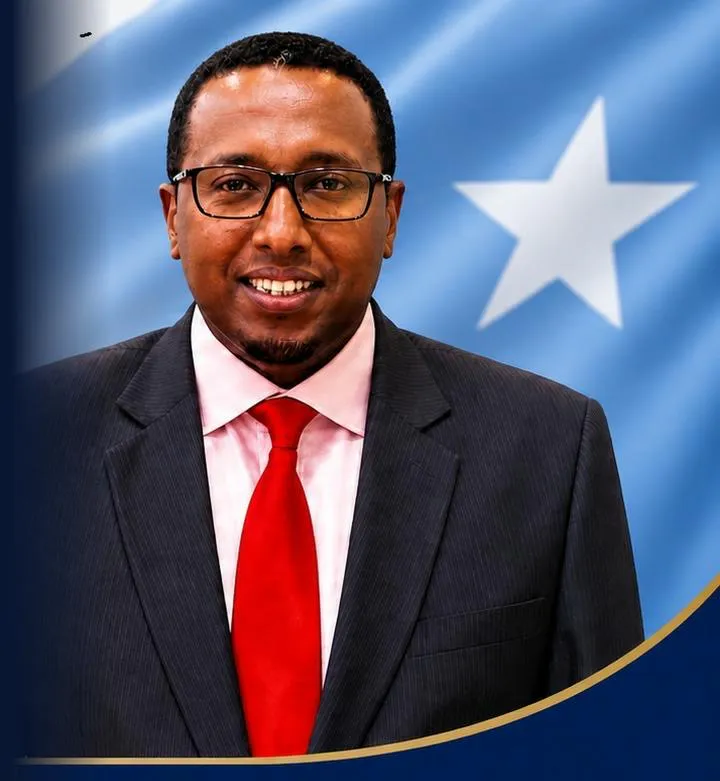
By: Awale Kullane
How a country goes deaf
There is a specific kind of failure that overtakes states, and it is not corruption, and it is not incompetence, and it is not treason. It is deafness. The state stops hearing the country. The capital stops hearing the regions. The presidency stops hearing the world. And because the deafness is not an event but a condition, no one in the country can point to the day it began. They can only point to the day the consequences arrived.
And the consequences have started to arrive. The electoral process is not agreed, and the international partners who have carried this state for nearly two decades are no longer offering encouragement. They are issuing joint statements telling the presidency to sit down with the country’s other stakeholders and reach a consensus, because they will not underwrite an outcome that does not have one.
Federal troops have moved on the states, and the states have pushed back, most recently in Galkayo, where Puntland forces overran a federal-aligned military base near the airport inside an hour. In the south west, the handover of power is contested on procedural grounds that the country cannot ignore, because the man who assumed the presidency did so while sitting as the presiding officer of the federal parliament.
Sacdiyo Bajaaj, a young woman driving a three-wheeler in Mogadishu, was jailed for three years for speaking against the presidency online, and the courts felt secure enough to say so. The president stood in the parliament chamber and accused his opponents of working for foreign powers, and did so without naming a single one, because the point was the accusation, not the person. And beyond all of this the security calculation is worsening in ways that are no longer speculative. This is not a warning. This is a report.
The deafness I am describing is not a limitation of the body. It is a limitation of the room a leader has built for himself. You can measure a leader by whom he appoints. This is a tool. Keep it. Use it tonight, on the government you have, and on every government that follows. Every other measure a state offers you, its speeches, its milestones, its ceremonies, is a claim the state is making about itself. The appointments are the evidence. Everything else is prologue.
Something has happened, in the last few years, to the way Somalia chooses the people it sends into its offices. Federal member state presidents have arrived through processes no Somali can quite describe as an election. The presiding officer of a parliament past its own mandate has been drawn from a serving cabinet. Ambassadors have been sent to the world’s most difficult capitals without a day of prior diplomatic service. And now the country is being told that its foreign friends are turning against it, that the federal member states defending the constitution are the obstacle, that its enemies are winning ground, and that these developments are separate. They are not separate. They are the sound of a country the leader can no longer hear.
The clinical name for it
The British neurologist and former Foreign Secretary Lord David Owen has spent much of his post-political career studying prime ministers and presidents who held significant power for long periods. In a 2009 paper in the medical journal Brain, with the psychiatrist Jonathan Davidson, Owen described a recurring pattern he named hubris syndrome. Excessive self-confidence. Contempt for the advice of others. Moral rectitude that bypasses scrutiny. Loss of contact with the country one is actually governing. A conviction that the leader alone perceives what the country requires.
Hubris, in Owen’s account, does not announce itself in speeches. It shows first in the appointments. The leader begins to promote the men and women who will confirm what he already believes. Independent judgment is edged out. Loyalty becomes the operative qualification. Competence becomes accidental, and eventually decorative. The room around the leader is not filled with bad men. It is filled with men who cannot, by design, tell him what he does not want to hear. And once that room has been built, the leader is deaf. He is still speaking. He is still receiving visitors. He is still watching television. But the country outside the room has left him, and no one inside the room has the standing to say so.
Two men who could not hear their own streets
Muammar Gaddafi ruled Libya for forty-two years. He entrusted his most sensitive security to his own Qadhadhfatribe and to his sons, most notoriously in the 32nd Brigade. When Benghazi rose in February 2011, his intelligence services told him it was a foreign plot, his son warned on television of a small conspiracy, and Gaddafi himself called the demonstrators rats. He believed the men he had chosen. By October he had been pulled from a drainage pipe in Sirte. The lesson is not that he lost. It is that the room he built could not hear the street he was losing.
Slobodan Milosevic, in autumn 2000, called early elections in Belgrade certain that the party structures he had built and the broadcasters he had staffed would carry him back. His inner circle told him what he wanted to hear about his standing. Serbian television told the country what he wanted them to hear about his opponent. Vojislav Kostunica won decisively. Milosevic refused the result, and within days he was out. A ruler surrounded by people paid to describe his popularity cannot distinguish the sound of applause from the sound of a country turning away.
The Somali silence
Now bring the tool home. The problem is not that a leader who selects for loyalty is surrounded by bad men. Some of the men are perfectly capable. The problem is that the criterion has been changed. Once loyalty becomes the criterion, the appointments compound, and the country loses, one office at a time, the capacity to hear the world it lives in.
Ask what the record shows. The senior ranks of the army and intelligence are increasingly drawn from a single subclan of a single clan. Foreign policy is entrusted, in practice, to members of the ruler’s own household who have not spent a day in the profession. The country’s most consequential embassies have gone to men without a day of prior diplomatic service. Regional missions have been staffed by proximity rather than familiarity with the terrain. The audit office was filled by a campaign figure. The presiding officer of a parliament past its own mandate was drawn from a serving cabinet. Each appointment is defensible on its own. It is the pattern that makes the state.
Diplomacy is neither direct nor indirect. It is the practice of reading what a counterpart says, what he does not say, and what he is preparing to say. That ear is not a personality trait. It is a professional skill. A leader who staffs his diplomatic posts with men and women who have never sat in the rooms where that ear is trained is a leader who has decided the country does not need it. The consequence is not that any one ambassador fails. The consequence is that the country becomes deaf.
And you can hear the deafness. Washington announced the end of its funding for the peacekeeping mission that has kept the state upright, and the announcement arrived in Mogadishu as a surprise. Nairobi’s frustrations with the presidency were audible, in public and in private, for a year before they produced a rupture, and the rupture arrived as a surprise. Kampala’s troop-contributing summit reframed the entire regional mission as an Ethiopian solidarity project rather than a Somali one, and this too was received as a surprise. A capital that cannot read Washington did not lose Washington by accident. A capital that cannot read Nairobi or Kampala did not lose them by accident either. It appointed the people who could not hear them.
The federal member states that refuse to sign what they cannot constitutionally sign, and the opposition figures who have paid personal costs to say the same, are not obstacles to the state. They are the last part of the state that is still awake.
The boat
A leader who cannot hear the water rising in the boat he built is a leader who staffed the boat with men who cannot hear it either. When the water was ankle deep, they told him it was condensation. When it was knee deep, they told him it was a design feature. When it was waist deep, they told him the shore was near. Somalia has been the passenger on that boat for four years. Every Somali knows the sound of the water. The only person on board who does not is the one at the wheel, and the men and women he chose to stand beside him were chosen for the very reason that they could not, and cannot, tell him what he refuses to hear.
You can measure a leader by whom he appoints. And you can hear a country by listening for what his appointees cannot. The measure is not difficult. The sound is not faint. What is difficult is admitting that the country has been speaking for some time, and that the room has been built not to hear it.
• • •
Awale Kullane is a former Somali Ambassador to Sweden and China, and former Deputy Permanent Representative of Somalia to the United Nations. He previously served as Chief of Staff in the Office of the Prime Minister. He writes on Horn of Africa geopolitics, constitutional affairs, and regional security.
