


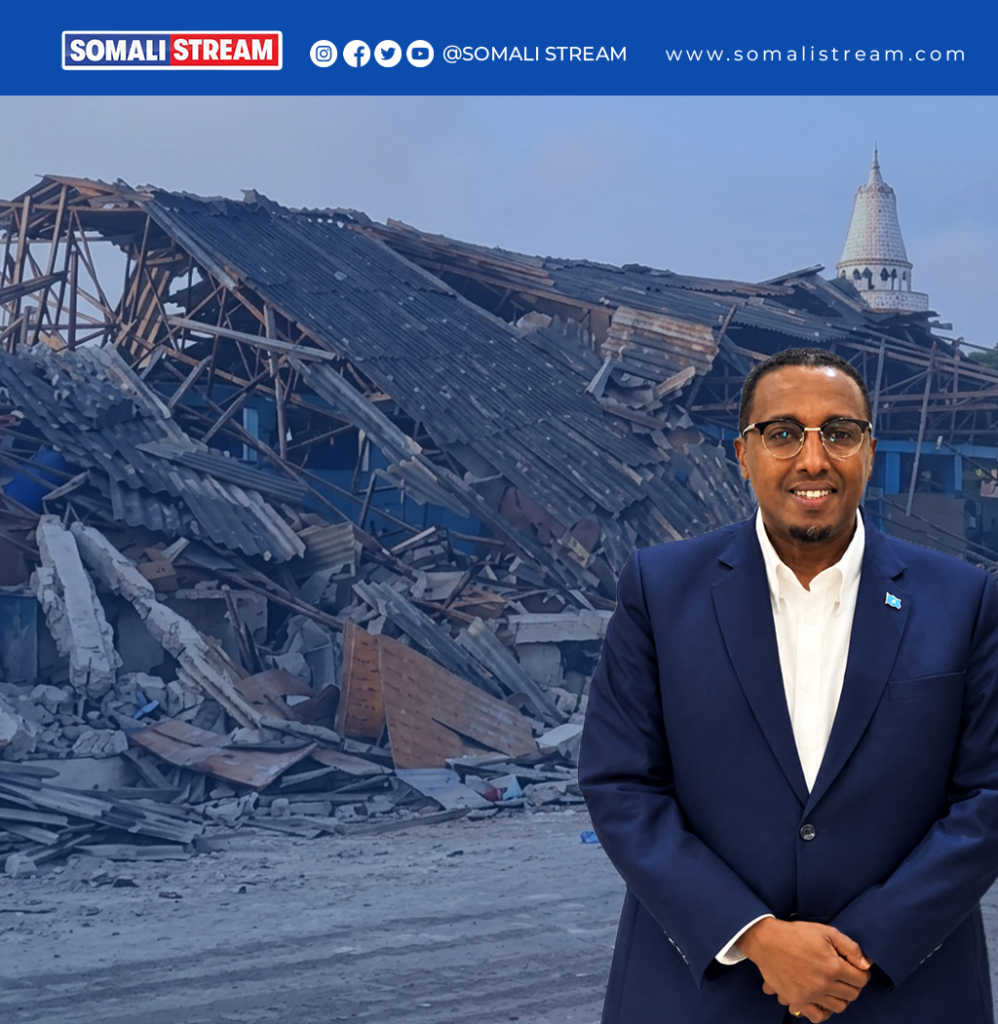
Families asleep in their homes within Mogadishu’s Wardhiigley District were confronted by police carrying out an eviction operation amid community protests over land grabs, leaving one person dead, Omar Said Ali, a young man with big dreams who was fatally shot during the eviction just a few hundred meters from the Presidential Palace, and three others injured as households, including women, children, and the elderly, were forced out into the dark. When the very police and government that claim to protect citizens rouse sleeping households at three in the morning to clear their homes, public trust is not merely strained; it is openly betrayed.
This outrage is not a single isolated shock. Across Somalia, over two million internally displaced people have endured repeated forced evictions, including more than seventy thousand people affected between January and April 2026 alone and over thirty six thousand displaced in April 2026 across Garasbaaley and Daynile, while eighty four eviction protests were recorded between April 2025 and March 2026, seventy eight of them in Mogadishu. For young people and families living through this relentless cycle, the trauma is raw and immediate, leaving every household to wake up asking what happens tomorrow.
Across Mogadishu’s districts, residents have faced repeated eviction pushes, demolitions, and land disputes that turn everyday shelter into an emergency. When security forces move before dawn while households are asleep, there is no warning, no safe refuge, and no time to gather basic belongings or protect children and elders from fear and sudden loss.
Power Without Mandate and a Fracturing Federation
Nocturnal coercion in Xariiryaale is the brutal symptom of a deeper constitutional and moral sickness. Original mandates expired in April and May 2026, and Somalia’s Supreme Court ruled on November 5, 2026 that term extensions did not apply to sitting officials, limiting executive authority to caretaker functions, yet President Hassan Sheikh Mohamud’s administration clings to contested power while refusing genuine talks with the opposition even as judicial disputes reach regional courts.
A caretaker authority has a duty to preserve calm, respect judicial rulings, and build inclusive consensus toward lawful transition. Instead, governing through contested decrees, resisting dialogue with political rivals, and deploying coercive force against civilians deepens constitutional rupture and inflames public anger.
The constitutional contestation has fractured the entire federation, leaving President Hassan Sheikh Mohamud without the country in his hand. Of the original five federal member states he sat with in 2022, Puntland and Jubaland have severed recognition and ties with the federal government over the contested constitution, South West is locked in bitter confrontation and internal conflict after disputes over elections and recognition, Hirshabelle is divided and in conflict, and Galmudug stands alone among the five as the administration aligned with Mogadishu.
The Dialogue Trap and Foreign Scapegoating
Opposition leaders warned before and during the constitutional amendments that unilateral overreach would fracture the nation, and those warnings have come true. After years of repeated meetings without results, the opposition has insisted on neutral mediators, a halt to unilateral electoral steps, and recognition that the mandate has expired, asking why a leader who claims to be right would fear mediation or refuse to pause a contested process.
Even when talks were floated or contested in November 2026, the electoral commission rolled out a calendar pointing toward parliamentary elections in April 2027 and a presidential vote in May 2027, exposing a gap between talk of dialogue and real willingness to halt unilateral moves. Blaming outside countries for Somalia’s crises cannot cover up internal divisions driven by a contested constitution and unheeded warnings at home.
Accountability and Public Scrutiny
Displacement figures, eviction protest counts, and Supreme Court rulings stand on the record, and the killing of Omar Said Ali alongside injuries during a predawn eviction just a few hundred meters from the Presidential Palace demands an independent, transparent investigation rather than silence or deflection.
What is already unmistakable is the disgrace of turning state security forces into instruments of displacement against ordinary citizens. When a government operating after expired mandates sends police against sleeping families in Xariiryaale so close to the seat of power while public money, land deals, and institutional oversight face mounting scrutiny, it forfeits moral standing and sharpens public anger.
Why Outside Partners Cannot Look Away
In January 2022, when he was in opposition, Hassan Sheikh Mohamud wrote in Foreign Affairs warning against an authoritarian turn in Somalia and pressing the international community to stay engaged rather than leave the country to slide. Today, as a caretaker president presiding over predawn evictions, contested power, and a fractured federation, his administration moves to dissolve the C6 plus forum and Prime Minister Hamza Abdi Barre declares that Somalia no longer needs outside direction and has left the opposition without international mediators, even while seeking international security backing abroad.
Calling for international engagement when in opposition and casting out international coordination when clinging to contested power is a striking reversal, and it is not a license to hide behind sovereignty when sleeping citizens are uprooted at three in the morning or when judicial limits are ignored. Outside partners, donors, and security allies face a clear test: whether they enable unchecked coercion or insist on lawful restraint, accountability, and inclusive dialogue.
An Unforgiving Test for Somalia and the World
For international observers and Somalis alike, Xariiryaale is a stark test of conscience and rule of law. Three o’clock raids, disputed land seizures, and rule without inclusive consent cannot bring stability to Mogadishu or heal a fractured nation.
Restoring human dignity requires an immediate halt to coercive evictions, independent inquiry into deaths and injuries including the killing of Omar Said Ali, transparent accounting of public land and funds, and inclusive dialogue under the constitution. Until power submits to law and restraint, tomorrow in Somalia will bring still deeper trauma.
History judges leaders not by how long they hold on past their mandate or how harshly they strike at night, but by whether they protect ordinary citizens under law. Somalia deserves lawful governance, accountable institutions, and a future where no child wakes in fear at three in the morning.
Awale Ali Kullane is a Somali diplomat, political analyst, and former ambassador who writes on institutions and governance in the Horn of Africa. Connect at www.linkedin.com/in/awale-kullane-2632a5388.
