


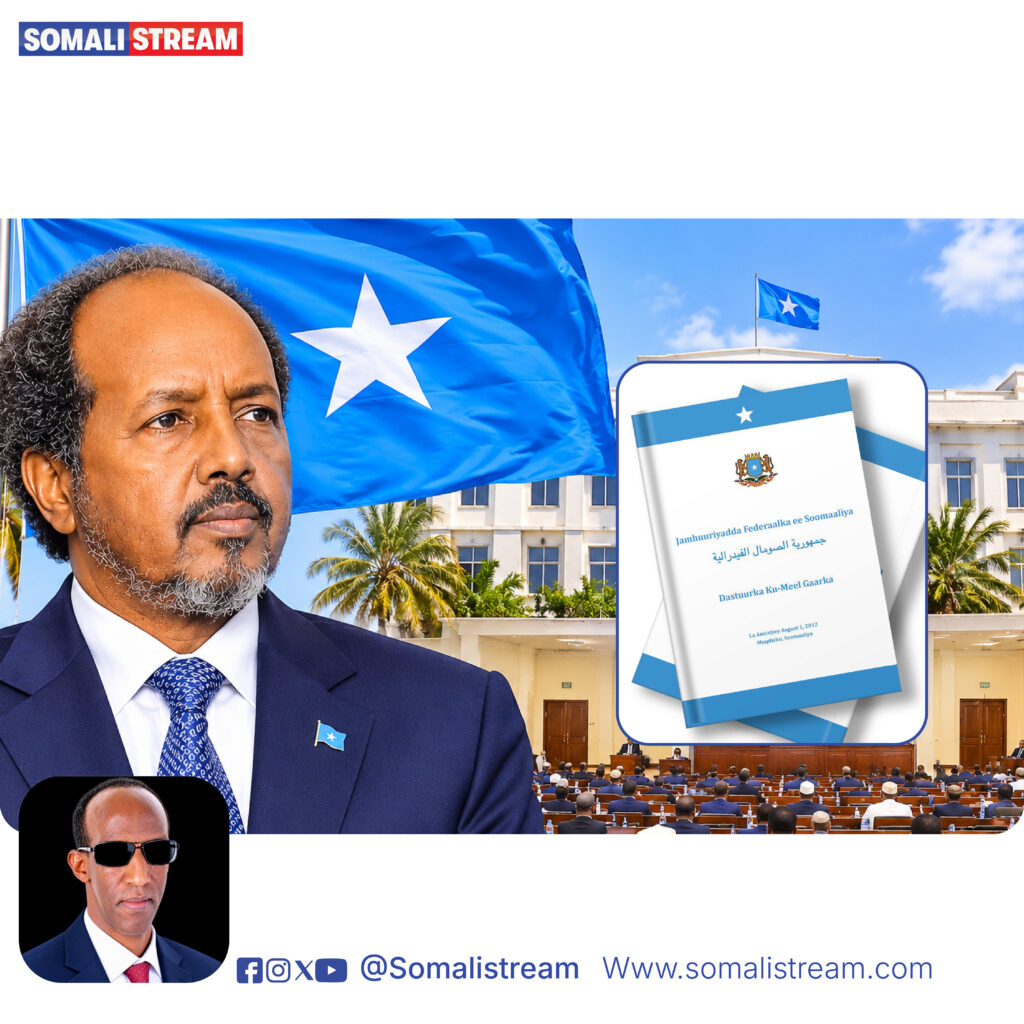
Introduction: The Debate Over the Third Republic
Somalia’s deepening constitutional and political impasse has revived a consequential claim that the Third Republic, the political order developed through the post-2000 state reconstruction process, is approaching its end. Contested constitutional amendments, electoral disagreements, and divisions between the federal government and its opponents have prompted some political figures and commentators to describe the crisis as evidence of the republic’s imminent failure.
Yet declaring the failure of a republic is far more consequential than describing a political crisis. It implies that an existing constitutional order has become incapable of sustaining itself and raises the question of what political regime might replace it. What constitutes a republic? What distinguishes successive republics? And what degree of constitutional rupture would justify declaring Somalia’s Third Republic at an end?
The post-2000 Somali political order emerged gradually. The Arta Conference initiated national institutional reconstruction after the 1991 state collapse; the 2004 transitional settlement advanced federalism; and the Provisional Federal Constitution of 2012 established a more definite constitutional framework. Despite institutional changes, the emerging order retained recognisable characteristics: a dual executive, parliamentary institutions, federalism, clan-based representation through the 4.5 formula, and the expectation of renewing governmental mandates approximately every four years through parliamentary reconstitution and leadership selection.
Although frequently contested, delayed, or renegotiated, these arrangements have sustained institutional continuity across successive administrations. They constitute the political framework whose survival is now being questioned.
The central issue is whether recent constitutional changes have fundamentally displaced this order or represent another serious but potentially resolvable crisis within it. Answering this requires examining the meaning of republic, the historical ruptures that have ended republican regimes elsewhere, and Somalia’s constitutional transformations.
From Res Publica to Jamhuuriyad: The Meaning of Republic
The word republic originates from the Latin res publica, meaning “public affairs” or the commonwealth. In classical Roman thought, particularly Cicero’s writings, it referred broadly to the political community and its common affairs. It was not necessarily defined by the exclusion of monarchy; classical republican thought could accommodate mixed constitutions incorporating monarchical, aristocratic, and popular elements.
Over time, European political thought developed a narrower understanding. From Renaissance Italy onward, an exclusivist conception of republicanism increasingly distinguished republics from monarchies. This distinction became prominent during the eighteenth and nineteenth centuries, particularly following the French Revolution. By the early nineteenth century, French dictionaries explicitly defined a republic in opposition to monarchy while retaining the older meaning of commonwealth.
The Arabic جمهورية (jumhūriyya), derived from جمهور (jumhūr), meaning the public or multitude, developed its modern political usage during nineteenth-century encounters with European political vocabulary. Its institutional meaning increasingly reflected the European conception of non-monarchical government.
The Jamhuuriyadda Soomaaliya (Somali Republic), adopted through Arabic, belongs to this later development. Although the precise transmission remains historically open to investigation, modern Somali usage reflects the wider reception of European republican terminology.
However, defining a republic as non-monarchical does not explain why a country may experience successive republics while remaining republican. That distinction concerns changes in the constitutional order itself.
The French Experience: Constitutional Rupture and Republican Succession
France offers a useful illustration of constitutional rupture and the succession of distinct republican regimes. Its successive republics emerged from fundamental transformations in political authority rather than ordinary changes of government. Three historical episodes demonstrate the magnitude of such ruptures.
The Revolution of 1792: The End of Monarchy
The establishment of the First French Republic in September 1792 marked the destruction of a centuries-old monarchical order. Although the Revolution of 1789 had already weakened royal authority, the decisive rupture came when the monarchy was overthrown and abolished in 1792. This was not merely the removal of a king but the abolition of hereditary monarchy as the organising principle of the French political system. Political sovereignty was redefined in the name of the nation, fundamentally replacing the constitutional foundations of the state.
The Coup of 1851: The End of the Second Republic
The Second French Republic, established in 1848, introduced an elected presidency and legislative assembly. However, President Louis-Napoléon Bonaparte faced constitutional restrictions preventing his immediate re-election. Rather than relinquishing power, he carried out a coup d’état in December 1851, dissolving the National Assembly, arresting opponents, and forcibly removing constitutional restrictions on executive authority. In 1852, he established the Second Empire, becoming Emperor Napoleon III.
The Second Republic did not end because of disagreement over constitutional reform. It ended because its constitutional framework was overthrown and replaced by imperial rule.
The Defeat of 1940: The Collapse of the Third Republic
The Third French Republic, established in 1870, survived political upheavals, constitutional disputes, and the First World War. Its end came with France’s catastrophic military defeat by Nazi Germany in 1940.
German forces overwhelmed the French military, occupied Paris, and forced an armistice. Amid this national catastrophe, the French National Assembly granted extraordinary powers to Marshal Philippe Pétain, who dismantled parliamentary republican government and established the authoritarian Vichy regime. Military defeat, foreign occupation, and authoritarian constitutional transformation destroyed the Third Republic’s political order. This was not an ordinary constitutional dispute but the collapse of a republican regime under extraordinary national circumstances.
What the French Experience Demonstrates
The three ruptures differed in cause: revolution abolished monarchy in 1792; a presidential coup destroyed the Second Republic in 1851; and military catastrophe ended the Third Republic in 1940.
Yet each involved the fundamental displacement of the existing constitutional order.
These examples do not imply that every republican transition requires violence or national catastrophe. Constitutional orders may also be replaced peacefully. They demonstrate, however, the distinction between political conflict within an existing system and the termination of that system.
This distinction is equally relevant to Somalia. Somalia’s First and Second Republics: The Ruptures of 1969 and 1991 Somalia’s constitutional history presents two profound ruptures: the military overthrow of civilian democracy in 1969 and the collapse of military rule and effective central state authority in 1991.
The First Republic, 1960–1969: The Overthrow of Constitutional Democracy
Somalia’s First Republic emerged in July 1960 following independence and the union of the former British Somaliland and Italian-administered Somalia. It established a civilian constitutional order characterised by multiparty politics, parliamentary institutions, and an elected presidency. Despite its shortcomings, the system permitted political competition and constitutional transfers of authority.
The rupture occurred on 21 October 1969, when the military seized power following President Abdirashid Ali Sharmarke’s assassination. The constitution was suspended, parliament dissolved, political parties banned, and the Supreme Revolutionary Council established under Mohamed Siad Barre.
The military replaced parliamentary democracy with authoritarian rule, later consolidating a personalised dictatorship and one-party system. A constitutional democracy was replaced by a military dictatorship that abolished the institutions and political freedoms underpinning the First Republic. This was not a dispute over electoral procedures or constitutional amendments but the wholesale overthrow of the constitutional order.
The Second Republic, 1969–1991: Regime Collapse and State Disintegration
If the military period is classified as Somalia’s Second Republic, its termination in 1991 represented an even deeper rupture. By the late 1980s, armed opposition, repression, and civil conflict had severely weakened the regime. In January 1991, Siad Barre’s government was overthrown.
Unlike 1969, however, the regime’s collapse produced no immediate constitutional successor. Somalia instead entered a prolonged period of fragmented authority, armed conflict, and the absence of effective central government.
The significance of 1991 extended beyond the fall of a government: the governing regime collapsed together with effective central state authority. The distinction is important. In 1969, one constitutional order was forcibly replaced by another regime. In 1991, the existing regime disintegrated without an immediate national replacement. Somalia remained a sovereign state under international law, but its effective central institutions collapsed.
These ruptures provide a historical standard against which contemporary claims about the Third Republic must be assessed.
Constitutional Crisis, Republican Failure, and Constitutional Succession
The French and Somali experiences suggest three distinct political conditions. A constitutional crisis arises when institutions seriously disagree over constitutional rules, powers, or electoral arrangements, but the existing system remains capable of resolving those disputes.
For example, a president and parliament may disagree over constitutional amendments while opposition groups reject proposed elections. The resulting impasse may undermine legitimacy and delay political succession. Yet if the parties negotiate an agreement and renew authority through existing institutions, the constitutional order has survived.
Republican failure represents a more fundamental breakdown: the destruction, displacement, or collapse of the constitutional arrangements through which political authority is organised and sustained.
Somalia’s 1969 coup illustrates this distinction. The military did not merely challenge government policy; it abolished the civilian constitution and dismantled the institutions through which democratic authority operated.
Constitutional succession occurs when a substantially different political order replaces the previous regime. The 1969 military takeover illustrates such replacement, while the collapse of military rule in 1991 demonstrates that a constitutional order can disintegrate without immediately producing a successor.
The distinction is straightforward:
A constitutional crisis challenges an existing order; republican failure ends or disables that order; constitutional succession establishes a new one. A republic can survive a constitutional crisis. It can also collapse without an immediate successor. And constitutional succession need not involve violence.
The Third Somali Republic: Does the Current Impasse Meet the Historical Test?
Against this background, the claim that Somalia’s Third Republic is approaching failure requires careful scrutiny.
Since 2000, Somalia has experienced recurrent disputes over elections, constitutional authority, political representation, and relations between successive governments and their opponents. Nevertheless, its institutional framework has demonstrated continuity. Presidents have succeeded one another, parliaments reconstituted, governments formed, and mandates renewed through negotiated arrangements, despite delays and constitutional controversies.
The present dispute concerns constitutional amendments, electoral arrangements, and the distribution of political authority. These are serious matters with potentially lasting consequences for Somalia’s federal system. However, a constitutional dispute, however serious, does not itself establish that the republic has ended or is irretrievably failing.
The historical comparison is revealing. In France, the monarchy was abolished in 1792, the Second Republic overthrown in 1851, and the Third Republic destroyed amid military catastrophe in 1940. In Somalia, the military abolished civilian democracy in 1969, while the collapse of military rule in 1991 brought down effective central state authority.
The present Somali impasse, however grave, has not yet demonstrated a comparable displacement of the constitutional order. The dual executive, parliament, federal institutions, and constitutional framework continue to exist, notwithstanding disputes over their legitimacy and operation.
More importantly, political engagement between the government and opposition offers a possible route towards resolving the crisis through negotiated electoral arrangements. Such negotiations, if successful, could restore an accepted process of political succession without replacing the constitutional system.
Consider the implications. Suppose the federal government and opposition reach an agreement on the contested constitutional and electoral questions, followed by parliamentary reconstitution, presidential selection or election, and government formation under broadly recognised arrangements.
In that case, the existing order would have demonstrated its capacity to overcome the crisis and renew political authority. The institutions and underlying principles of the post-2000 settlement would remain recognisable.
This raises a further difficulty for the claim of republican failure.
If the Third Republic has already failed, what constitutional order is expected to replace it?
The question is not merely rhetorical. Declaring the termination of a republic implies a fundamental breakdown of the existing constitutional settlement, even if a successor has not yet emerged. Where political actors instead seek to restore or renegotiate the same federal arrangements, parliamentary institutions, power-sharing principles, and mechanisms of political succession, their proposed settlement may indicate constitutional continuity rather than the creation of a new republic.
A new republic need not abandon every institution inherited from its predecessor. However, it must involve a sufficiently fundamental transformation in the constitutional organisation of political authority to distinguish it from the previous regime.
If negotiations produce an agreement that largely preserves the defining features of the post-2000 order, the result would more plausibly constitute its reconstitution or reform than the inauguration of a Fourth Republic. The restoration of a recognisably existing constitutional order is evidence of its capacity for renewal, not necessarily proof of its historical termination.
This does not mean that constitutional failure is impossible or that the current crisis cannot deepen. A prolonged breakdown of accepted political rules could eventually undermine the system’s capacity to reproduce legitimate authority. Nor does the possibility of compromise guarantee its achievement.
The question is whether the present crisis has already displaced the constitutional framework or whether that framework remains capable of political recovery.
Conclusion: A Republic in Crisis Is Not Necessarily a Republic at Its End
The classification of Somalia’s political periods as First, Second, and Third Republics is best understood as a historical and constitutional periodisation of distinct political regimes, rather than an uncontested official designation.
If the post-2000 settlement constitutes a Third Republic, its possible failure must be judged by the fate of its foundational constitutional arrangements, not merely the severity of disputes among political actors.
The current impasse threatens political legitimacy and institutional cooperation, but the possibility of a negotiated settlement preserving the existing federal and parliamentary framework suggests that the constitutional order remains capable of renewal.
A government may lose legitimacy without bringing down a republic. Constitutional amendments may provoke a crisis without creating a new regime. And the renegotiation of an existing political settlement does not necessarily constitute its replacement.
To declare the failure of Somalia’s Third Republic is therefore to make a claim far more consequential than describing the current political crisis. It requires demonstrating that the existing constitutional order can no longer sustain itself and identifying the nature of the rupture that would distinguish its termination from its reform or reconstruction.
Until such a rupture becomes evident, the more persuasive conclusion is that Somalia’s Third Republic is confronting a serious constitutional crisis, not that it has already reached its end.
By Abdirahman Farah (Luunge)
The writer can be reached at:
a.luunge@gmail.com
