


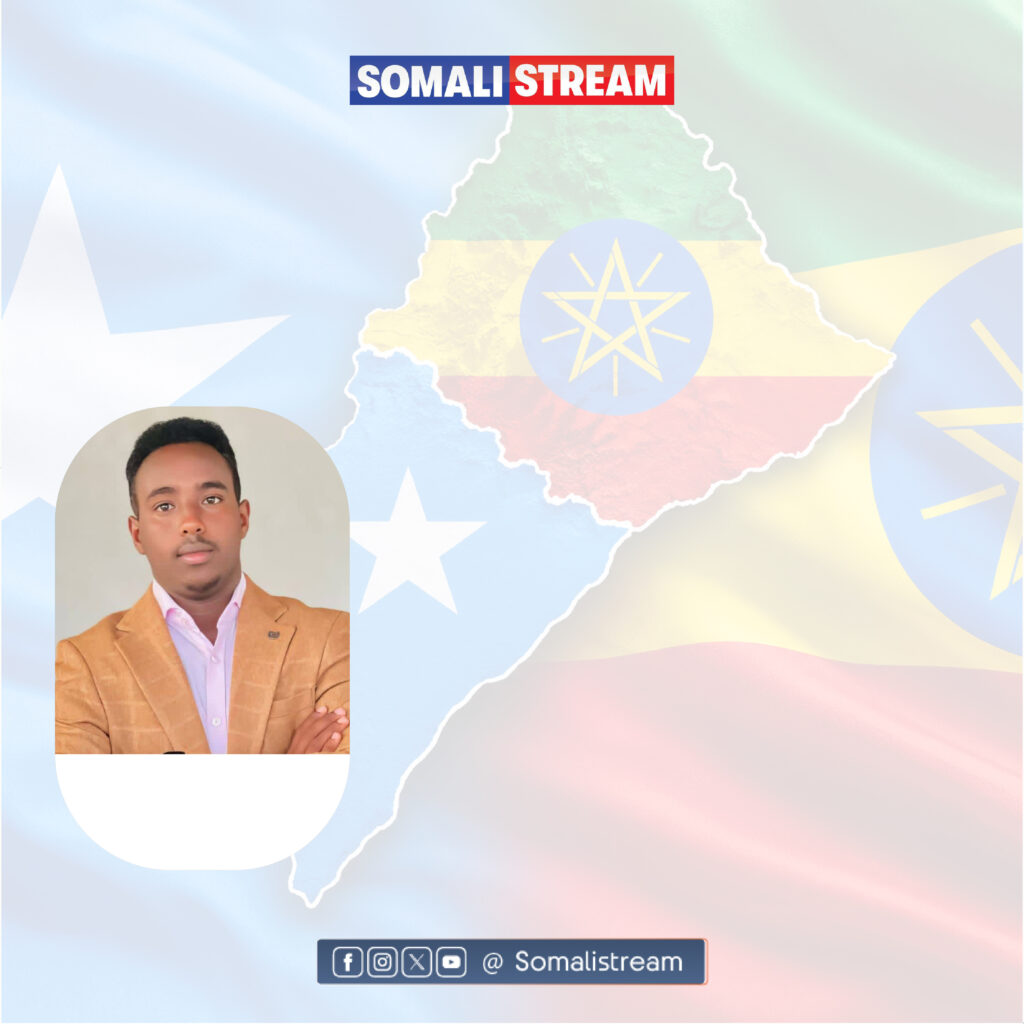
National Sovereignty, Foreign Military Presence, and the Future of Somalia’s Regional Policy
Foreign relations are essential to the stability and development of any country. For Somalia, a nation rebuilding its institutions while confronting persistent security challenges, relations with neighbouring countries are particularly important. However, good neighbourly relations must be built on mutual respect, territorial integrity, and the principle that neither country should undermine the sovereignty of the other.
It is within this context that Somalia needs to reconsider its relationship with Ethiopia.
This is not an argument that Somalia should permanently abandon diplomatic relations with its neighbour. Rather, it is an argument that the relationship requires a more careful, strategic, and accountable approach—one that places Somalia’s national interests at the centre of every diplomatic and security decision.
When Diplomacy Challenges National Sovereignty
https://apnews.com/article/somalia-somaliland-ethiopia-coast-deal-a36449a0712249a59d74ad44d09d262c
The January 2024 memorandum of understanding between Ethiopia and Somaliland raised serious concerns in Mogadishu. Somalia opposed the agreement, viewing it as a violation of its sovereignty and territorial integrity. The controversy was particularly significant because it involved discussions concerning access to the sea and the possibility of Ethiopian recognition of Somaliland.
For Somalia, the issue extended beyond a bilateral disagreement. It concerned a fundamental question: can a neighbouring country negotiate arrangements concerning territory that Somalia considers part of its sovereign territory without the consent of the federal government?
https://web.mfa.gov.so/communique-ankara-declaration-11-december-2024/
The Ankara Declaration of December 2024 provided a diplomatic framework for addressing the dispute. Both countries reaffirmed their commitment to sovereignty, unity, independence, and territorial integrity, while agreeing to pursue arrangements for Ethiopia’s access to the sea under Somalia’s sovereign authority.
Nevertheless, the episode demonstrated how quickly competing national interests can undermine trust between neighbouring countries.
Somalia should therefore approach future negotiations with clarity. Agreements concerning its territory, maritime resources, ports, and security arrangements must respect its sovereignty and be subject to transparent, lawful processes.
The Question of Ethiopian Military Presence
Another important issue is the presence of Ethiopian troops inside Somalia.
Ethiopian forces have participated in operations against Al-Shabaab, including through African Union missions and bilateral security arrangements. Their role in counterterrorism cannot be ignored when assessing the broader security relationship between the two countries.
However, cooperation against a common security threat does not eliminate the need for clear rules governing foreign military deployments.
https://web.mfa.gov.so/the-federal-government-of-somalia-condemns-the-blatant-aggression-by-ethiopian-forces-in-doolow/
The events in Doolow in 2025 illustrate why this question deserves serious attention. During clashes involving forces aligned with Somalia’s federal government and Jubbaland, Ethiopian troops were reported to have supported Jubbaland forces. The European Union Agency for Asylum documented the fighting and the involvement of Ethiopian forces in its reporting on Somalia’s security situation.
Such developments raise an important policy question: what happens when foreign forces operating within Somalia become involved in conflicts connected to internal political divisions?
Foreign military deployments should have clearly defined mandates, transparent command and coordination arrangements, and effective mechanisms for accountability. Their primary purpose should be to support security and stability, not to intensify political or military competition among Somali actors.
Somalia should consequently review the conditions under which foreign forces operate on its territory, ensuring that their presence serves agreed national security objectives and respects the authority of legitimate Somali institutions.
Foreign Military Presence and Internal Political Divisions
Somalia’s internal political disagreements make the management of foreign security partnerships even more complicated.
Tensions between the federal government and some federal member state administrations have periodically escalated into armed confrontations. In such circumstances, the involvement of neighbouring countries can complicate already sensitive disputes.
The situation in Jubbaland and the Gedo region demonstrates the risks associated with the intersection of domestic political competition and external security involvement.
The concern is not that every foreign military presence necessarily creates instability. Rather, it is that unclear mandates, competing political relationships, and insufficient accountability can increase the risk of confrontation.
This concern is also relevant when considering political tensions involving South West State. Somalia must ensure that external security relationships do not become instruments through which domestic disagreements are prolonged or intensified.
A foreign policy focused on national stability should therefore establish clear safeguards against the use of foreign military cooperation to influence internal political contests.
The responsibility also lies with Somali political leaders. Federal and regional authorities must pursue dialogue and constitutional solutions rather than allowing political disputes to create opportunities for external interference.
Rethinking the Relationship Without Abandoning Diplomacy
Reconsidering Somalia’s relationship with Ethiopia should not automatically mean severing diplomatic relations, rejecting all security cooperation, or treating ordinary Ethiopian citizens as adversaries.
Geography makes the two countries permanent neighbours. They share a long border, interconnected communities, economic interests, and common security concerns. A prolonged confrontation would carry risks for both societies.
The more constructive approach is to make cooperation conditional on clear principles.
First, Somalia should strengthen diplomatic mechanisms for addressing disputes before they escalate into security crises. Second, any foreign military deployment should operate under an agreed and transparent legal framework. Third, Somalia should strengthen its own security institutions so that its national security does not depend excessively on the decisions of external partners.
Finally, Somalia should diversify its diplomatic and economic relationships without allowing competition among international partners to determine its national priorities.
A country is better positioned to defend its interests when it has credible institutions, consistent policies, and the capacity to negotiate from a position of strength.
A Foreign Policy Guided by National Interests
The broader challenge for Somalia is to develop a foreign policy that is neither reactive nor driven solely by temporary political tensions.
Relations with Ethiopia should be assessed through measurable questions. Does a particular agreement protect Somalia’s sovereignty? Does a security arrangement strengthen Somali institutions? Does foreign military cooperation reduce threats to civilians? Are disputes addressed through recognised diplomatic and legal mechanisms?
These questions offer a more sustainable basis for foreign policy than either unconditional cooperation or permanent hostility.
Somalia should also apply consistent principles to all foreign partners. Respect for sovereignty, transparency, accountability, and non-interference in domestic political affairs should not depend on which country is involved.
This approach would allow Somalia to defend its national interests while maintaining the possibility of peaceful and mutually beneficial relations with its neighbours.
Conclusion: Respect Must Be the Foundation of Cooperation
Somalia’s relationship with Ethiopia requires a serious and realistic reassessment. The 2024 Somaliland memorandum dispute and the reported involvement of Ethiopian forces in the 2025 fighting in Doolow demonstrate why questions of sovereignty, military presence, and internal political stability cannot be separated from foreign policy.
The answer, however, is not necessarily permanent hostility. It is principled diplomacy supported by stronger institutions, clear security agreements, and a willingness to hold all partners accountable to mutually agreed commitments.
Somalia should remain open to cooperation with Ethiopia, but that cooperation must serve a clearly defined national interest and respect the sovereignty of the Somali state.
Peaceful relations between neighbours are most sustainable when cooperation is built on mutual respect, not when one country’s strategic interests come at the expense of another’s sovereignty.
