


What unfolded at the start of April, the removal of a sitting and elected president in Baidoa was never simply a dispute between a regional leader and an impatient central authority. It was something far more consequential and far more alarming.
In a country still haunted by insurgency and institutional weakness, the deployment of federal force into a politically contested space did not just heighten tensions; it exposed, in unmistakable terms, the fragility of Somalia’s federal experiment. This was not governance by negotiation. It was governance by pressure. At the center of the drama sits Abdiaziz Hassan Mohamed Laftagareen, once a loyal, even an ally, of Hassan Sheikh Mohamud, the president of the Federal Government of Somalia.
Not long ago, Laftagareen was firmly inside the president’s political tent, an insider in the ruling Justice and Solidarity Party(JSP), a dependable voice in federal consultations, a regional leader who knew how to fall in line. But in Somalia’s zero-sum political arena, loyalty has a short shelf life.
The rupture between Villa Somalia and Baidoa did not play out in courtrooms or constitutional institutions because, in reality, those institutions barely exist. Instead, it spilled into the streets, into deployments, into a show of force that felt less like atraditional governance and more like coercion. What should have been a test of federal mechanisms have become a demonstration of their absence.
The timing could hardly have been worse. Al-Shabaab remains a persistent, adaptive threat and arguably the defining national security challenge Somalia faces. This unveils what the current administration’s priority is.
And yet, at a moment demanding outward focus, the federal government turned inward, redirecting resources, troops, and attention toward a political confrontation that by any sober assessment, did not rise to the level of a security emergency. It is the kind of miscalculation that invites uncomfortable questions.
Why mobilize heavily armed units against a federal member state while insurgents continue to exploit governance vacuums elsewhere? Why escalate a political disagreement into a security operation in a country where the line between the two is already dangerously thin?
For residents of Baidoa, a city already burdened by trauma and displacement, the answer offered little comfort. With hundreds of internally displaced people (IDP) sites and a population acutely vulnerable to instability, the show of force did not signal strength – it signaled risk.
If this feels familiar, it is because it is. The federal government has exercised this path before, most notably in Jubbaland, where similar interventions left behind political scars that have yet to fully heal.
The pattern is becoming difficult to ignore: when disputes arise between the center and the periphery, Somalia lacks a neutral arena for resolutions.
There is no credible constitutional court to arbitrate competing claims. No widely trusted electoral commission to referee legitimacy. No institutional safeguards to prevent political maneuvering from sliding into confrontation. In that vacuum, power fills the space where process should be.
And yet, amid the escalation, one decision stands out—not for what it triggered, but for what it prevented. Laftagareen, facing mounting pressure, chose not to turn Baidoa and surrounding areas Buur Hakaba, Daynunay into battlefields.
It was a calculated restraint, one that likely spared the region from a flood of violence, displacement, and civilian casualties. In Somalia’s current climate, restraint is often the exception, not the rule. That it proved decisive says as much about the fragility of the system as it does about the individuals navigating it.
Hovering over all of this is a ticking political clock. With roughly weeks remaining in the mandate of President Hassan Sheikh Mohamud’s administration, the question of legitimacy is no longer theoretical – it is immediate.
The promise of a one-person, one-vote election continues to hover on the horizon, but the logistical and political realities make it increasingly difficult to see how such a process could be delivered credibly in the time available.
In that context, the Baidoa crisis feels less like an isolated outburst and more like a symptom of a system under strain.
With Laftagareen effectively sidelined, attention now shifts to succession in Southwest State. The stakes are high, and the signals will be closely watched.
Will the next leadership transition be transparent, inclusive, and procedurally credible? Or will it be orchestrated behind closed doors, reinforcing the perception that outcomes are predetermined?
The answer will resonate far beyond Baidoa.
For federal member states, it will indicate whether autonomy is respected or conditional. For opposition figures, it will define the boundaries of dissent. For ordinary Somalis, it will either rebuild a measure of trust—or deepen an already entrenched skepticism toward political institutions.
The Baidoa crisis underscores a hard truth: Somalia’s federalism is not failing in theory—it is collapsing in practice. Until disputes are channeled through credible institutions rather than displays of force, each political disagreement carries the potential to escalate into a security crisis.
And each time it does, the cost is cumulative—measured not just in instability, but in fractured trust, weakened legitimacy, and a state that looks, increasingly, like it is governing on shaky foundations.
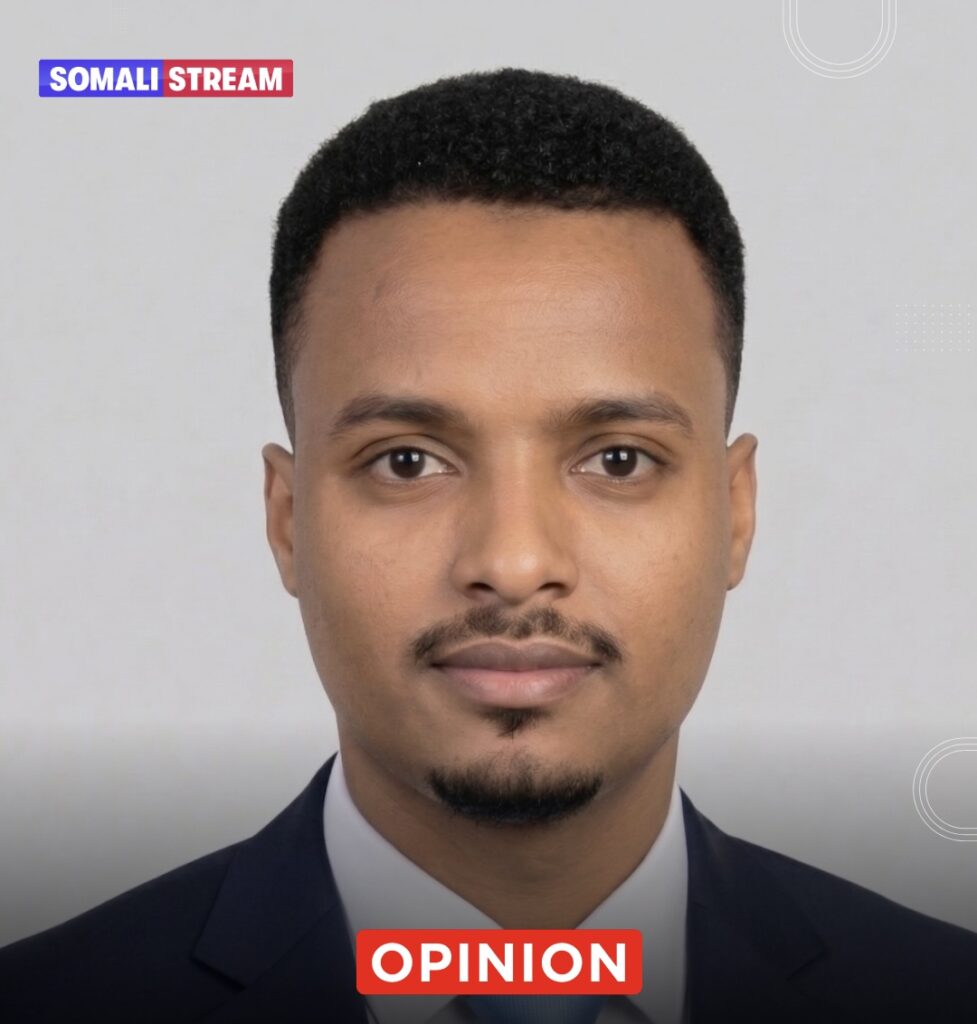
Kamal Hassan holds a degree in Computer Engineering and a Master’s in Security Studies. He has worked as a research assistant in Germany and the Netherlands. His work focuses on digitalization, artificial intelligence, and security strategy.