


By Abdullahi Yabarow
Moving the capital would change the address of government, not the failures of governance.
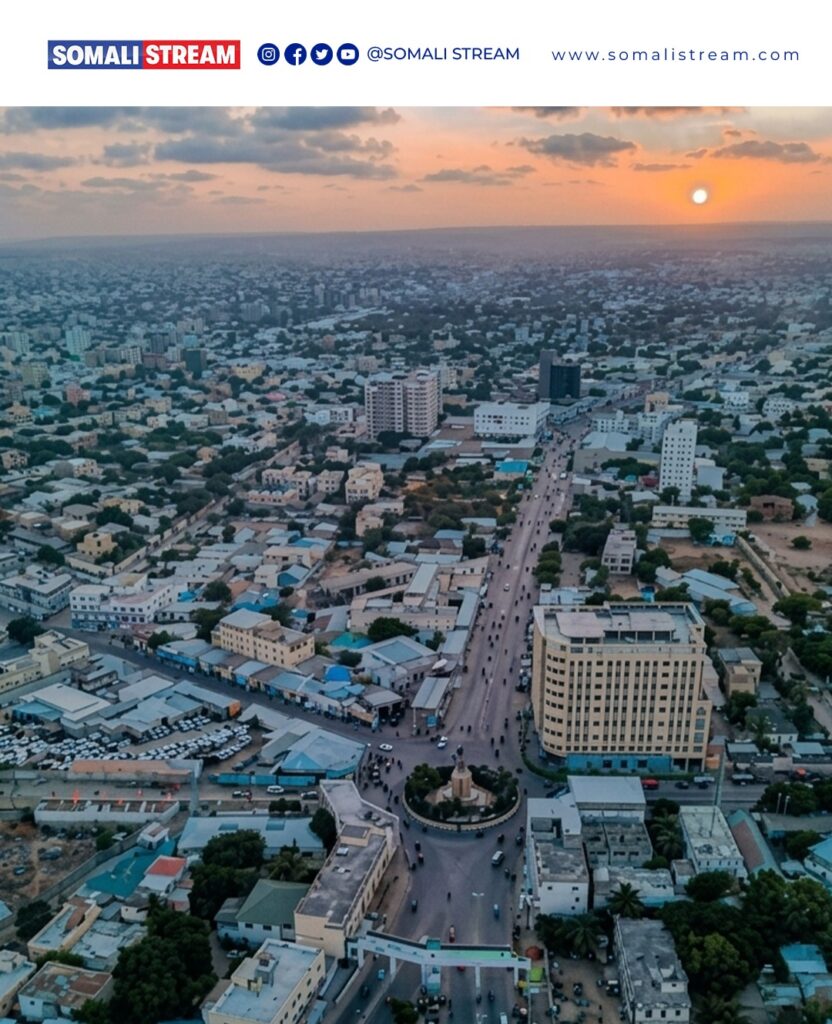
A familiar argument has returned to Somali political debate: Mogadishu should no longer be the national capital.
The case is usually linked to clan politics, the concentration of federal institutions, or dissatisfaction with the way Somalia is governed. Yet before relocation is treated as a remedy, one question should come first: which failure of governance was caused by Mogadishu being the capital?
Mogadishu is a city. The Federal Government consists of institutions operated by political leaders and public officials. These are not the same thing.
Mogadishu does not postpone elections, appoint ministers, manage relations between the Federal Government and Federal Member States, spend the national budget, or decide whether Parliament holds the executive to account. Those are political and institutional choices. When elections are delayed or disputed, the issue concerns electoral arrangements, political agreement, and those responsible. When federal and state relations deteriorate, the dispute concerns authority, resources, constitutional arrangements, and trust. When Parliament fails to scrutinise the executive, that is a parliamentary failure.
None becomes a failure of Mogadishu because the institutions concerned are located there.
Changing where power sits is not the same as changing how power works.
A minister from another part of Somalia does not become a representative of Mogadishu because the ministry is based there. An MP does not become accountable to Mogadishu residents because Parliament sits in their city. The presidency, Parliament, ministries, and federal agencies belong to the Somali Republic. Mogadishu hosts them; it does not own them.
The clan argument offers no stronger justification.
It is often said that Mogadishu is associated with one clan and therefore should not remain the capital. But where would Somalia move the capital in order to escape clan geography?
Somali cities do not exist outside Somali society. Garowe, Baidoa, Kismayo, Jowhar, Dhuusamarreeb and other centres have their own communities and political relationships. Moving federal institutions elsewhere would not create a clan-neutral capital; it would place them in another local setting.
That changes geography. It does not resolve clan politics.
Mogadishu is also home to Somalis from many clans and regions. They live, work, study, trade, and raise families there. A locally rooted majority does not make everyone else an outsider. The objective is to ensure that the Republic’s institutions belong equally to citizens, regardless of the community surrounding them.
The neutrality required is the neutrality of the state.
Nor did Mogadishu appoint itself the capital. Law No. 5 of 31 January 1961, the Act of Union, expressly provided that the capital of the Somali Republic would be Mogadishu. Its national role predates the governments and disputes of the present period.
Hosting the Federal Government places Mogadishu residents and businesses within the closest reach of federal revenue administration. Ministry of Finance reporting records tax enforcement involving rental properties in Mogadishu and the use of data on rental properties and vehicles in the capital for revenue administration, alongside reforms in sales tax and customs collection.
This does not mean every federal tax is collected in Mogadishu. Federal Member States have their own budgets and revenue systems. But Mogadishu carries a substantial part of the practical burden of federal revenue mobilisation.
Businesses, employees, landlords, consumers, and traders encounter the federal revenue system. Residents also bear road closures, security restrictions, and pressure on infrastructure.
A city can host power without owning it, just as it can finance government without controlling it.
That raises another question: what does Mogadishu receive in return for the burden it carries?
Federal revenue is national revenue. Mogadishu cannot claim ownership of every tax collected within the city. But fiscal fairness still matters. Where a jurisdiction contributes substantially to revenue collection while also carrying the costs of hosting national institutions, it is reasonable to ask how that contribution is recognised through services, infrastructure, transfers, and municipal capacity.
Which alternative city presently has the commercial scale, administrative reach, infrastructure, financial services, and taxable economy required to absorb the federal machinery?
Another Somali city may develop that capacity. But a serious proposal must address present conditions and explain how a relocated federal government would replace or reorganise the fiscal relationship that has developed around Mogadishu.
Government offices can move by political decision. Businesses, trade routes, the port, the airport, banking networks, and established markets do not move in the same way. If substantial federal revenue continued to arise from Mogadishu after relocation, how would it be collected, shared, and returned to the city?
Recent discussions in Garowe have again placed questions of governance and state formation before Somalia’s political class. The 2026 PDRC Annual Peace Conference was convened there around those themes. The significance is not the conference or any one participant, but that arguments about Mogadishu continue to arise among figures with long experience of federal and state institutions.
Somalia has politicians who have moved between Parliament, ministries, Federal Member State administrations, government, and opposition. They are entitled to criticise institutions in which they once served. But criticism should identify what failed.
If moving the capital is offered as a remedy, its advocates should explain what the move would correct. Would Parliament become more accountable in another city? Would elections take place on time? Would disputes between the Federal Government and Federal Member States disappear?
If those outcomes depend on reforming laws, political conduct, institutions, and systems of accountability, then the problem is not the physical location of the capital.
The same principle applies to parliamentarians. If communities experience weak services, insecurity, or poor administration, questions should be directed towards the representatives and institutions responsible for those areas. Mogadishu cannot explain every failure elsewhere.
Somalia is already organised as a federal system. Federal Member States have their own executives, legislatures, administrations, and revenue structures. The existence of a national capital does not remove responsibility from those institutions.
Responsibility should follow authority. It should not follow geography.
The case for relocation therefore faces three tests.
What failure of governance would moving the capital actually cure?
Where is the Somali city that escapes the same clan geography invoked against Mogadishu?
Which alternative location presently has the institutional, economic, and fiscal capacity to absorb the federal machinery, and how would the existing fiscal relationship with Mogadishu be reorganised?
Until those questions are answered, relocation remains a change of geography rather than a programme of reform.
There may eventually be a separate question for Mogadishu itself: whether the whole metropolis should remain synonymous with the federal seat, or whether a defined Federal Capital District could contain the principal institutions of the Republic while the wider city is governed separately. That is a distinct constitutional question.
When government fails, examine government. When Parliament fails, examine Parliament. When Federal Member State institutions fail, examine them. When political leaders cannot reach agreement on elections, resources, or constitutional arrangements, examine their decisions.
Do not turn the city in which they meet into the defendant.
Mogadishu did not create Somalia’s failures of governance. Its residents do not collectively control those who govern from the city. They host national institutions, contribute substantially to the economy that sustains them, and carry much of the burden associated with being the capital.
Blaming Mogadishu does not repair governance. It merely shifts responsibility away from those who exercise power.
Somalia’s problem is not Mogadishu. The problem is how public power is exercised and whether those entrusted with it are held accountable. Moving the capital would move the offices. It would not move responsibility.
Adv. Abdullahi Yabarow, LL.M., is a legal scholar based in the United Kingdom. His research focuses on constitutional law, governance reform, institutional accountability, and state building in fragile states. He can be reached via email: abdullahiyabarow@gmail.com