


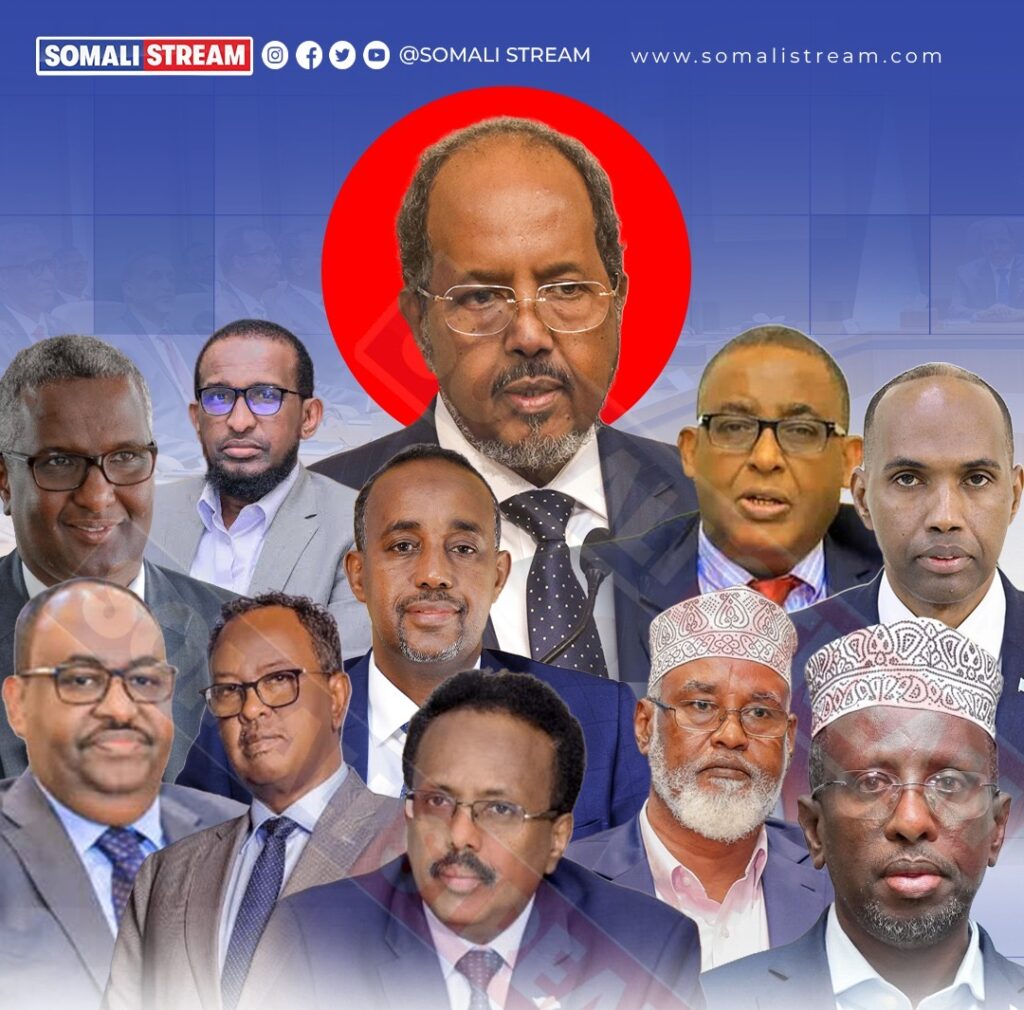
On 20 November, the opposition met in the capital to weigh a message from President Hassan Sheikh Mohamud, and no formal answer has yet been announced. The capital has tried many strategies, and the latest is called a National Consultative Forum. Its principal guests did not come, and their absence was not a quarrel among themselves. In a letter to the four mediating partners, the opposition set its terms: the President should not host the talks, the partners should convene and mediate them, and only then would venue, security and agenda be discussed. The message reportedly offered to meet them at a location they trust.
The gift is a change of room. The opposition never asked for a new room. It asked to sit as negotiators before a referee both sides trust, while the electoral calendar of April and May 2027 runs on untouched. One member argued that the federal leadership uses every internal forum to harden its electoral position. They have walked this road before and come home with nothing.
Every farmer knows the harvest is decided long before the reaping. The opposition’s caution lies in the field, where three years of warnings were sown. Now they come up.
The Seeds Were Sown Early
In October 2023, the UN Special Representative, Catriona Laing, told the Security Council that “all constitutional amendments, including a decision on term extensions, should be based on inclusive dialogue, consensus and legislative processes.” At home, the previous President, former President Sharif and Puntland agreed. Abdiaziz Hassan Laftagareen, the elected president of South West and for years a close ally, has said he repeatedly warned against changing the constitution without broader consensus. Friend and critic brought the same seed: consensus. By June 2026, the UN mission itself recorded that the warnings of partners had not been heeded.
The Plough Went On
Twice the nation offered him a better season. In January 2024, when a neighbouring state signed a memorandum with Hargeisa, opposition leaders stood behind the federal government. Within three months, parliament passed the first amended chapters, and the next morning Puntland withdrew its recognition of the government. In December 2025, when a foreign state announced its recognition of Somaliland, former presidents sat beside him in “a rare show of political unity.”Again, within three months, the remaining amendments passed. Unity offered in an hour of national insult is a loan, not a gift. It was spent on the very project that had split the house.
The pattern of talks never changed. Round after round ended the same way, and in May 2026, talks at Halane mediated by the United States and the United Kingdom ended without consensus. Each time, the door opened, the cameras came, and the guests went home. The plan stayed, and it grew. Put plainly, the opposition was told to get lost, not with insults but with procedure.
Consultation Is Not Negotiation
On 15 October, on state television, the President ruled out talks with the opposition on how the vote works. Ten days later, he invited his rivals to a consultative forum. Wadatashiis consultation, where the guest speaks and the host decides. Wadahadal is negotiation, where both sides bend. The opposition asked for the second, with a freeze on electoral activity and independent mediation, and neither was granted.
The Season Has Turned
In June 2022, President Hassan Sheikh Mohamud sat with the leaders of all five federal member states. Four years on, Puntland and Jubaland have walked away, South West is contested, Hirshabelle is divided, and only Galmudug remains both beside him and whole. On 5 November, the Supreme Court read his own constitution back to him: the text that stretched terms to five years nowhere applies the extra year to those already in office, so his term ended on 15 May 2026.
Abroad, the United Kingdom urges inclusive political dialogue, Egypt stresses national understanding among Somalia’s political actors, and Türkiye, the African Union and IGAD say the same. Dialogue and consensus, the two words he spent three years stepping around, now meet him in every capital. Why should the opposition release a man surrounded by his own unheeded counsel? The constitution he pushed through alone has become a red card, and it sits in his own pocket.
Why the Opposition Hesitates
Philip Keefer, in the Oxford Handbook of the Politics of Development, names a central failure of fragile politics as “the inability of political actors to make credible commitments.” His word has no guarantor. The UN mission closed on 31 October after a transition the government requested. On 19 November, the Prime Minister turned that orderly exit into a boast: “We expelled the UN envoy and dismantled C6+. Come on then; there is no international community left to mediate between us.” The same day, European and Turkish envoys were meeting opposition leaders. The UN never needed an office in the capital; its political office worked from Nairobi for seventeen years. The office gave the government a quiet room where disagreements were softened before they became statements. That room is gone, and the next word from New York will arrive unfiltered. The remark was aimed at the opposition. It landed on the government.
What Would Rebuild Trust
Four steps are needed. First, agree on the referee before the agenda: a guarantor panel both sides accept. Second, a mutual pause, with the government suspending unilateral electoral steps and the opposition suspending parallel processes. Third, a written, dated agreement lodged with the guarantors. Fourth, a dispute rule: the guarantors’ finding is published and stands. Ansell, Boin and ‘t Hart remind us that leaders must get others to accept their definition of the situation. He has not, and his word alone is no longer enough.
The Harvest Before Him
A harvest of warnings, left unheeded, becomes a famine of trust. Until a promise is on the table that would cost the President something to break, caution is not stubbornness. It is memory. Once he offers a guarantor, the opposition’s reasons to stay away will wither in the field.
Awale Ali Kullane is a Somali diplomat and political analyst who writes on institutions and political leadership in the Horn of Africa. Find him at www.linkedin.com/in/awale-kullane-2632a5388