


1. Introduction
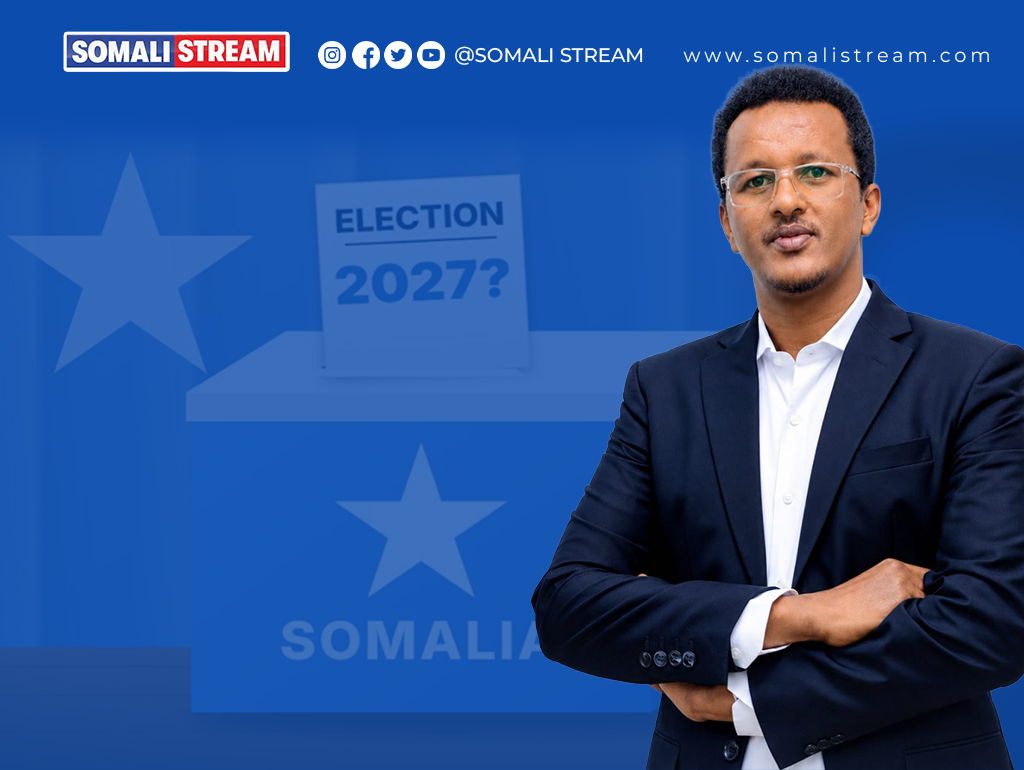
Somalia’s National Independent Electoral and Boundaries Commission has scheduled parliamentary elections for 15 April 2027 and the presidential election for 15 May 2027. These would be the first national direct elections since 1969, ending the clan-based indirect model used for every transition since 2012. The aspiration is legitimate, but the vote is being prepared in a deeply contested environment: the March 2026 constitutional amendments are rejected by the opposition and by two founding member states, Puntland and Jubaland; South West State and Hiiraan have become theatres of armed confrontation; and the ruling party dominates the state-level elections it is itself organising. The central question is not whether Somalis want to vote, but whether the government can deliver an election the whole nation accepts as free, fair and legitimate. This commentary argues that an election without consensus is more likely to reproduce the crisis than resolve it, and proposes pathways towards a credible vote.
2. Historical Background: From Unitary Collapse to a Federal Bargain
The Somali Republic, formed on 1 July 1960, held competitive multiparty elections and achieved one of Africa’s first peaceful transfers of power in 1967. Clan patronage, the disputed March 1969 election and the assassination of President Abdirashid Ali Sharmarke in October 1969 opened the way for General Mohamed Siad Barre’s coup. The military regime suspended the constitution, banned parties and centralised power in Mogadishu. Defeat in the Ogaden war (1977–78), repression and the manipulation of clan against clan led to armed rebellion and, in January 1991, total state collapse, teaching Somalis that control of the capital does not mean control of the country.
Reconstruction came through negotiated settlements: the Arta conference (2000); the Mbagathi process (2004), which first adopted federalism in the Transitional Federal Charter; and the Djibouti process (2008–2009), which brought in former Islamic Courts leaders. The Provisional Constitution of 2012 established the Federal Government. Federalism was a remedy, not a fashion: to share power and resources, protect communities from a predatory centre and build the state from below through member states such as Puntland (1998), Jubaland, South West, Galmudug and Hirshabelle. Every electoral dispute since 2012 has asked the same question: does the centre govern by agreement or by force? The April 2021 crisis, when an attempted mandate extension provoked armed clashes in Mogadishu and was reversed, remains the most relevant precedent for 2027.
3. The Constitutional Dispute and the Mandate Question
In March 2026 Parliament amended the Provisional Constitution, extending presidential and parliamentary terms from four to five years, and President Hassan Sheikh Mohamud signed the changes into law on 8 March. The government presents this as completing the constitution and a step towards universal suffrage. The opposition, the Somali Salvation Forum, Puntland and Jubaland reject it on two grounds. Procedurally, the Provisional Constitution was a negotiated political settlement, so fundamental changes to the system of government, the electoral model and the division of powers cannot be made by the federal parliament alone without the member states. Second, it is a conflict of interest, extending the mandate of the very office holders who passed it. The president says his term ends on 15 May 2027, while Puntland and the Salvation Forum say it ended on 15 May 2026. A government with a disputed mandate is poorly placed to organise an election its rivals will accept.
Opposition leaders compare the government’s approach to Japan in Manchuria after the 1931 Mukden Incident, when Tokyo created the nominally independent state of Manchukuo under a figurehead ruler while keeping real power. In their reading, Villa Somalia seeks puppet administrations that keep the forms of self-government while answering to the centre. Whether or not the analogy is exact, it expresses a genuine fear: that federalism is being preserved in form but emptied of substance.
4. A Fragmented Federation
Puntland, Jubaland and North East State. Puntland and Jubaland have formed a common front against the amendments and the one-person, one-vote model as designed by Villa Somalia. Jubaland boycotted the amendment process, and the prime minister has said elections there will be held only where conditions allow. Puntland also rejects federal recognition of North East State, formed from the former SSC-Khaatumo administration in parts of Sool, Sanaag and Cayn that Puntland claims, and sees a pattern of breaking existing states and building new ones loyal to the centre. It condemns the creation and arming of new forces in contested areas, noting that it secured its own territory, including through its campaign against ISIS in the Cal Miskaad mountains, without Mogadishu. An election without Puntland and Jubaland would be partial, not national.
South West State. In March 2026 Abdiaziz Laftagareen cut ties with Mogadishu over the amendments. Federal forces took Baidoa on 30 March, and Laftagareen resigned days after his re-election. His loyalists have since attacked Baidoa repeatedly, with dozens killed. On 3 September an explosion struck the Doolow residence of General Mahad Abdirahman Aden (Taliye Shub), a former Custodial Corps commander aligned with Laftagareen. Jubaland and Laftagareen’s camp called it a Turkish airstrike on behalf of the federal government; the government denied involvement and announced a fact-finding committee. In October a further alleged drone strike targeted another Laftagareen ally in Bay region. The use, or perceived use, of air power against political opponents is a dangerous escalation, and Baidoa, home to hundreds of thousands of displaced people, cannot host a free vote without a political settlement.
Hirshabelle. Hirshabelle has been fragile since its formation in 2016. Many Hawadle leaders in Hiiraan sought either the state presidency or moving the capital to Beledweyne; the 2026 process delivered neither. The ruling Justice and Solidarity Party (JSP) won 78 of 99 seats on 30 September, and on 24 October the incumbent, Ali Abdullahi Hussein (Gudlawe), was re-elected with 81 votes, with Jowhar remaining the capital. Critics call the process neither free nor fair, arguing that candidates were pre-selected by the ruling party in Mogadishu, and some allege that the president placed a close relative in the new leadership. The earlier dismissal of Hiiraan Governor Ali Jeyte, a leading Ma’awisley commander against al-Shabaab, and fighting around Beledweyne show that the dispute is now being settled with weapons rather than dialogue.
Galmudug. Galmudug is the government’s strongest case. After the 30 September rerun the JSP won 67 of 89 seats, and on 22 October Liban Ahmed Hassan was elected state leader with 72 votes; some opposition figures congratulated him. Yet the president had earlier endorsed him as the party’s sole candidate. Galmudug shows that a vote is possible, but not yet that it is trusted.
Al-Shabaab. The main beneficiary of elite division is al-Shabaab. During the 2021 crisis it intensified attacks in Mogadishu and regained ground in the Shabelle regions. Today federal troops are deployed against member states and clan militias rather than insurgents; every soldier sent to Baidoa or Beledweyne to settle a political quarrel is a soldier withdrawn from the counter-insurgency.
5. Is Somalia Following the Regional Playbook?
Djibouti’s President Ismail Omar Guelleh, in power since 1999, removed term limits in 2010 and the age limit in 2025, then won a sixth term in April 2026. In Tanzania, President Samia Suluhu Hassan was declared winner with nearly 98 per cent in October 2025 after the main opposition party was excluded and its leader charged with treason. In Uganda, President Yoweri Museveni won a seventh term in January 2026 amid an internet shutdown and reports of intimidation. The common pattern is to change the rules through a loyal parliament, keep the formal election and control who may compete.
Somalia shows warning signs of this pattern: a self-serving term extension, a contested electoral commission, a ruling party winning state after state, and federal force used against dissenting member states. There are also real differences: the president does not control the whole territory, the army or the economy; power remains dispersed among clans, member states and armed actors; and supporters can fairly argue that replacing clan selection with direct voting is a genuine reform. Somalia is not yet Djibouti, Tanzania or Uganda, but it stands at the door. In a state without a strong centre, the regional model will not produce stability; it will produce another cycle of conflict.
6. Can Somalia Deliver a Free, Fair and Trusted Election?
Technically, voting can take place in 2027 in Mogadishu, Galmudug and parts of South West and Hirshabelle. Politically, a credible national election cannot be delivered on the current path, because it fails four tests: inclusion, since Puntland and Jubaland are outside the process; trust, since the opposition rejects both the commission and the mandate; security, since Baidoa, Beledweyne and large rural areas held by al-Shabaab remain insecure; and time, since national registration, boundary delimitation and dispute-resolution mechanisms cannot be built in under six months.
A credible election requires three conditions, met in sequence: a political settlement on the rules, with a roadmap agreed by the federal government, all member states and the opposition on the electoral model, the mandate and the commission; neutral administration, with an electoral commission and dispute-resolution body appointed by consensus, transparent registration and independent observation; and a secure environment, with a ceasefire in contested states, federal forces redeployed against al-Shabaab and a joint security plan for polling. Only then will losing candidates accept the result, and acceptance by the losers is the true measure of a credible election.
7. Recommendations
- Convene a National Consultative Council within 60 days, without preconditions, bringing the president, all member state leaders and the opposition together to agree one electoral roadmap.
- Reconstitute the electoral commission by consensus, giving each major actor a voice in naming commissioners, because a body rejected by one side will see its results rejected.
- Adopt a phased, hybrid model: direct voting where security and registration allow, an improved indirect model elsewhere, and a fixed timetable to extend direct voting nationwide.
- Return the constitutional amendments to a consultative process and commit in writing that no current office holder will benefit from any further extension after May 2027.
- Stop using force to settle political disputes: halt operations in South West and Hiiraan, independently investigate the Doolow and Bay strikes, and redeploy troops against al-Shabaab.
- Respect the integrity of existing member states by settling the Puntland and North East State dispute through dialogue, and stop creating or arming parallel forces in contested areas.
- Resolve Hirshabelle through local reconciliation led by elders, religious leaders and civil society of Hiiraan and Middle Shabelle, with neutral mediators agreeing power-sharing first.
- International partners should support the process, not individuals, linking electoral funding to inclusion, a consensual commission and an agreed timetable, and speaking with one voice.
- Protect the vote with a joint federal and state security plan backed by the AU mission, and include women, youth, minorities and the diaspora, with free media and civil society observers.
8. Conclusion
Somalia has walked this road before. The unitary state collapsed because one group held power without the consent of others; transitional governments survived only when they brought in the excluded; and federalism was adopted as the Somali answer to the gun, with consensus as its price. The 2027 elections can still become a historic turning point, returning Somalis to the ballot box after nearly six decades, but only if the government chooses agreement over speed, dialogue over force, and the integrity of the federation over short-term advantage. A credible vote held a few months late is far better than a disputed vote held on time. Leaders in Mogadishu, Garowe, Kismayo, Baidoa and Jowhar share responsibility for that choice, and history will judge them by it.
About the Author
Abdulkadir Mohamed Ahmed (Haider) is a researcher, security analyst and lecturer, and a coach in conflict resolution and peacebuilding. He holds a Master’s degree in Peace and Security Studies. His commentary focuses on peace, security, federalism and politics in Somalia and the Horn of Africa.
