


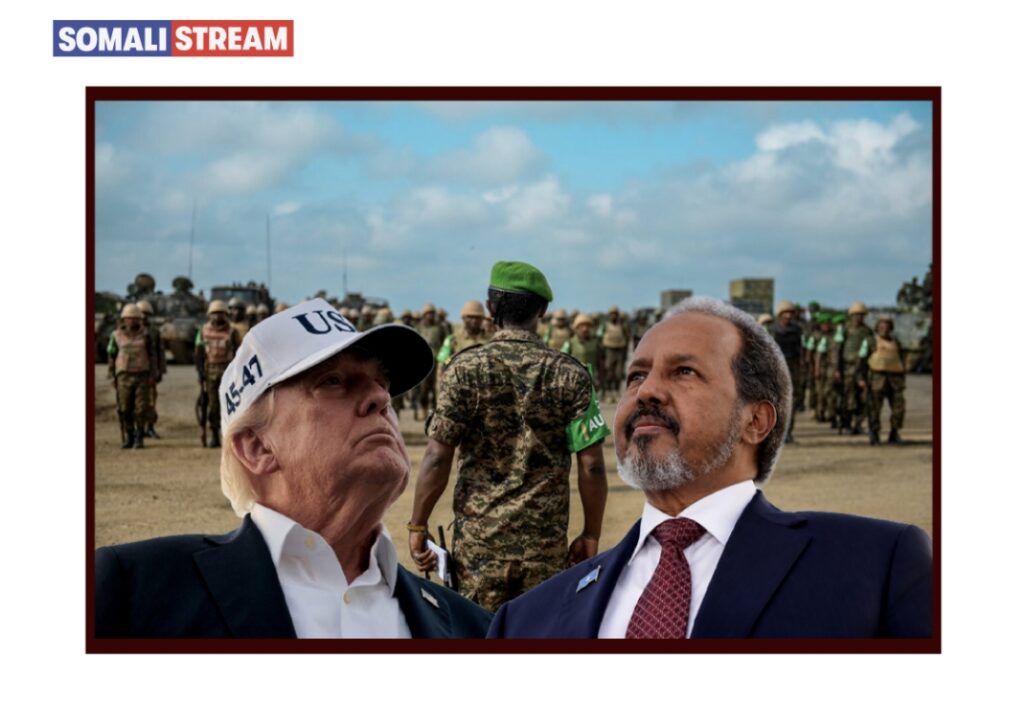
The United States has offered Somalia and the African Union a little more time, but not nearly as much as they want. Washington is now prepared to support a 12-month drawdown of the United Nations Support Office in Somalia, or UNSOS, before its eventual liquidation.
African countries contributing troops to the African Union Support and Stabilisation Mission in Somalia, AUSSOM, are still seeking 18 to 24 months of continued support. The difference is only a year on paper.
In Somalia, where African troops still depend heavily on international logistics to operate against al-Shabaab, it could become the defining argument over how the country’s nearly two-decade security transition ends.
The American proposal is not an immediate withdrawal of AUSSOM. It is a proposal to begin dismantling the United Nations machinery that helps sustain it. That machinery matters because military operations are not sustained by soldiers alone. Food, fuel, water, transportation and medical support have to reach troops in remote and insecure areas.
If those functions disappear before another institution can take them over, an apparently gradual international withdrawal can translate into a much faster reduction in military capability.
That is the concern behind the Kampala position.
At the recent summit in Kampala, AUSSOM’s troop-contributing countries called for 18 to 24 months of uninterrupted support, arguing that Somalia needs time to meet security milestones, strengthen its own institutions and transfer responsibilities in an orderly way.
Washington has rejected that longer extension, while suggesting that some UNSOS functions could eventually move to the African Union or other actors.
The argument therefore is no longer simply whether AUSSOM should continue. It is whether the infrastructure sustaining the mission can be transferred before it is withdrawn.
That question reaches directly into the strategy of President Hassan Sheikh Mohamud.
For years, his government has presented Somali ownership of national security as the ultimate objective: international forces should gradually give way to Somali institutions capable of securing the country themselves. But that strategy contains an unavoidable contradiction.
The faster international support is removed, the greater the pressure on Somali forces to demonstrate that they are ready to replace it.
If they are not, the government risks inheriting a security burden before it has the means to carry it.
The timing is especially awkward because Somalia is simultaneously asserting greater political and diplomatic authority.
In February, Somalia was elected to the African Union Peace and Security Council for 2026–2028, taking its seat on the body responsible for continental conflict and security decisions.
Yet Somalia remains dependent on the same African security architecture in which it now has a stronger diplomatic voice.
The contradiction becomes sharper in Mogadishu itself. Hassan Sheikh’s government has defended constitutional changes that it says extend the mandate of the federal government and parliament until May 15, 2027. Opposition forces have challenged the political transition, making the timing and legitimacy of the next elections a central dispute. Independent analysis has described the constitutional changes as a source of continuing political stalemate.
That political dispute matters to the security transition because Somalia cannot easily separate the question of who governs from the question of who commands and finances security.
The federal government needs cooperation across the country’s political system to build national security institutions. Those institutions need predictable financing and international support. And foreign governments need confidence that the Somali state can manage the responsibilities being transferred to it.
The UNSOS dispute puts all three questions under pressure at once.
For the African troop contributors, the immediate concern is avoiding a gap between the departure of one support system and the arrival of another.
For Washington, the issue is how quickly an expensive international structure can be wound down and its responsibilities shifted elsewhere. For Mogadishu, the problem is more fundamental: how to demonstrate national security independence while still relying on an international system to sustain the forces fighting
Somalia’s insurgency.
The financial question could prove decisive. UNSOS already has an approved allocation of about $481 million for the current financial year, meaning a 12-month drawdown could provide additional time to use, transfer or liquidate resources rather than forcing an abrupt shutdown at the end of 2026.
But more time is not the same as a solution.
The African Union would have to assume additional logistical responsibilities. Donors would have to provide predictable financing.
Somalia would have to accelerate the development of its own security institutions. And the United Nations would have to determine which assets and functions can actually be transferred rather than simply dismantled.
The central danger is therefore not the formal closure of UNSOS. It is the gap that could emerge between the withdrawal of international capacity and the readiness of whoever is supposed to replace it.
For Hassan Sheikh, that makes the coming negotiations unusually consequential. Somalia is gaining influence inside the institutions that shape Africa’s security policy while still depending on those institutions for its own security.
The United States has now offered a longer runway than an immediate shutdown would have provided. But by rejecting the 18-to-24-month transition sought by African governments, Washington has also made clear that the era of open-ended international support is drawing toward its end.
The question facing Mogadishu is no longer simply how long AUSSOM can stay. It is whether Somalia can become responsible for its own security before the system that has carried much of that responsibility begins to disappear.