


By Mohamed Yonis Hassan
Somalia, located in the horn of Africa and with the longest mainland coastline on the continent, was once collectively known as the “Greater Somalia” which was under the control of FIVE (5) different colonial powers. The northern Somali territories were colonized by Britain while the South and Central regions came under the colony of Italy. The Northern Frontier District (NFD) now euphemistically called Northeastern Region of Kenya, was placed under the administration of Kenya after British colonial authority simply handed over the land to them. The Western Somali (Ogadenia) today remains under the occupation of Ethiopia while Djibouti was colonized and remains under the influence of France. This diverse powerhouse aiming to solely dominate a single ethnic society shows the strength of the said Somali people and the magnitude of their resistance throughout their long history.
The present Somali Republic consisting of the Northern and Southern regions jointly achieved independence in 1960 after a long struggle led by the various Somali Resistance Movements. Likewise, Djibouti’s independence came only after intense negotiation by the then Somali central government which forced the French colonial administration to accept a transition toward sovereignty. The independence of the Western Somali Territory (Ogadenia) region escalated into the well documented 1977 war between Somalia and Ethiopia, which was backed by the then world superpowers including the Soviet Union and the west before it. However, despite all the pressures, Somalia came out on top of that war by advancing well into the outskirts of Addis Ababa coming within mere 60 km of the Ethiopian capital.
This demonstrated the seriousness and commitment of all Somali people to liberate their Somali brothers in the region much to the opposition posed by the world’s big guns. Eventually, brokered negotiations brought a halt to the fighting and gave the Somali West region a weak status within the Ethiopian federal system. Similarly, the Northern Frontier District (NFD) which is currently described as Northeastern Region of Kenya was given a form of equal disposition by Kenya amid huge pressure from the then Somali government.
It is worth noting that none of the Somali regions achieved their independence peacefully. Their freedom came only after unrelenting resistances against the colonial powers that lasted for centuries. From the legendary Somali freedom fighter Ahmed Ibrahim Al Ghazali better known as Gurey who ruled vast territories across the Horn of Africa to the fearless freedom fighter Sayid Mohamed AbdulleHassan, whom the British spuriously named the ‘Mad Mullah’ after he faced them down with such bitter battles, forcing them to conduct their first ever aerial bombardment in Africa against his Dervish Somali fighters and all the way to the formation of the Somali Youth League (SYL).
The SYL led electrifying campaigns against the Italian colony in the South and Central Regions of Somalia; the Somali independence did not come by coincidence nor was it a gift but was a result achieved through the loss of thousands of lives and the shedding of honourable. blood for the freedom cause
Meanwhile, for those who do not fully understand the Somali ethnicity, its independence history gives a clear glimpse into who they really are as a people. For Somalis, pride is not just an identity in emotion, it is rather integrated into their deep roots. Being Somali is tied to an ancient history, a distinct language and a unique culture defined by agro-pastoralism, stern resistance and a never-say-die spirit which defines their invincibility.
There is an old Somali proverb that says, “wherever you are, either rise above the rest or disappear”. This is not just another traditional saying, but it is rather a living reality of the Somali character. Therefore, when you see Somali refugees, migrants and naturalized citizens excelling, booming in business, holding influential political roles and in professional fields, you have to realize that it’s not accidental; It is instinctive. Hence, the infamous quote by the legendary Somali actor –Barkhad Abdi – in the pirate film – Captain Phillips – “look at me, I am the captain now” did not appear out of the blue, but it reflects a Somali heritage that is defined by centuries of survival and resistance.
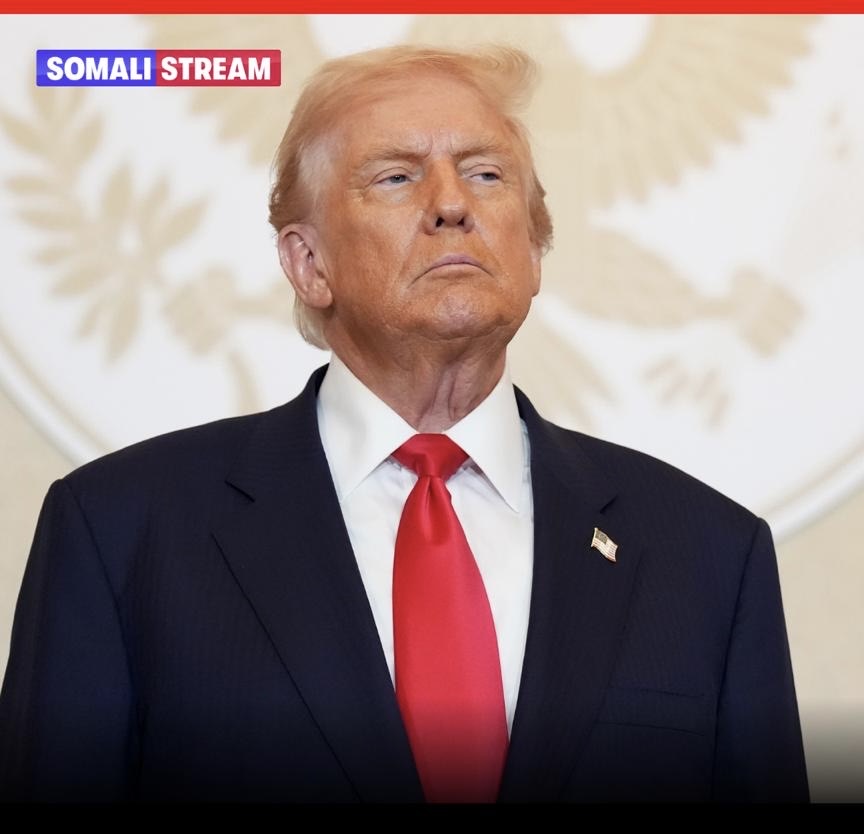
Nevertheless, When U.S. president Donald J. Trump aimed derogatory insults against Somalis, their collective response was swift, unified, and strongly rooted into their culture. Calling such a strong and deeply cultured society “garbage” was not a smart move on the part of Trump. It really shows his ignorance towards an ethnic society which thrives wherever it lives- whether at home or abroad.
Somalis are one of the few ethnic groups in Africa with a distinct language which is spoken nowhere else in the world, a proud nomadic culture, a history of poetry and diplomacy as well a centuries-long existing cultural code that outshines most current legal systems. Therefore, pathetic insults directed at Somalia or the Somali people do not land on a loose soil; they rather fall on mentally tough society who know exactly who they are. It is evidently clear that Somalia has been recovering from decades of foreign backed civil war, a brutal U.S. supported Ethiopian invasion and other conflicts almost always driven largely by external actors. Yet today, Somalia is experiencing a renewed stability, a re-energized economy and a booming business environment that is attracting foreign investors.
Subsequently, the world’s most powerful countries including from the collective west, Russia and China are now competing to build close relations with the Somali government to benefit from the country’s vast natural resources and its unmatched strategic location on the east coast of Africa.
USA has long been a key partner in Somalia especially in the areas of security and development. Billions of their dollars have been spent on military installations either inside Somalia (such as the Balidogle airbase) or in the neighbouring countries like Kenya (Manda Bay base) and Djibouti (AFRICOM) just to maintain strategic oversight over the Somali resources and limit the influence of competing global powers. The American interest is Somalia begun at independence and only grew in the decades since. It heightened during the cold war when their persistent diplomatic pressures pushed Somalia to withdraw from the Soviet alliance and tie a bilateral relationship with the U.S.
However, the U.S. relationship with the Somali people was not always clean and respectful. This was evident during the 1993 battle of Mogadishu when the U.S. army initially entered the country as peacekeepers under the mission of (Operation Restore Hope) but later slowly turned into an invasion force on a bloodbath when they deployed their elite Rangers and Delta force units who took out thousands of innocent civilians. In return, the US Army received a harsh lesson in urban warfare from the Somali militias who killed dozens of American soldiers, dragging some of their dead through the streets of Mogadishu in a moment that was to become a wake-up call for the American public. The entire mission collapsed, and the U.S. forces withdrew in weeks.
But the U.S. envy as it were, did not cease, they instead armed and supported Ethiopia’s 2006 invasion into Somalia after 6 months of incredible stability and peace achieved by the publicly supported Islamic Courts Union. Predictably, that invasion ended with yet another colossal failure. Ethiopia was eventually granted a safe passage to withdraw only after suffering tens of thousands of casualties and acute psychological trauma.
Since then, the relationship between U.S. and Somalia has only grown thinner and more transaction based than one primarily informed by mutual interest and understanding. With the U.S. providing more aid through the abolished USAID and in-return maintaining military presence in the country. But the U.S. was far from honest on its aid support since 75%of the billions supposedly spent on Somalia returned to the U.S. in the form of personnel salaries and logistics, on U.S. based contractors and private security firms. The remaining 25% was also invested in non-sustainable projects that failed to build resilience and self-reliance. When Trump dissolved USAID, many countries suffered but Somalia, with its strong resilient people, did not feel its absence one bit. That alone demonstrates these people’s spirit and determination.
Hence, given this long history, Trump’s derogatory insults against Somalis did not come as a surprise to them, considering how much of a pathological liar he can be, they did, however, question how a man could display such ignorance about a society with which U.S has such an agitated past.
Somalis, like the rest of the world, know that Trump is incapable, ignorant and sympathetic to criminals. But the fact that he insulted the very same people who defeated the American forces in their own backyard in 1993 and still standing strong against him in his own backyard – in the White House is absolutely staggering. Calling those same people “Garbage” raises serious concerns about his mental health and questions his judgement. Otherwise, he would have known, by now, that Somalis never bow to foreign intimidation, let alone insults from a man desperately trying to avoid accountability over unreleased Epstein files.
The careless rhetorical remarks against Somalis displayed Trump’s level of ignorance about a society whose pride in their ethnic identity is paramount, whose diaspora influence is thriving worldwide and whose history of defending their pride and freedom is well documented. Somalis are open to criticism, but they expect it from a knowledgeable source not from a pathological liar like Trump.
Perhaps, Trump has now realized that he just provoked a society who are very much united in their response towards his racist and derogatory insults. From Mogadishu to Minneapolis, From Nairobi to London and all the way to Moscow, Somalis made it clear that their history and culture speak louder than his blatant racism and derogatory insults. They never tolerate disrespect. Just ask the U.S. rangers.
Finally, Somalis have stood firm against far stronger threats and are not shaken by the opinion of one lying ignorant politician. They are defined by their unwavering resilience, resistance, heritage, pride and cultural identity. And most importantly, unlike many other nations who forgive but not forget, Somalis may forget, but they never forgive. So, if, in the coming weeks, months, years or even decades, the United States attempts to restore friendly relations with the Somali people, they will discover that Somalis are not quick to forgive those who disrespect them.
Mohamed Yonis Hassan is a senior project manager, humanitarian worker, youth activist, and political analyst. He currently serves as Managing Director of the African Agricultural and Forestry Research Centre (AFREC).