


Somalia’s trade diplomacy has moved further in three years than in the three decades before them. The country is now a partner state of the East African Community, it has ratified the African Continental Free Trade Area, and its accession file at the World Trade Organization is open in Geneva. On paper that is a strong position. The harder question, the one that matters to a trader in Bosaso, is whether membership turns into real market access. What happens next depends almost entirely on decisions taken at home.
Achievements in Trade Diplomacy: Expanding Market Access
Somalia became a full partner state of the East African Community on 4 March 2024, and the two years since have gone into the unglamorous work that follows accession. A national monitoring committee on non-tariff barriers was launched in Mogadishu, and technical committees were set up to phase in the Customs Union and Common Market protocols. The EAC is the first bloc in which Somalia holds both a vote and a tariff schedule. Domesticating EAC law through Parliament remains the slowest part.
In August 2026 Somalia deposited its instrument of ratification for the African Continental Free Trade Area and became the fiftieth state party. The AfCFTA Secretary-General, Wamkele Mene, was in Mogadishu within days to begin work on implementation, and the Minister of Commerce and Industry, Jamaal Mohamed, tied the moment to industrial zones and a “Made in Somalia” label on processed goods. Somalia’s tariff offer rides on the EAC consolidated schedule, which covers about ninety per cent of tariff lines. The rest, and the services commitments, are still being finalised. Ratification was the easy half.
The WTO file is older and slower. Somala applied in 2016 and submitted its Memorandum on the Foreign Trade Regime in 2020, and the first Working Party meeting, chaired by Sweden’s Ambassador Mikael Anzén, was finally held in Geneva in February 2025. Members have put well over a hundred questions to Somalia, and the replies, the legislative action plan and the bilateral market access talks are all still ahead. Least developed countries take more than twelve years on average to accede.
Challenges to Somalia’s Trade Diplomacy
The obstacles are familiar and they have not improved. AlShabaab’s offensive through the Shabelle valley in 2025 took back towns the government had cleared two years earlier, and the group still taxes goods moving on the main roads into Mogadishu. Financing for the African Union mission that replaced ATMIS is unsettled. No investor commits capital to a rural processing plant when the road to it may change hands in a season.
The legal side is the part I follow most closely. Somalia is negotiating regional and multilateral commitments faster than it is writing the domestic law those commitments assume. Company law, competition rules, standards, customs procedure and investment protection are either outdated or missing, and where rules exist the Federal Government and the member states often apply them differently. A trader moving cargo from Kismayo to Mogadishu can meet two tariff treatments for one consignment. Investors read that as unpredictability, and they price it.
Competition in the region is real. Kenya and Djibouti have deeper port infrastructure, and Ethiopia’s search for commercial sea access, returned to negotiation by the Ankara Declaration of December 2024, will be settled by whoever offers working logistics rather than the better argument. Somalia’s export base has meanwhile taken a heavy blow. After a record 2024 of about 6.4 million animals, sheep and goat exports fell to roughly 3.8 million this year, and the price of an export-quality goat dropped from around fifty five dollars to about thirty-two. Four failed rainy seasons and a disrupted Hajj market did that in under two years.
Most of the economy is still unregistered, and the statistics trade negotiations depend on are thin. You cannot table a credible tariff offer or defend a standard without data on what is actually produced and traded. Weak customs records hold back revenue as well, at a time when donor support is falling. Growth slowed to about three per cent in 2025 and is expected to stay near that level this year.
Opportunities for Expanding Partnerships
The opportunities are equally clear. Somalia has the longest coastline in mainland Africa and its fisheries remain barely developed relative to what those waters can sustain. Licensing, stock assessment and cold chain investment would earn far more than selling access cheaply to distant fleets. Türkiye’s offshore hydrocarbon programme, which moved from survey to drilling this year, has drawn attention to the same waters, and its fiscal and environmental terms deserve scrutiny now.
Diversifying away from the Gulf livestock trade is no longer optional. This year showed how quickly a single-market, single commodity export profile can fail. Sesame, gums and resins, hides and skins and processed fish have buyers in Asia and increasingly within Africa, and AfCFTA rules of origin reward the country that processes rather than the one that ships raw. That is where “Made in Somalia” becomes an economic argument instead of a slogan.
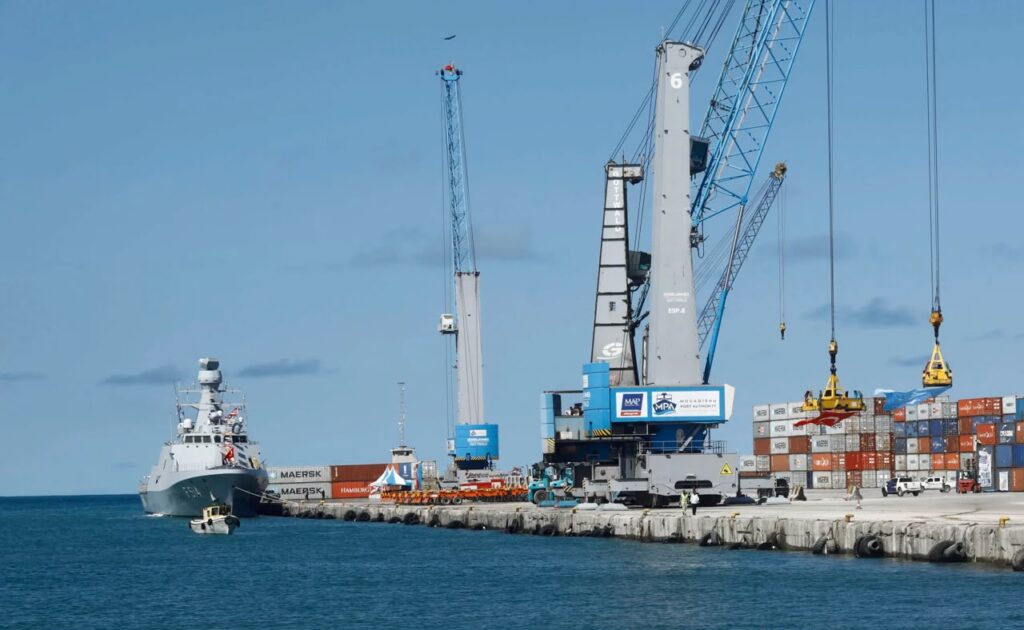
Infrastructure is being built, though unevenly. Construction has started at Hobyo, Mogadishu port handles more volume each year, and the Berbera corridor keeps pulling Ethiopian cargo. Public private partnerships can carry much of this investment, but only under a concession framework that survives a change of government. Digitising customs and clearing goods on risk rather than on inspection would cut days out of the border process far more cheaply than a new quay.
The Role of Regional Integration
Regional integration gives Somalia access to a market of about 1.4 billion people, but access is a legal condition, not a shipment. Preferences are claimed through certificates of origin and conformity assessment that partners will accept. Somalia has few accredited testing laboratories and no working standards regime, so an exporter can hold a preference on paper and still be turned back at Mombasa or Djibouti. Building that technical infrastructure is less visible than signing an agreement, and far more decisive.
Cooperation with neighbours on transit, security and customs lowers risk for everyone, and Somalia’s position between the Red Sea and the Indian Ocean gives it something to offer in those conversations. The World Bank and the African Development Bank remain the realistic sources of financing for customs modernisation, access roads and energy links, and Somalia’s record since reaching the debt relief completion point in December 2023 has kept that door open.
Recommendations for Strengthening Trade Diplomacy
Several things follow. The Ministry of Commerce and Industry, the Ministry of Finance and the customs authority need a standing team of trained negotiators rather than delegations assembled a few weeks before each meeting. Accession files reward institutional memory, and Somalia keeps losing it.
The legislative agenda should be sequenced against the obligations Somalia has actually taken on. Company law, standards, competition, customs procedure and investment protection ought to be drafted with the EAC and WTO commitments in view, and agreed with the federal member states before enactment.
Customs digitisation deserves priority over new physical works. An electronic single window, published tariffs and a working appeals procedure would improve competitiveness quickly and cheaply. Special economic zones near the main ports can follow, once the law governing them is clear on land, tax and dispute settlement.
Security planning and trade planning belong in the same room. Corridor security for livestock routes and feeder roads has a measurable export value, and should be argued in those terms with partners funding the security sector.
Export diversification has to include drought resilience. Fodder reserves, water infrastructure, animal health certification and holding grounds protect the trade that still earns most of Somalia’s foreign exchange, while fisheries, agribusiness and renewable energy widen the base over time.
Conclusion: The Future of Somalia’s Trade Diplomacy
Somalia has reached the point where trade diplomacy stops being about recognition and starts being about delivery. Membership of the EAC and the AfCFTA, with an active WTO file, places the country inside a rules-based system it stood outside of for thirty years. None of it will show up in a pastoralist’s income unless the law is written, the customs system works and the roads are safe. The next two years, before the 2027 elections take the government’s attention, are the window for that domestic work. If it is done, Somalia trades as a partner. If not, these agreements stay what they are today, which is potential.
About the Author
Ahmed Mohamed Abdi writes on economic development, trade and governance in Somalia and the Horn of Africa, with a focus on the conditions that decide whether reform commitments become working institutions. He holds an LLB from the University of Somalia and is completing an LLM in international business law at the University of Liverpool.