


By Said Ahmed Ali
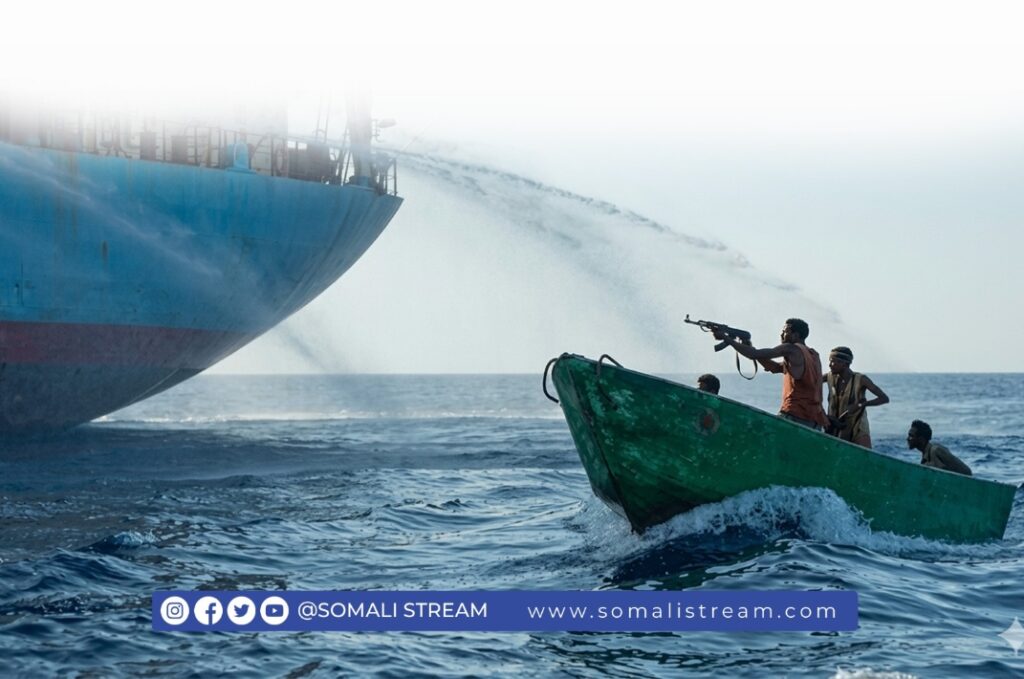
For more than a decade, Puntland’s coastline was known to the world for one thing. Somali piracy attacks surged between 2005 and 2011 (World Bank, 2013), and towns like Eyl and Garacad became shorthand for hijacked ships, long ransom negotiations, and foreign warships offshore. Yet Puntland’s people have fished, traded, and sailed these waters for generations, and the pirate was never the whole story of the coast.
Most of the global response treated piravy as a problem of force, to be met with naval patrols, arrests, and prison sentences. But the young men who climbed onto those ships came from somewhere, and where they came from matters. They came from isolated coastal communities with few schools, almost no technical or vocational training, and little awareness that other careers existed. When drought, illegal fishing, or conflict struck, they had no skills to fall back on. The UN Development Programme put youth unemployment among Somalis aged 14 to 29 at 67 percent (Foreign Policy, 2014). In that setting, the pirate’s skiff was the only visible opportunity within reach.
The problem has not gone away. Piracy has surged back off Somalia’s coast, though not yet to the scale of its 2011 peak (Al jazeera, 2026), and the human cost is again falling on Puntland’s youth. Since the resurgence began in early 2024, my own findings record between 18 and 24 young Somalis killed after being identified as pirates, between 44 and 50 imprisoned for piracy, and six who went to sea and have not returned. Each of them is a young person who might have become a fisherman, a mechanic, or a trader, and each is a permanent loss to Puntland’s human capital.
The official response has focused on the coast itself. In September 2026, President Deni visited Xaafuun and highlighted its potential for fisheries, tourism, water infrastructure, and a wider blue economy (WardheerNews, 2026). This attention is welcome, and the same report notes that residents want tangible services and improvements in daily life more than visits. But ports, airports, and heritage sites will take years to pay off, and they do not reach the young people who are dying, being jailed, or disappearing at sea today. Investment in coastal places is not the same as investment in coastal people. This administration has not yet focused on coastal resilience deeply or wisely, and the important question is not whether to invest in coastal villages and towns but what kind of investment they need.
This essay argues that piracy was a symptom of an economic vacuum and an educational deficit, and that lasting recovery depends on cultivating human capital. Investment must be judged by whether it gives young Puntlanders skills, tools, and viable livelihoods before the next hijacking recruits them. Infrastructure matters only to the extent that trained young people can use it. Gunboats alone cannot make the sea worth more to them as a workplace than as a target.
The Cause: How Underinvestment in People Created the Pirate
A pirate crew is made of labor, and labor joins when alternatives are poor. The World Bank names manpower as one of three foundations of Somali piracy (World Bank, 2013), and manpower is cheapest where young people have the least to lose. In many Puntland coastal communities, that foundation was thin. Only about 58% of primary-age children are enrolled and just 22.5% of pupils complete primary school, mainly because fees are unaffordable (Education Cannot Wait, 2022). Across Somalia, more than 60% of young people are reportedly outside education, employment, or training, and youth unemployment among 15–24-year olds was about 34% in 2024 (Baraarug, 2026).
Schooling is only half the story; the other half is what young people see it leading to. They watch graduates finish and leave the country because there is no work at home, so education looks like a route out of Puntland, not a livelihood in it. Even skilled youth are pulled in: some with English, numeracy, or bookkeeping end up working for pirate groups as translators and bookkeepers. Piracy therefore did not only recruit the unschooled. It absorbed skills Puntland had failed to give a legitimate market, so human capital was drained and misdirected at once.
Status deepens the pull. In many coastal towns the person who commands respect is the pirate with money, while the graduate is unemployed and the fisherman poor. To a teenager, piracy looks like a golden ticket, and awareness of prison, death at sea, and addiction is thin. Its returns were always part of the appeal; Hansen (2009) notes that its income could draw recruits from relatively good jobs. That reinforces the point: where legitimate careers are scarce and invisible, ambition attaches to whatever is visible.
This is why large projects have not solved the problem. Some coastal towns have seen multi-million dollar investments, yet piracy stays dormant in young people’s minds as a latent option. Crisis Group found in 2024 that anger over illegal trawling still risked sympathy for piracy in Eyl (Mahmood, 2024). Buildings change a town’s skyline, not what a nineteen-year-old believes is possible for him. Until investment reaches young people’s skills, incomes, and sense of a future, the recruitment pool stays open.
The Consequence: How Piracy Cannibalized Puntland’s Future
Puntland has lost human capital in two waves, and the second is still running. The first was piracy itself, which consumed the young men who put to sea. The second is the flight of young people, including the educated, through irregular migration. Both come from the same failure.
The first wave is hard to count, but the estimates are large. The World Bank reports pirate casualties estimated at 300 to 500, as lower bounds that exclude those who die at sea before ever attacking. It also cites a UN estimate of 200 to 300 pirates who never returned home, and 111 killed in 2011 alone (World Bank, 2013). Many survivors went to prison: over 1,400 Somali pirates were incarcerated across 21 countries by early 2014 (Reisener, 2026). At home, Bosaso’s overcrowded prison released lesser offenders to make room for them (DefenceWeb, 2011), and pirates were held alongside al Shabaab members, with juveniles among adults (Foreign Policy, 2014). One inmate, arrested at about sixteen, said he saw no future. Not all were Puntlanders, but each was a young worker lost to a cell or the sea.
The reward went mostly to others. The World Bank estimated that up to 86 percent of ransom proceeds went to people whose connections let piracy operate, leaving crews and financiers the rest. Shortland (2012) found that ransom money was spent mainly in Garowe and Bosaso, with no significant change in Eyl itself, while stigma fell on the whole coast.
The pattern has returned. Since early 2024 my findings record 18 to 24 young Somalis killed after being described as pirates, 44 to 50 imprisoned, and six who went to sea and have not returned. The label is contested, since Puntland’s security ministry says recent airstrikes hit civilian fishermen (Somali News Today, 2026). Cuts to US programs for coastal communities removed alternatives, and illegal fishing still squeezes local fishermen (Reisener, 2026).
Piracy is not the only exit. A joint study by the Puntland Development and Research Center and East Africa University, based on 406 survey respondents and 90 interview and focus group participants in Badhan, Bosaso, Galkayo, and Garowe, found that 32 percent of respondents intend to migrate irregularly within five years, and participants described friends and classmates who died at sea, including five boys from one neighborhood (PDRC & EAU, 2026). It challenges the assumption that unemployment is the main driver: institutional mismanagement was the most strongly cited push factor, with 81 percent agreeing that it encourages migration, against 75 percent for unemployment. Nearly everyone knows the journey kills, but the knowledge does not deter because staying feels just as hopeless. A Marag essay reports that when youth asked officials what could be done, the president told them to learn to swim (Siciid Axmed Cali, 2025). The remark is reported and unconfirmed.
The educated leave too. The same essay describes a drought of brawn and brain. A minister told parliament that professionals left after his ministry failed to meet their rights, higher education enrolment has fallen, Heritage research finds graduates lack market skills, and clan favoritism sours those who do qualify. The PDRC study found that intentions peak among diploma holders at 46 percent (PDRC & EAU, 2026).
This is the deepest damage. When visible wealth belongs to a pirate and graduates leave or drown, families doubt what schooling is worth. Piracy and tahriib are two exits from one dead end, and both drain the people Puntland needs. Piracy drained human capital twice: it took people, and it wore down the belief that would have built the next generation. Recovery cannot wait for infrastructure that matures over years.
Behind both waves lies a wider pattern: Puntland is leaving behind its biggest and most varied opportunities, especially in its coastal places. The coast offers fishing, trade, ports, and services, yet the coastal communities that supplied the pirates still see little of the investment that could turn those opportunities into livelihoods. Eyl, the pirate hub, showed no visible change even in the ransom years (Shortland, 2012). A region that neglects its coast leaves its coastal youth choosing between the skiff and the exit.
The Turning Point: Human Capital as the Foundation for Local Production
Puntland’s most valuable coastal asset is not its fish, ports, or buildings but its young people, and it is the asset that must be invested in and retained. Fish and boats do not make an economy. Somalia’s own fisheries framework names a lack of skills alongside missing vessels, storage, and transport as the constraints, while illegal fishing was estimated to bring US$306 million to other economies against a domestic sector worth US$135 million (Ministry of Fisheries and Blue Economy [MFBE], 2024). Boats and fish are useless without marine engineers, cold-chain technicians, business managers, and environmental scientists, and raw muscle cannot fill those roles.
Investing in skills is necessary but not sufficient. In Bosaso, a graduate trained in fish processing now fishes for about nine dollars a day on a boat whose owner takes most of the profit, and a young vendor is held back by missing cold storage and unreliable power (ICSF, 2026). Skills that cannot be used, owned, or financed leave young people trained and still poor.
Buildings are not enough either. Large projects in some coastal towns have not changed what a young person believes is possible, and piracy stays dormant in their minds. The same fisheries framework rates its own social risk “High” because of elite capture (MFBE, 2024), the pattern of the ransom years, when up to 86 percent of proceeds went to the well-connected (World Bank, 2013). Investment that ignores who controls it will repeat that pattern. Attention from the top, welcome as it is, helps only if trained youth can operate, own, and profit from what is built.
Governance must also reach the far coastal towns and villages. Ministries, schools, training centres, and credit are concentrated in the larger towns, while the remote coastal communities where recruitment happened see them least. Investment that stops at the cities and the ceremonial visit leaves those youth with the same choice as before. Schools, training, licensing, and protection from illegal trawlers must be present where opportunity is thinnest.
Retention decides the return. Nepotism and clan favoritism were the most strongly cited push factor in the PDRC study (81 percent), and it recommends merit based recruitment and training designed with the private sector (PDRC & EAU, 2026). Puntland keeps the people it trains only if effort pays.
So the investment is a sequence: skills that employers want, power and cold storage that make them usable, credit and ownership that let young people keep the value, and fair access, delivered by governance that reaches the far coastal towns and villages, so they stay.
Conclusion
Piracy off Puntland’s coast was never only a security problem. It was the visible surface of a deeper failure to invest in the people who live there. Where schools were few, skills scarce, and futures unclear, illicit economies found willing recruits. The price of that inaction has been lives lost at sea, years in prison, and young people who never came back. The first wave took those who put to sea, and the second, tahriib, takes those who choose to leave. Both come from the same dead end.
Piracy had other causes, including illegal fishing and weak institutions, but human capital is the asset Puntland controls and has let slip. Investment in the coast must begin there. Ports and cold stores matter only when trained young people can run them, own them, and keep the value, under fair, merit based governance that reaches the far coastal towns and villages and not only Garowe and Bosaso.
Naval patrols can suppress attacks, but they cannot create opportunity. Puntland’s greatest coastline defense is not gunboats but educated, empowered, and productive young citizens, with every reason to protect the sea and none to prey on it. Investing in them, and keeping them, is far wiser than paying again for neglect.
Said Ahmed Ali is a researcher at the IRIS Institute, focusing on Somali maritime security, evidence-based policy, peace building, and coastal resilience