


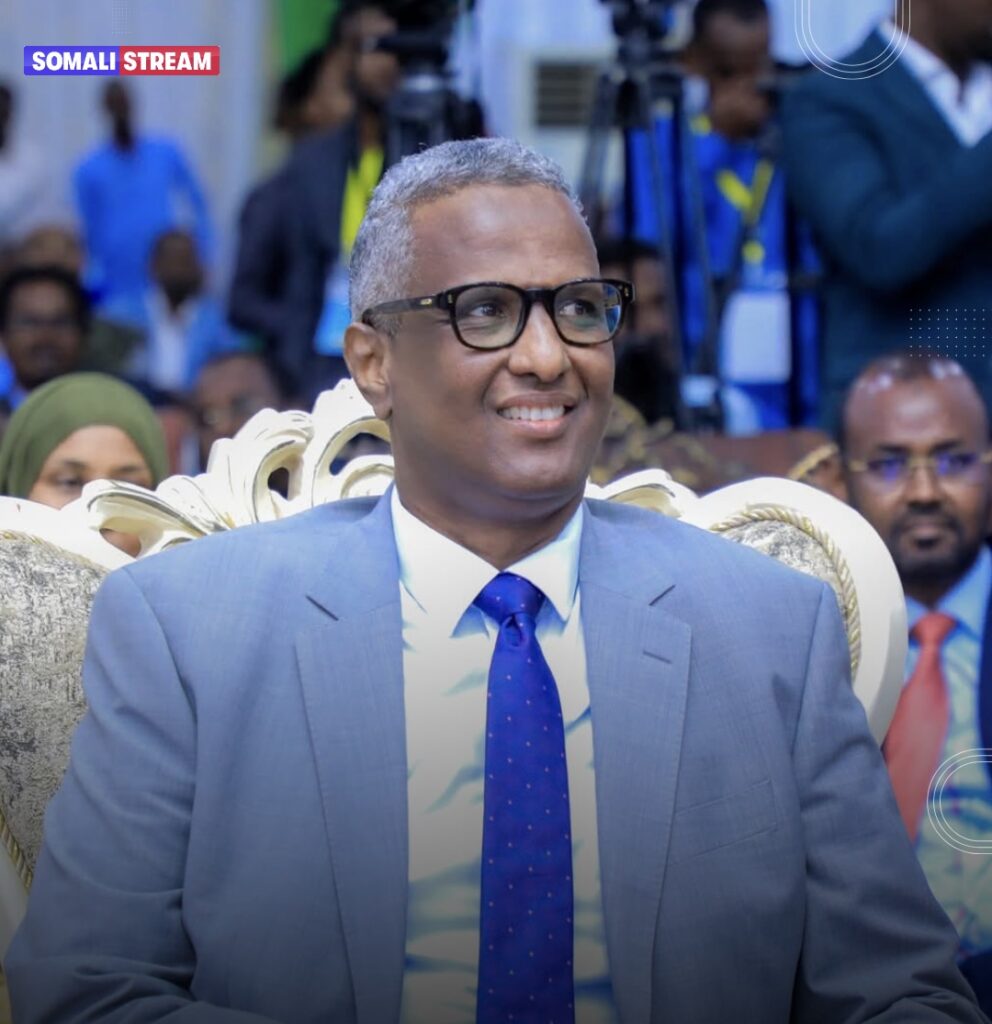
Hassan Sheikh Mohamud (HSM) returned to office in 2022 with an extraordinary reservoir of national goodwill. Most political forces accepted his presidency, opposition figures supported his election, Puntland and Jubaland were part of the political constellation behind his victory, and even in Somaliland there were voices that regarded his return with cautious optimism.
Four years later, much of that political capital has been exhausted.
The country is more divided, trust between Mogadishu and Federal Member States has deteriorated, and political disputes that belong at the negotiating table have been securitised. The use of drone warfare in domestic political confrontations should particularly alarm us, because when political disagreement becomes a security target, political mistrust becomes existential.
More consequential, however, is the political culture HSM has promoted and entrenched: division over consensus-building, elite capture over institution-building, and personal loyalty over merit. Access to the highest offices of the state has been determined by personal allegiance, political compliance and sycophancy rather than character, experience and sound judgement.
The consequences extend far beyond poor appointments and ineffective governance. This political culture has steadily hollowed out the state’s institutional intelligence, the accumulated knowledge, independent judgement and strategic capacity required to recognise emerging threats, anticipate their consequences and formulate coherent national responses.
This may ultimately define HSM’s second presidency: he inherited one of the broadest reservoirs of political goodwill in the country’s recent history, yet risks leaving behind a nation more divided, a political system more fractured and a state more vulnerable than the one entrusted to him.
But this domestic crisis is unfolding at an even more dangerous historical moment.
One Country, Five Strategic Spaces
The international order is entering a more competitive era. As great-power rivalry intensifies and regional powers become more assertive, ports, maritime corridors, military access and strategic infrastructure are again becoming instruments of geopolitical power.
The Somali state sits at the convergence of the Red Sea, Gulf of Aden and Indian Ocean. For a cohesive country, this geography should generate considerable diplomatic, economic and strategic leverage. For a divided one, however, the same geography becomes a vulnerability: instead of shaping the competition around it, the country risks becoming an arena through which others advance their interests.
A deeper geopolitical transformation is now taking shape: unresolved internal divisions are beginning to intersect with distinct external centres of power. The danger is not that foreign actors are necessarily conspiring to partition the country, nor that every external partnership threatens sovereignty. It is that competing political centres are increasingly looking outward for the security, resources and leverage they have been unable to negotiate among themselves.
In the northwest, Somaliland treats its position on the Red Sea and Gulf of Aden as diplomatic capital, seeking to convert strategic geography, ports and maritime access into international recognition. In the northeast, Puntland draws upon its ports, maritime importance and external security and economic partnerships to reinforce its autonomy and bargaining power vis-à-vis the federal centre.
Mogadishu occupies a fundamentally different position. As the seat of the internationally recognised Federal Government, it enjoys privileged access to international finance, security assistance, multilateral institutions and state-to-state relations. Yet rather than using these sovereign advantages primarily to consolidate an inclusive federal compact, the centre has increasingly sought to translate them into domestic political leverage in an unresolved struggle over the constitutional distribution of power.
South West and Jubaland occupy another strategic environment. Their proximity to neighbouring states, together with cross-border communities, commerce, population movements and security interdependence, gives those neighbours considerable influence over their political and security calculations. During periods of centre–region tension, these territories can consequently assume characteristics of strategic buffer zones, where domestic political disputes intersect with neighbouring security interests.
Together, these dynamics are producing a self-reinforcing centre–periphery power struggle, driven by mutual fears of domination and an increasingly acute security dilemma. Mogadishu draws upon international recognition and external support to consolidate authority, while peripheral political centres deepen external relationships to preserve autonomy or counterbalance the centre. What the centre regards as legitimate consolidation, the periphery may perceive as domination; what the periphery regards as self-protection, the centre may interpret as defiance. Each side’s attempt to become more secure therefore makes the other feel less secure, deepening mistrust and generating further counter-moves.
The danger is not necessarily formal partition. It is strategic partition by accumulation: the gradual emergence, through successive security partnerships, port arrangements, investments and diplomatic relationships, of distinct political spaces increasingly oriented toward different external centres of power.
No conference needs to divide the country. No new borders need to be drawn. No foreign power needs formally to declare a sphere of influence.
Partition can emerge strategically before it appears territorially.
The republic could retain juridical sovereignty, one flag, one UN seat and internationally recognised borders, while progressively losing strategic sovereignty: the capacity to organise its territory, security relationships, strategic assets and foreign partnerships around a common conception of national interest.
The question, therefore, is not whether foreign powers intend to divide the country. That is too simplistic. The deeper question is whether our unresolved struggle over power is internationalising domestic divisions and creating the conditions in which external interests can become embedded along internal fault lines.
The country needs international partnerships. But it needs many partners and one Somali strategic compass.
Otherwise, one sovereign state in international law could gradually become several strategic spaces in geopolitical practice.
One flag. One UN seat. One recognised territory. But one nominal Somalia and five strategic Somalias.
Reclaim the Somali Debate
Yet our national conversation remains dangerously below the magnitude of the challenge.
A nation confronting terrorism, constitutional uncertainty, economic underdevelopment, demographic pressure and intensifying geopolitical competition should be producing its most sophisticated national debate since independence. Instead, too much of the agenda is shaped by the mentality of former warlords, clan entrepreneurs, tribal propagandists and social-media personalities whose influence derives from provocation, slander and outrage rather than knowledge, ethics or intellectual seriousness.
The tragedy is not an absence of intellectual or professional capacity. The country has professors, entrepreneurs, religious scholars, economists, lawyers, diplomats, security professionals, writers and an enormous educated diaspora. Yet too often these constituencies react to an agenda created by others rather than exercising their responsibility to shape it themselves.
The loudest voices have displaced the most knowledgeable. The immediate has displaced the consequential. And the question “What does this mean for the nation?” has too often been replaced by “What does my clan, region or political camp gain?”
We cannot confront twenty-first-century geopolitics with the political vocabulary of the civil war.
My appeal, therefore, is particularly to our political, economic, religious, professional and intellectual elites: reclaim the debate, reclaim the narrative and reclaim responsibility for setting the national agenda.
This is no longer merely about political survival. It is about national survival.
National survival requires a minimum consensus that stands above government and opposition, clan and region. We can disagree over who governs, how power should be distributed and what constitutional arrangements we prefer; what we cannot allow is for those disagreements to destroy our collective capacity to determine our own future.
A national recovery requires five fundamental shifts:
From confrontation to reconciliation: political disputes must return from coercion and security confrontation to negotiation and political settlement.
From factionalism to agreed rules: government, opposition and Federal Member States need minimum rules of political competition that cannot be rewritten according to who temporarily controls power.
From patronage to merit: national institutions must recover professionalism, institutional memory and independent judgement.
From competing dependencies to strategic sovereignty: ports, military agreements, maritime resources and foreign partnerships must be governed by a coherent conception of the national interest.
From clan grievance to citizenship: our political vocabulary must move beyond clan arithmetic and regional resentment toward institutions, economic opportunity, public service, rights and equal citizenship.
National unity does not require eliminating our differences. National survival requires agreeing on what our differences must never be allowed to destroy.
The question confronting our elites is therefore larger than the next election, appointment or political alliance. We must stop asking only: What can I gain? What can my clan secure? What advantage can my region extract?
We should ask instead:
Where will history place us if we understood the magnitude of the danger, possessed the means to act, and nevertheless allowed the Somali nation to come apart?
Our ancestors confronted a Somali space divided by colonial powers. Our circumstances are fundamentally different, but the historical warning remains: external competition becomes most dangerous when it finds internal fault lines through which to operate.
If our generation allows political division, institutional weakness and geopolitical rivalry to produce five strategic Somalias, we will not be able to say that history simply happened to us.
Our ancestors endured partition imposed from outside. We would have presided over strategic partition from within.
We must choose another legacy: from clan to citizenship, region to nation, grievance to common purpose, patronage to merit, dependency to strategic sovereignty and from political survival to national survival.
Abdirahmam Abdishakur Warsame is a MP and leader of Wadajir Party in Somalia.