


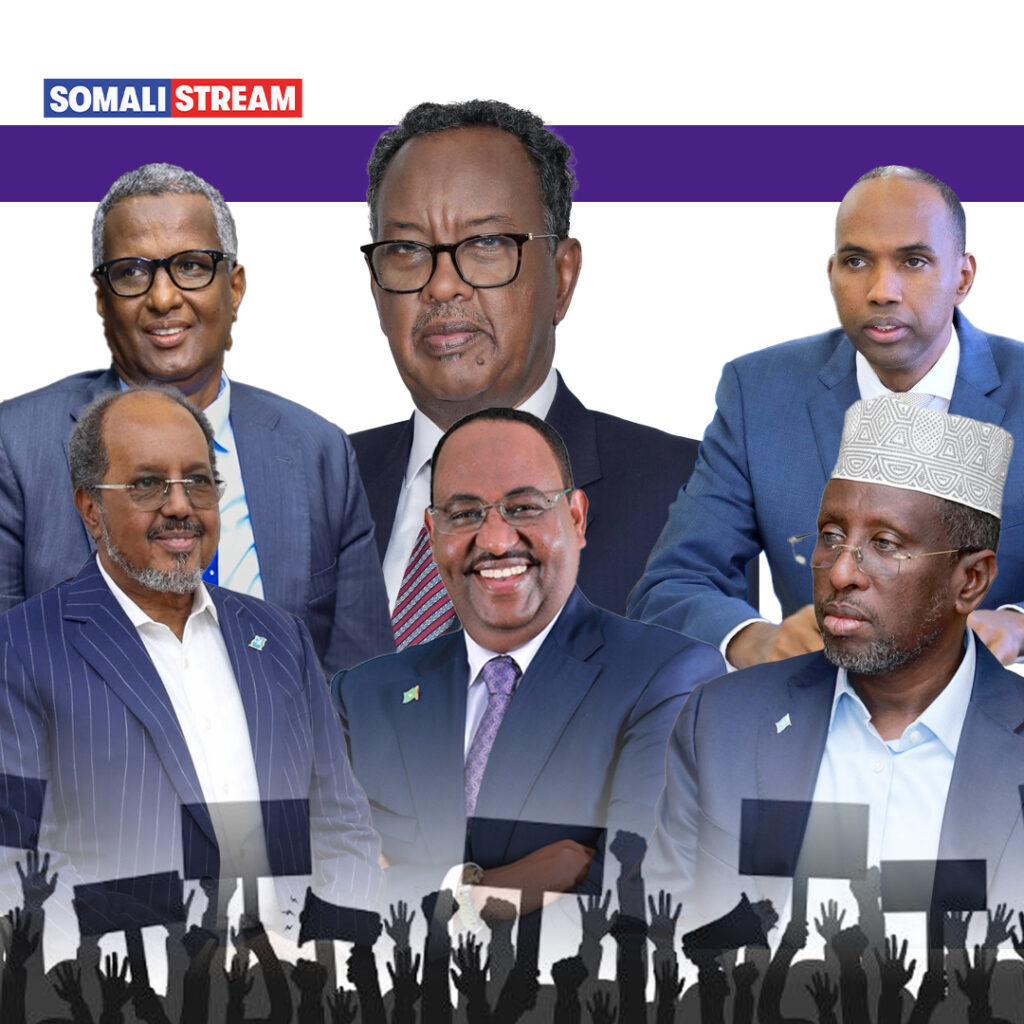
Somalia stands at one of the most consequential political crossroads since the adoption of federalism. The decisions taken—or deferred—over the coming days will shape not only the country’s next elections, but also its security, unity, sovereignty and long-term stability. As Somali political leaders gather this week under the facilitation of Türkiye, the United Kingdom, the United States, the European Union and the United Nations, they should recognize one overriding reality: there is no sustainable solution to Somalia’s security, economic or humanitarian challenges without first resolving the country’s political crisis. Every national priority—defeating Al-Shabaab, attracting investment, strengthening institutions, preserving national unity and delivering services—depends upon legitimate political authority accepted by all major stakeholders. Without agreement on the constitutional and electoral framework, every disagreement risks becoming another national crisis that consumes attention, weakens institutions and erodes public confidence.
By 15 July, it will be exactly two months since the constitutional term of President Hassan Sheikh Mohamud expired. His mandate ended on 15 May, precisely four years after he assumed office. Rather than witnessing an orderly political transition, Somalia once again finds itself trapped in a familiar cycle of constitutional uncertainty and political brinkmanship. For a country that has endured decades of conflict, state collapse and fragile governance, the current impasse is more than another dispute over electoral arrangements; it is a reminder of how elusive institutional normality remains.
This is no longer simply a contest for political advantage between President Hassan Sheikh Mohamud and opposition leaders, whether organised under the Somali Future initiative or the Somali Salvation Forum. The issue before the country has grown beyond personalities and partisan calculations. At stake is whether Somalia’s political class can demonstrate the statesmanship required to place the national interest above factional competition and preserve the credibility of constitutional governance.
The contrast with the wider region is increasingly difficult to ignore. Several of Somalia’s neighbours have recently navigated peaceful political transitions or managed competitive electoral processes without descending into prolonged constitutional crises. Somalia cannot afford to remain an exception—an island of recurring political uncertainty while others, despite their own imperfections, continue to strengthen institutional norms. Every additional day without an agreed political settlement deepens institutional paralysis, widens the governance vacuum and distracts national attention from the country’s far more pressing security, economic and humanitarian challenges. Political stalemate in a fragile state is never merely a constitutional inconvenience; it carries profound consequences for millions of ordinary Somalis whose daily lives depend upon a functioning state.
The humanitarian consequences of continued political paralysis are already devastating. Nearly 6 million Somalis face acute food insecurity, approximately 3.4 million people remain internally displaced, and almost 1.9 million children are suffering from acute malnutrition, including hundreds of thousands facing severe acute malnutrition. These are not simply humanitarian statistics; they are a reminder that political failure carries an immense human cost.
Somalia’s security situation also remains deeply concerning. In its recent report, New Chapter, Same Stalemate: Somalia’s War with Al-Shabaab, the International Crisis Group concludes that Al-Shabaab has adapted to military pressure, regained momentum in several areas and returned the conflict to a prolonged stalemate. The report warns that political divisions, weakening international support and the absence of a coherent national strategy have enabled the group to remain one of the most serious threats to Somalia’s stability and to security across the Horn of Africa.
At the same time, the consequences of Somalia’s political divisions are beginning to affect international security support. The United States has informed the African Union that it opposes continued financing of the African Union Support and Stabilization Mission in Somalia (AUSSOM) through UN-assessed contributions and has indicated that it will no longer support the current UN logistical support model beyond 2026. Washington has explicitly linked its concerns to Somalia’s persistent political divisions, lack of national cohesion and failure to assume greater responsibility for its own security. At a time when Al-Shabaab remains a potent threat, Somalia cannot afford a political crisis that undermines both international confidence and the financial sustainability of its security architecture.
Somalia also faces an increasingly dangerous geopolitical environment. The Horn of Africa has become one of the world’s principal arenas of strategic competition, and Somalia’s internal political divisions are increasingly intersecting with those rivalries. Broadly speaking, one regional alignment has centred around Türkiye, Qatar, Saudi Arabia and Egypt, while another has included the UAE and, more recently, Israel following its recognition of Somaliland. Within Somalia, these geopolitical dynamics increasingly overlap with domestic political alignments, with the Federal Government and several allied Federal Member States often perceived as closer to one grouping, while Somaliland and, at various times, Puntland and Jubaland have cultivated closer relations with the other. Whether by design or circumstance, Somalia’s internal political divisions are becoming increasingly entangled in broader regional competition.
The recognition of Somaliland by Israel demonstrates that Somalia’s unresolved political questions are no longer purely domestic matters; they are increasingly becoming part of wider geopolitical competition in the Red Sea and the Horn of Africa. Unless Somali leaders reach a durable political settlement founded on an agreed constitutional and electoral framework, external powers will continue to exploit internal divisions, deepening fragmentation and weakening Somalia’s sovereignty. A divided Somalia invites external interference; a politically united Somalia is far better positioned to engage all partners from a position of confidence and in pursuit of its own national interests.
Somalia’s economic outlook is equally fragile. Although macroeconomic reforms and debt relief have strengthened fiscal management, economic growth is projected at only 2.6–2.8 per cent in 2026—far below the level required to create meaningful employment for one of the world’s youngest and fastest-growing populations.
Youth unemployment remains among the highest globally, with an estimated two-thirds of young Somalis unemployed or underemployed. At the same time, reductions in international assistance, recurring climate shocks, rising food and fuel prices, disruptions to Red Sea trade routes and broader global economic uncertainty are placing additional strain on livelihoods and public finances. Without political stability and a predictable constitutional order, Somalia will struggle to attract investment, generate jobs, expand domestic revenues and build an economy capable of reducing poverty and dependence on external assistance.
Therefore, this week’s meeting represents far more than another political dialogue. It is an opportunity to place Somalia on a different trajectory. While any agreement reached will almost certainly be another interim compromise rather than a permanent settlement, securing an immediate consensus on the electoral process is now indispensable. Political leaders may continue to disagree over constitutional design or the future electoral model, but they share a collective responsibility to prevent institutional breakdown. Even a temporary agreement on the rules governing political competition would provide the breathing space needed to negotiate more durable constitutional reforms. Failure, however, would carry far greater consequences than another delayed election. It would further weaken the state, embolden violent extremists, invite deeper external interference and leave Somalia’s future increasingly shaped by forces beyond its own control.
Mohamed Keynan is a public policy and governance expert, former Senior Policy Advisor to the President, spokesperson for the 2016–2017 federal electoral process, and Permanent Secretary in the Office of the Prime Minister. He holds a bachelor’s degree in Economics from The Ohio State University and a master’s in Public Policy from the University of Minnesota’s Humphrey School.
