


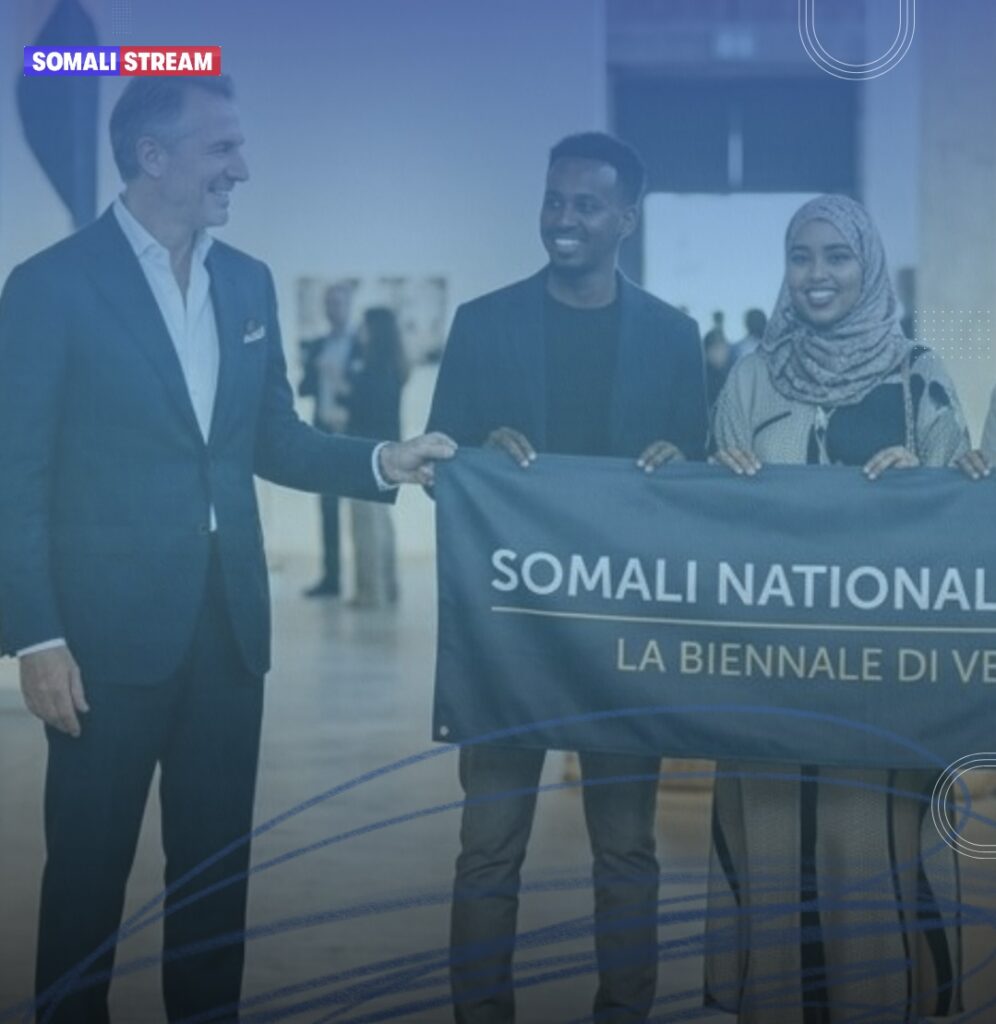
Each Venice Biennale brings with it the debut pavilions of nations that have never before shown at the world’s biggest and most prestigious art exhibition. Typically, these inaugural moments are causes for immense national celebration, marking a country’s formal entry into the global cultural dialogue. But in the run-up to the 61st International Art Exhibition of La Biennale di Venezia opening this May, the inaugural Somali Pavilion has instead become a profound source of controversy, heartbreak, and outrage.
Rather than a unifying celebration of Somali resilience and creativity, the pavilion has exposed a deep rift. Local artists, cultural workers, and independent institutions based within Somalia have spoken out against the pavilion’s organizers, revealing that they were “neither meaningfully consulted nor included” in the process. Compounding the frustration is the revelation that the program is being curated by a white, European curator a dynamic that many in the Somali art community view as a painful regression to colonial-era representation.
In a powerful and extensive press statement released this April, four prominent Somali art institutions and nine established local artists issued a unified declaration, explicitly condemning the exclusionary nature of the pavilion. Their message to the global art world is unequivocal: “This pavilion does not speak for us.”
What is the Venice Biennale? A Brief Explanation
To understand the gravity of this controversy, one must first understand what the Venice Biennale is and why securing a “National Pavilion” is such a monumental milestone for any country.
In simple and understandable terms, the Venice Biennale (La Biennale di Venezia) is often referred to as the “Olympics of the Art World.” Held every two years in Venice, Italy, it is the oldest, most prestigious, and most closely watched contemporary art exhibition on the planet.
Unlike standard art museums or galleries, the Venice Biennale is uniquely structured around “National Pavilions.” Countries from all over the world sponsor their own exhibitions, selecting curators and artists to represent their nation’s contemporary cultural landscape. These pavilions act as sovereign cultural embassies. When an artist is chosen to represent their country at the Venice Biennale, it is generally considered the highest honor of their career. For a nation, especially one recovering from decades of conflict, hosting a pavilion is a powerful declaration to the world: We are here, our culture is alive, and we have a voice.
Because a national pavilion carries the heavy responsibility of reflecting a country’s artistic life, the selection process is traditionally expected to be rigorous, transparent, and deeply connected to the nation’s grassroots art community. For Somalia, a nation that has spent years painstakingly rebuilding its cultural sector from the ashes of civil war, a Venice Biennale pavilion should have been the ultimate symbol of artistic rebirth. Instead, it has become a symbol of exclusion.
The Controversy: Diaspora Over Local Realities
The controversy ignited when the details of the 61st Venice Biennale’s Somali Pavilion were announced. As reported by ARTnews, the pavilion features only the work of three Somali diaspora artists who reside outside of the country. While the global success of Somali diaspora artists is a point of pride, the complete exclusion of artists actually living and working within Somalia struck a devastating blow to the local cultural sector.
The ARTnews report highlighted the growing tension: “Each Venice Biennale brings with it the debut pavilions of nations who’ve never before shown at the world’s biggest art exhibition, and these are typically causes for celebration. But in the run-up to the show’s opening in May, the inaugural Somali Pavilion has instead become a source of controversy, with artists from the country saying the organizers ‘neither meaningfully consulted nor included’ representatives of the Somali art scene.”
In response to this opaque selection process, an extended press statement was drafted and signed by a coalition of Somalia’s most vital cultural pillars. Several institutional powerhouses of the Somali art scene banded together to issue a formal rebuke.
“This pavilion, which should have been a meaningful act of national cultural representation, has instead been led and organised by Somali diaspora figures in collaboration with their European colleagues,” the joint statement read. “It carries a responsibility to reflect the breadth, complexity, and realities of a country’s artistic life. For Somalia, that responsibility is especially important given the long and difficult work of cultural rebuilding after decades of conflict.”
The signatories were careful to clarify that their grievance is not an attack on the diaspora. “Our concern is not with the diaspora, nor with the important role Somali diaspora communities have played in supporting Somalia’s recovery. That contribution is real, valuable, and should be recognised,” the collective stated.
Rather, the outrage stems from the erasure of the very people who have kept art alive on the ground. “Our concern is that artists and arts organisations based in Somalia, those who have spent years rebuilding the cultural sector from within, were not meaningfully consulted, included, or recognised in a process that should have belonged to the nation more broadly.”
A Neo-Colonial Sting: The White European Curator
Perhaps the most shocking and deeply offensive aspect of the Somalia Pavilion’s organization is the appointment of a white, European curator to helm the project. For the local Somali art community, this decision has been described as a bitter pill to swallow, echoing the painful dynamics of historical colonization.
Somalia’s history is inextricably linked to the struggles against Italian and British colonialism. For decades, the narrative of the Somali people was dictated, curated, and exported by European voices. In the modern era of contemporary art a time when the global art world is supposedly undergoing a massive movement toward “decolonization” the decision to place a white, European figure in charge of curating Somalia’s very first national representation on the world stage is seen as highly tone-deaf and fundamentally regressive.
How can a nation truly represent its sovereign, post-conflict identity when the lens through which it is viewed is controlled by someone representing the demographic of its former colonizers? To the local community, this is not just an administrative oversight; it is an insult. It suggests a paternalistic mindset that Somali art must be validated, organized, and packaged by a European authority before it can be deemed worthy of the Venice Biennale.
The local artists view this as a missed opportunity to showcase brilliant homegrown curators and cultural managers who intimately understand the nuances of Somali life, poetry, visual arts, and history. The reliance on European colleagues to “legitimize” the pavilion underscores a systemic issue in the global art world, where the Global South is often mined for its aesthetics while its local intellectuals and organizers are sidelined.
Government Neglect: A Failure of the Ministries
A significant portion of the blame for this debacle falls squarely on the shoulders of the Somali government and its relevant ministries, particularly those tasked with overseeing culture, tourism, and national heritage. A National Pavilion at Venice cannot exist without the official sanction and bureaucratic backing of the state. Therefore, the government’s role in green-lighting this exclusionary pavilion has been a source of immense frustration for local creatives.
For years, the art sector in Somalia has survived purely on the grit, passion, and personal sacrifices of independent citizens. The government has historically offered little to no institutional support and virtually zero budgetary backing for the arts. Local collectives and independent galleries have had to navigate extraordinary security challenges, economic hardships, and social stigma to create safe spaces for creative expression in Mogadishu and beyond.
The artists’ statement cuts right to the heart of this betrayal: “The art sector in Somalia has been rebuilt through the commitment of artists, cultural workers, independent institutions, collectives, and organisers working under extraordinarily difficult conditions, often with little to no institutional support and almost no budgetary backing from the government. It is therefore deeply disappointing that when such a visible opportunity for cultural representation emerged, those who have helped keep artistic life alive in Somalia were sidelined.”
When the government finally had the opportunity to elevate Somali culture on the most visible cultural platform in the world, they bypassed the very people doing the foundational work. By allowing the pavilion to be shaped through opaque and selective processes driven by foreign capital, diaspora networks, and European curation the ministries demonstrated a profound lack of respect and consideration for their own domestic arts sector. The government treated a national asset as a private opportunity, failing in its duty to foster a cohesive and inclusive national identity.
A Demand for a New Standard
The 61st Venice Biennale will open its doors, and the Somali Pavilion will likely draw international crowds. But for the artists back home, the pavilion will stand as a hollow monument a “missed opportunity to honour those rebuilding the sector, and to build a meaningful bridge between Somalia-based practitioners and the diaspora.”
The local art community has drawn a line in the sand. They are refusing to let their national identity be co-opted without their consent. Their statement concludes with a powerful, uncompromising demand for the future:
“We therefore state clearly and without ambiguity: this pavilion does not speak for us. It does not represent our labour, our struggles, our commitments, or the difficult conditions under which artistic life in Somalia continues to be nurtured and sustained. We call for a different standard going forward. Future representation of Somalia on major international cultural platforms must be rooted in transparency, consultation, and genuine engagement with artists, curators, and arts organisations based in Somalia. We believe Somalia deserves better than this.”
The controversy surrounding the Somali Pavilion is more than just an art world dispute; it is a profound debate about representation, decolonization, and who gets to claim the narrative of a nation. Until the government, international organizers, and the global art establishment learn to genuinely partner with the artists doing the hard work on the ground, the true artistic soul of Somalia will remain unseen by the world.
Abdi-Hakan Bashir Ali