


To Somalia’s international partners,
I write as a Somali citizen and former diplomat who has represented our country in postings including China, Sweden, the United States, and the United Nations. I write in a personal capacity, but with a sense of urgency that I believe many of my compatriots share.
On 8 May 2026, the World Food Programme warned that Somalia faces a severe malnutrition crisis as funding cuts threaten the suspension of life-saving operations. Earlier this year, United States assistance was suspended, and in February the suspension was extended across seven African countries, Somalia among them. The International Rescue Committee has separately warned that fuel and aid supply chains into Galmudug and other regions are under acute strain.
These are not abstractions. In 2011, famine in Somalia killed approximately 260,000 people, more than half of them children under five. In 2022, famine was narrowly averted through early warning, coordinated response, and timely funding. The conditions that made 2022 survivable, predictable financing, functioning coordination, and a state capable of working with humanitarian actors, are precisely the conditions that are eroding now.
Governance failure is now part of the famine architecture itself.
The political reality you are being asked to work around
Donor fatigue and global aid retrenchment are real. But they are not the only forces converging on Somali households. Over recent months, the federal government has taken a series of actions that have weakened, rather than strengthened, the institutional capacity needed to navigate this crisis. In March 2026, parliament approved constitutional amendments extending the president’s term and delaying elections, advanced without the consent of the Federal Member States as required by the federal compact. At the end of March, federal forces took over Baidoa, a key city in the Southwest, prompting the resignation of the state leader. In April, parliament’s own mandate expired without elections in sight.
These are not procedural irregularities. They are decisions that narrow the space within which humanitarian, security, and development partners can operate. They strain the federal compact at the moment when its functionality matters most. Puntland and Jubaland do not recognise the amendments. Galmudug, the region most exposed to the humanitarian shock the WFP has flagged, is heading into a contested electoral process under those same disputed rules.
I am part of Somalia’s political class, and I write from within it, not above it. The conduct of our political contests, the standards we accept and the standards we tolerate, is a responsibility we share. Accountability for what has gone wrong in Somali state-building does not rest only with those currently in office. But the actions that have most directly compounded today’s crisis have been concentrated in the past several months, and at the federal level. That distinction matters, because partners are being asked to absorb the consequences.
What I am asking of you
The international community remains deeply embedded in Somalia’s state-building, security, and humanitarian architecture, through the African Union Support and Stabilisation Mission in Somalia (AUSSOM), through the $4.5 billion debt relief package delivered under the Heavily Indebted Poor Countries (HIPC) framework, and through sustained humanitarian financing. This embeddedness carries weight. It also carries responsibility.
I appeal to Somalia’s international partners to use the full range of instruments at their disposal, with seriousness commensurate to the moment, to insist on political restraint, institutional coordination, de-escalation, and the minimum standard of national functionality that a humanitarian emergency of this scale requires.
Concretely, this means: protecting humanitarian funding lines from being captured by any political actor or used as leverage in domestic disputes; insisting that constitutional change proceed only with the genuine consent of the Federal Member States; supporting credible electoral processes at the Federal Member State level on terms that are accepted by the populations they serve, not only by Mogadishu; and making clear, in private and where necessary in public, that actions which deepen institutional fragmentation during a hunger emergency will carry consequences.
Humanitarian aid can temporarily slow famine. Only political functionality can prevent it from recurring.
A closing word
Somalia has been, for a generation, a country that international partners have helped keep on its feet. That partnership has saved lives. It has also, at times, allowed Somali political actors to assume that the costs of their conduct will be absorbed elsewhere. We are at a point where that assumption is no longer safe, for partners or for Somalis.
The people who will pay the price of further dysfunction are not the political principals in Mogadishu. They are pastoralist families in Galmudug whose herds are already thinning, displaced households in the Southwest, and mothers walking to feeding centres that may not be open next month. Their interests, and our obligations to them, are what should govern the choices ahead.
With respect and with urgency,
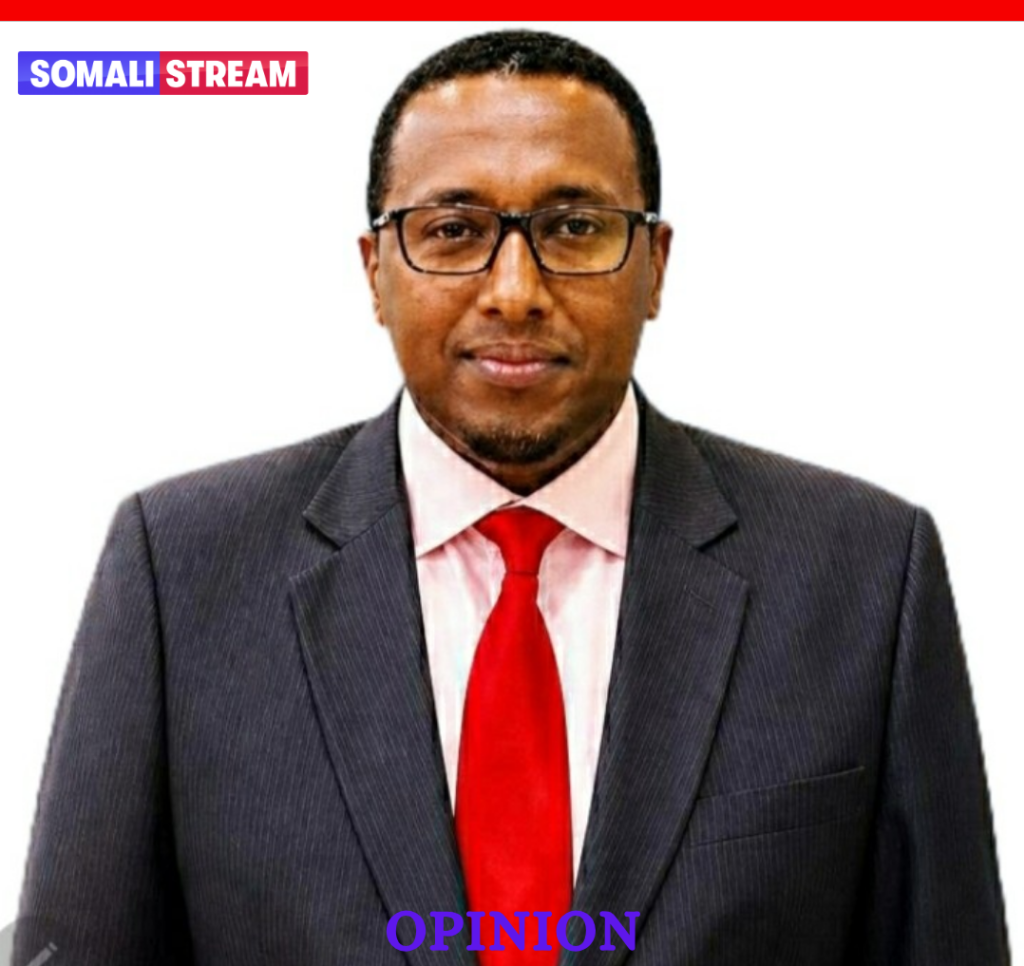
Awale Kullane
Awale Kullane is a former Somali diplomat who has served in postings including China, Sweden, the United States, and the United Nations, and previously served in the Office of the Prime Minister of Somalia. He is currently a candidate for the presidency of Galmudug. He writes in a personal capacity.