


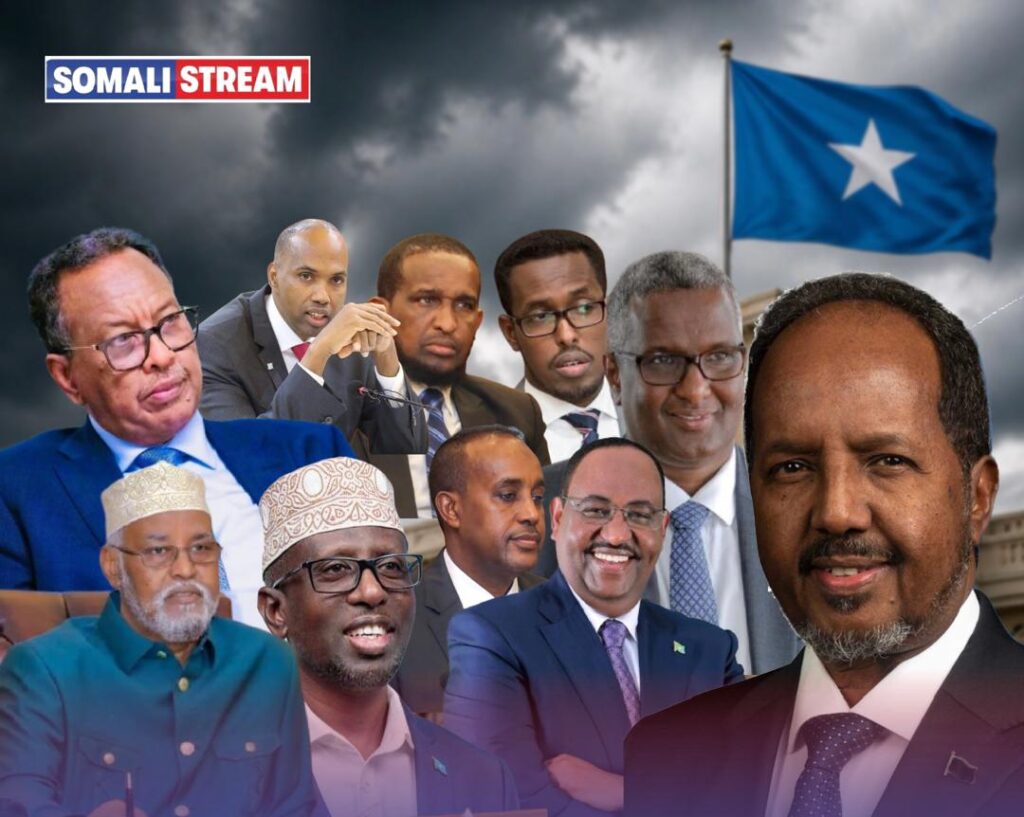
A group of prominent Somali opposition figures, under the umbrella ‘Somali Future Council’ leaders, have issued a strong and wide-ranging ultimatum to President Hassan Sheikh Mohamud, warning of coordinated political action if constitutional and governance concerns are not addressed before the end of his term.
In an urgent press statement released in Mogadishu, the opposition leaders said they had concluded extensive consultations with various sectors of society across the Benadir region, including traditional elders, religious scholars, civil society groups, media representatives, women, and youth.
The discussions, they noted, were driven by what they described as a “dangerous phase of political uncertainty” deliberately imposed on the country.
The opposition outlined a series of grievances against the current administration, accusing it of escalating forced evictions, appropriation of public land, systemic corruption, and the suppression of dissent, particularly targeting young people. They also alleged misuse of state power beyond constitutional limits.
According to the statement, some of the most affected citizens particularly vulnerable communities, shared accounts of displacement, destruction of property, and loss of trust in both the current leadership and broader state institutions.
Central to the opposition’s declaration is the assertion that President Hassan Sheikh Mohamud’s constitutional term will end on May 15, 2026. They warned that any extension beyond that date would not be recognized, stating that he would be considered “an ordinary citizen” thereafter.
The group reaffirmed its commitment to the 2012 provisional constitution as the only legitimate legal framework, rejecting any recent amendments they described as “unilateral” and lacking due process, national consultation, and political consensus.
They further announced plans to organize peaceful resistance, public mobilization, and national dialogue in coordination with federal member states and other opposition forces to prevent what they termed a “constitutional vacuum.”
The opposition also called for immediate and credible elections in several federal member states, including South West, Hirshabelle, and Galmudug, where mandates have expired. They rejected ongoing electoral processes they described as “pre-determined” and lacking transparency.
At the federal level, they outlined key conditions for acceptable elections, including broad political agreement, transparency, adequate security, and nationwide participation. They warned they would not accept any process perceived as manipulated or centrally controlled.
A significant portion of the statement focused on the role of security institutions. The opposition warned against the politicization of the national armed forces, urging that they remain neutral and uphold their constitutional duties.
They called for an end to what they described as the fragmentation of security forces and the use of military units to suppress political opponents and civilians. At the same time, they pledged accountability for officers involved in unlawful actions, while promising recognition for those who resist illegal orders.
The opposition confirmed that consultations had also been held with international partners, including the United States, United Kingdom, European Union, Türkiye, and the United Nations.
In conclusion, the group called on Somali citizens to remain peaceful but vigilant, urging unity in resisting injustice, illegality, and violations of constitutional rights.
They pledged to safeguard the stability of Mogadishu, defend the constitution, and work toward preserving Somalia’s fragile statehood. The statement signals a potentially critical turning point in Somalia’s political landscape, as tensions rise ahead of the anticipated end of the current presidential term.