


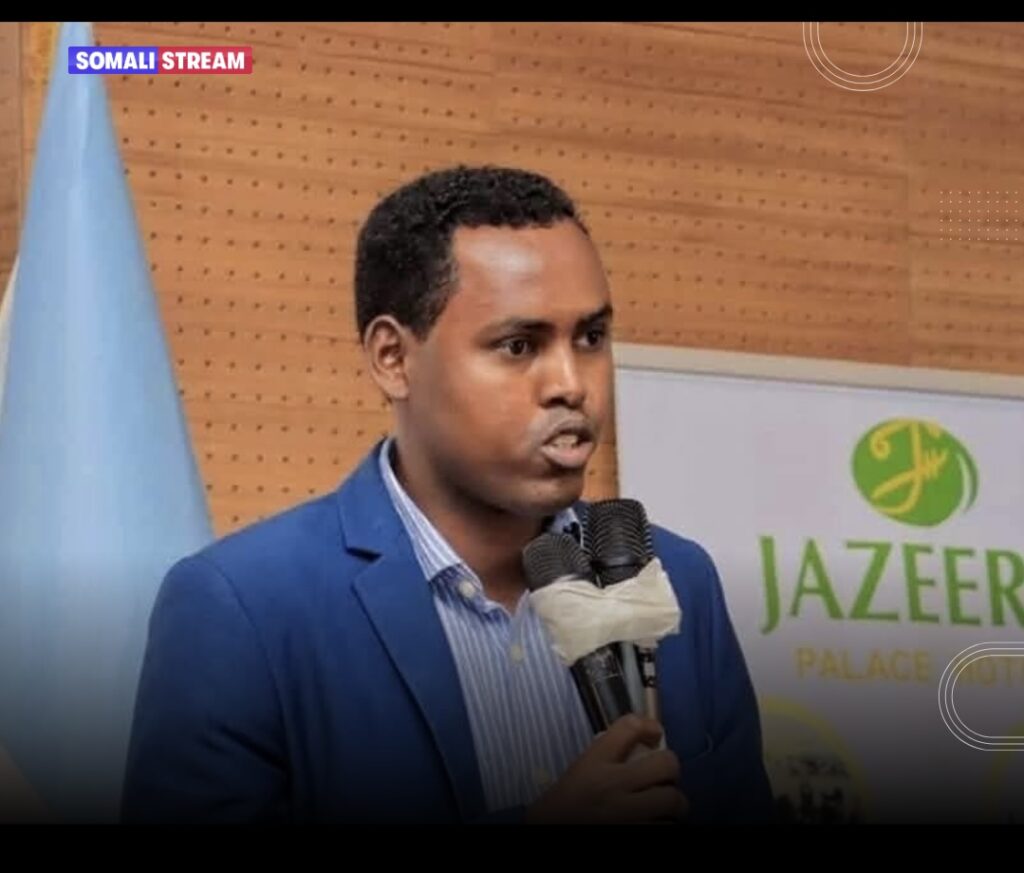
By: Hassan Mudane
Entrepreneurship has always been a pathway to economic growth, independence, and innovation. In the current era, defined by rapid advancements in artificial intelligence (AI), entrepreneurship is undergoing a fundamental transformation. Young entrepreneurs are no longer limited by geography, capital constraints, or traditional barriers to entry.
AI has created a new playing field where ideas, creativity, and execution matter more than ever before. For young Somali entrepreneurs, this moment represents a strategic turning point.
To begin with, AI is reshaping industries at an unprecedented pace. From healthcare and education to finance and media, intelligent systems are automating tasks, improving decision-making, and unlocking new forms of value creation.
AI is not just a tool; it is an ecosystem where businesses can be built, scaled, and globalized faster than in any previous era. This means shorter development cycles, lower operational costs, and access to technologies that were once reserved for large corporations.
AI-driven entrepreneurship
In the past, startups required large teams, infrastructure, and long timelines. Today, small teams can build global products using AI models and APIs. Tools based on large language models can automate writing, coding, customer support, and data analysis.
As a result, a single entrepreneur or a small team can create products that reach millions of users worldwide. Examples of this shift are already visible.
Cursor is an AI-powered coding assistant that helps developers write and understand code more efficiently. It grew rapidly by solving a clear problem with practical AI applications. Similarly, Manus.ai focuses on improving restaurant operations through automation and intelligent systems.
These startups show how AI can transform even traditional industries. At the same time, young founders are building highly valuable companies at an unprecedented speed. Scale AI, founded by Alexandr Wang, became a multi-billion-dollar company by providing essential data infrastructure for AI systems.
Likewise, OpenAI has created an entire ecosystem of startups building on top of its models. These examples demonstrate that the AI economy rewards early action, focus, and strategic thinking.
However, success in AI entrepreneurship requires more than enthusiasm. It requires identifying meaningful problems. The strongest startups are not those that simply use AI, but those that apply it to real-world challenges.
For Somali entrepreneurs, this could include financial inclusion, education access, agriculture, logistics, and language technology. The key is combining global technology with local understanding.
Challenges still exist
AI development requires technical skills, access to data, and computing resources. However, these barriers are decreasing due to open-source tools, cloud platforms, and online learning resources. In addition, remote work allows entrepreneurs from Somalia to collaborate with global teams and investors. In today’s environment, execution and digital capability matter more than physical location.
AI entrepreneurship also stands out because of scalability. Unlike traditional businesses that grow gradually, AI-driven companies can scale rapidly. Once a product is built, it can serve thousands or even millions of users with minimal additional cost. This creates strong potential for fast growth and high returns.
Collaboration is equally important. Building in isolation limits growth, while partnerships with developers, designers, and domain experts increase the chances of success. Networks also open doors to funding, mentorship, and global opportunities. No modern AI startup grows alone.
Ultimately, AI is not just a technological trend. It is a structural shift in how businesses are created and scaled. Success will depend on how effectively entrepreneurs use it to create value. With the right mindset and execution, young Somali innovators can build impactful AI companies and compete on a global stage.
Hassan Mudane is a researcher and consultant specializing in AI-augmented workflows, public sector transformation, and human‑centered AI adoption. He is an advocate for the ethical use of AI and serves as the founding CEO of 26AI Advisory, based in Mogadishu, Somalia. You can contact him via mudanep5@gmail.com