


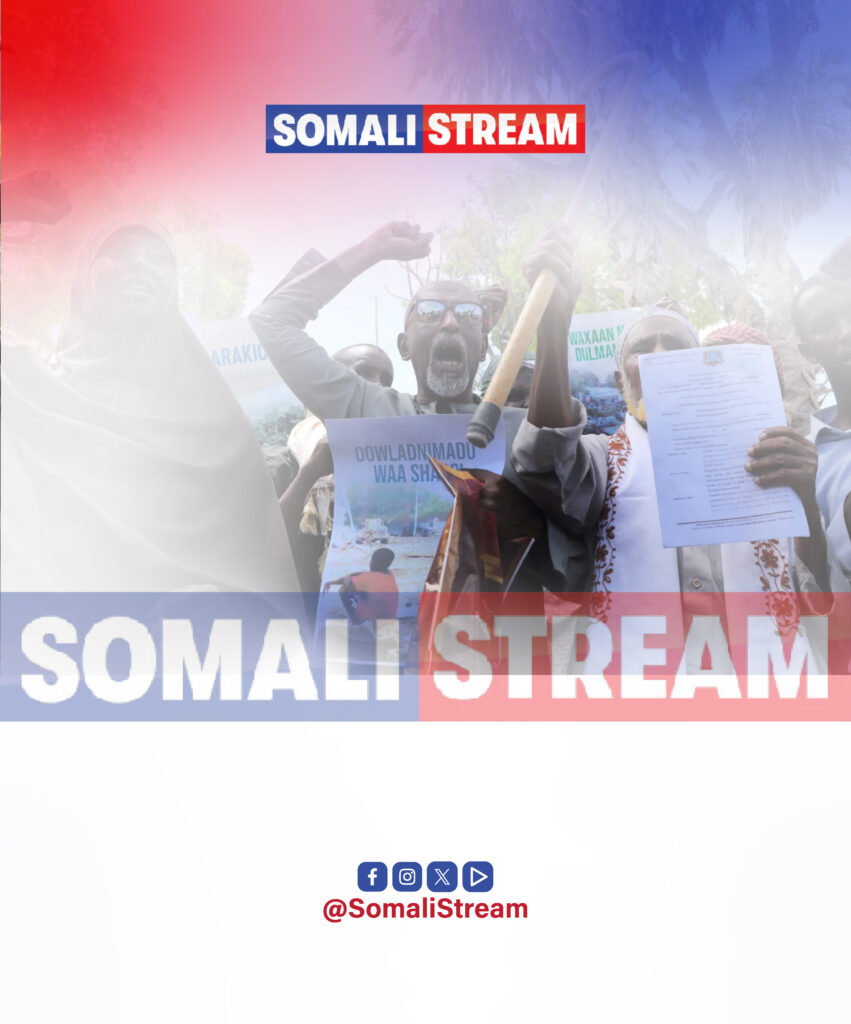
For more than a decade, Somalia’s election system has been decided by a remarkably small circle of elites. The faces around the table change slightly over the years, but the Somali people have remained firmly outside the room, peering through the glass.
Back in 2012, the political agreements that officially ended our transitional period were hammered out by a tight group of national and regional leaders. Under the system they created, 135 traditional elders selected the members of parliament, and those MPs then elected the president. It was defended as a necessary temporary bridge for a fragile, post-conflict nation, but it was never meant to become Somalia’s permanent definition of democracy.
Yet, temporary fixes have a funny habit of becoming permanent fixtures.
In 2016, the process got a slight upgrade. The electoral circle expanded to roughly 14,025 selected delegates, with colleges of 51 people deciding each Lower House seat. It was branded as progress, but for the majority of Somali citizens, it was still a spectator sport. By 2022, we watched a near-identical rerun. A fresh batch of political elites negotiated a 101-delegate model per seat. Once again, millions of Somalis watched a few thousand people decide the country’s entire future.
Every single one of these backroom deals was justified by real challenges: insecurity, weak institutions, and the urgent need to prevent political collapse. But when you repeat a “temporary emergency arrangement” for fourteen years, it isn’t an emergency plan anymore. It’s just the system.
Today, history is repeating itself. A handful of political elites and Federal Member State presidents are sitting around yet another table, negotiating yet another election framework. Naturally, everyone claims to be protecting democracy, federalism, and national stability while quietly securing their own political survival.
But the most important voice in the country hasn’t even been invited to the building.
What do the Somali people actually want?
Has anyone actually asked citizens whether they want to vote for their MPs directly or keep relying on selected delegates? Do they want to elect the president themselves or leave it to parliament? Do they want to scrap the 4.5 system, reform it, or keep it on life support a little longer? What specific protections do women, marginalized clans, and underrepresented groups expect from the future system?
Politicians on all sides love to claim they speak for “the public.” The trouble is, they are operating entirely on vibes. There is currently zero credible, independent national evidence showing what the public actually believes.
To bridge this massive gap between elite rhetoric and reality, we need to stop guessing and start measuring. This is why we should look toward innovative, private-sector-led solutions.
A powerful starting point would be the establishment of Somalipoll.com, proposing an independent, non-partisan national public-opinion platform designed to give ordinary Somali citizens a direct, unedited say on the very questions splitting our political class. The domain is already secured, and as a private sector initiative, it stands ready to be built out in collaboration with any interested institutions, think tanks, or civil society organizations ready to champion public voice.
A platform like this could first be introduced online as the fastest, safest, and most practical way to gather public sentiment while these high stakes negotiations are actively happening. Around 30% of Somalia’s population has internet access. While that admittedly doesn’t capture everyone, especially in rural areas or communities with low connectivity, it still represents millions of active voices and provides an unprecedented, data driven starting point.
The platform would also welcome participation from our vibrantand outspoken diaspora. However, to keep the data incredibly accurate, it would strictly separate domestic responses from diaspora inputs. We love our family members in London, Minneapolis, and Nairobi, but their votes should not overshadow the realities of those living and experiencing everything inside Somalia.
We know that in a highly polarized political climate, skepticism is the default setting. If a platform can be rigged, someone will try to rig it. To prevent this, the platform would implement strict verification protocols. Utilizing secure methods like unique mobile network verification, which fits perfectly with Somalia’s deeply rooted mobile ecosystem, we can block bots, eliminate duplicate voting, and stop political factions from tilting the scales. Most importantly, user anonymity would be protected with absolute certainty, and the methodology, data-cleaning rules, and source code would be published openly. No black boxes, no hidden algorithms.
We must also be realistic about the limitations of digital polling. No one should pretend an online-first platform captures the view of every single nomad, farmer, or citizen. To ensure complete neutrality and build national trust, the vision for Somalipoll.com is to partner directly with local Somali universities, independent researchers, and civil society organizations. These collaborative partners would take the lead in crafting neutral poll questions, auditing the methodology, and producing the final independent research reports.
As the initiative grows, these academic and civic partners could help expand the project into telephone and face-to-face polling, ensuring that the views of rural communities, internally displaced people (IDPs), and citizens without reliable internet are fully brought into the light.
The goal of a tool like Somalipoll.com isn’t to bypass parliament, subvert ongoing political dialogues, or replace an official constitutional referendum. It is simply to introduce a tool that has been missing from Somalia’s political landscape for far too long: hard evidence of what ordinary people think.
Somalia moved from 135 elders in 2012 to 14,025 delegates in 2016, and then to a slightly different room of delegates in 2022. The next stage of our political evolution cannot just be another slightly larger room filled with hand-picked insiders.
If we genuinely want to build a democracy, the listening has to start before election day. It has to start before the political elite lock the doors and write the rules we are all expected to live by. Somalia’s future cannot be treated like a private business deal between the same powerful individuals. The politicians can keep negotiating, but the public deserves a seat at the table. Before they decide our future, they need to ask us.
Deeq Afrika