


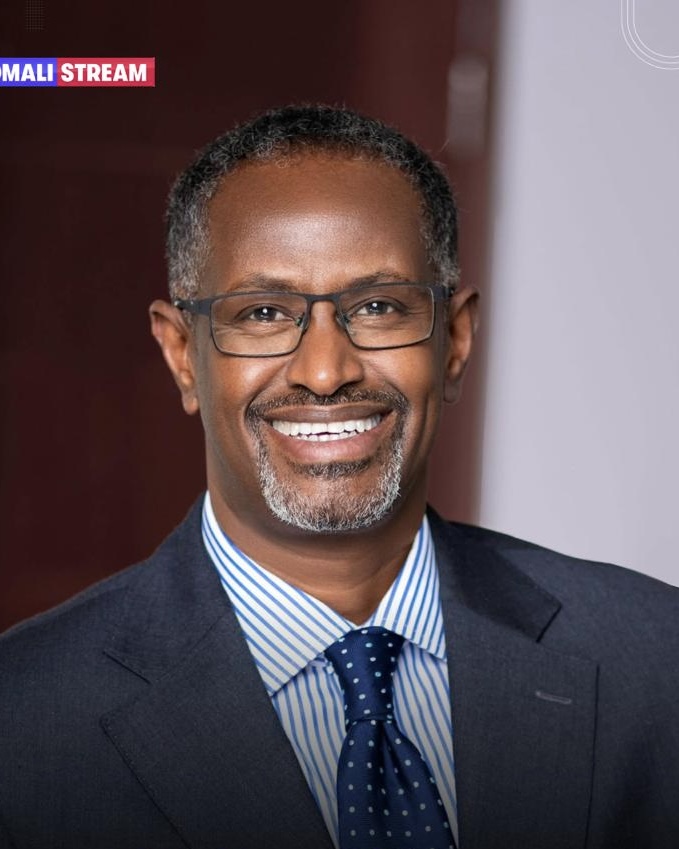
By: Nuradin Aden Dirie
On April 15th, the Federal Parliament’s constitutional mandate expires. Thirty days after that, on May 15th, the President’s mandate follows.
I say this not to alarm – but because facts, stated plainly, matter. These dates are not political talking points. They are constitutional facts, written into the architecture of the Republic that Somali men and women bled to build.
And it is precisely out of respect for that Republic – its institutions, its founding logic, its promise to this people – that what is unfolding before us cannot go unnamed
What is being presented to the Somali public as a democratic transition is, on honest examination, nothing of the sort.
The military deployment into Baidoa. The rushed, uncoordinated rollout of an electoral process that no serious stakeholder agreed to, prepared for, or consented to.
The manufactured urgency around a ‘One Person, One Vote’ framework that lacks the logistics, the legal consensus, and the institutional infrastructure to deliver a credible result.
These are not the actions of a government secure in its legitimacy and confident in its democratic mandate.
These are the actions of an administration that has watched its constitutional clock run down – and has chosen crisis over concession.
I have served this country long enough to recognise the pattern. And the Somali people deserve to have it named clearly, without theatre and without malice – but with absolute honesty.
A Crisis by Design
The architecture of what is happening is not difficult to understand, once you decide to look at it without illusion.
The executive branch has initiated a deeply contested, logistically unworkable electoral process in the final days before its legal authority expires.
The intention is then to stand before this nation – and before the international partners – and declare: we cannot step down; the country is in the middle of an election.
This is not a constitutional argument. It is a constitutional evasion.
The chaos is not incidental – it is the instrument. By shattering the federal consensus that exists between Mogadishu and the member states, by making a legitimate transition appear impossible, the administration creates the very crisis it then uses to justify its continued presence.
I say this not with anger, but out of a necessary duty to the facts. A leader who engineers disorder to avoid accountability is not governing – he is retreating. And a retreat conducted at the expense of the Republic’s institutions is something that cannot go unnamed.
The Capture of the State
What concerns me more deeply – and what I believe will concern history – is not the extension itself, but the machinery being constructed to guarantee what comes after it.
The line between the Somali state and one political faction has not been blurred. It has been methodically dismantled. The national army, the federal budget, the instruments of public administration – these were entrusted to the executive to serve all Somalis.
They are being deployed instead to install compliant administrations in the Federal Member States. These are not governing arrangements. They are captive voting structures.
The National Independent Electoral Commission – whose independence is the precondition of its entire purpose – has been staffed with loyalists and handed custody of the national voter registry.
When a single faction controls the treasury, commands the troops present at voting centres, and oversees the body that administers the election, what follows is not a democratic exercise. It is a ceremony of ratification for a decision already made.
History teaches us how republics fail. They rarely fall to a single dramatic blow. They are hollowed out, institution by institution, appointment by appointment, until the forms remain but the substance has quietly departed.
That is the process unfolding before us – and we cannot afford to ignore it for the sake of diplomatic comfort
On the Question of International Support
I want to speak carefully here, because I have genuine respect for Somalia’s international partners and for the investment – financial and political – that many have made in this country’s future.
But respect requires honesty, and honesty requires me to say this plainly: international funding and external diplomatic silence cannot substitute for domestic constitutional legitimacy. They never have. They never will.
The language of universal suffrage – of ‘One Person, One Vote’ – is a language I believe in. It represents a destination I am committed to reaching for this country.
But that language is currently being borrowed, not to advance democracy, but to extract foreign capital for a process designed to produce a predetermined outcome.
Institutions and governments that underwrite this process in good faith, drawn in by the vocabulary of democratisation, will find that they have not advanced Somalia’s state-building. They will have helped to arrest it.
A mandate that has expired at home cannot be renewed abroad. And the Somali people – proud, patient, and clear-eyed – will not accept an electoral result that was engineered in the regions, administered by a captured commission, and validated in foreign capitals. That is not a prediction. It is a certainty.
What I Believe, and What I Stand For
A Republic is a covenant – between its founding principles, its institutions, and the people it exists to serve.
It does not belong to the party that currently occupies its offices. It belongs to every Somali citizen, including those not yet born, who will inherit whatever we leave behind.
I stand for one thing above all: the absolute supremacy of the Constitution. The mandates expiring on April 15th and May 15th are not obstacles to be managed.
They are the Constitution speaking. And the Constitution, in this Republic, is not a negotiating position.
The Co-Founders of this Republic will defend their jurisdictions. The Somali people will not accept a manufactured outcome.
And I – as someone who intends to serve this country with the full weight of constitutional legitimacy behind me, and not a day before it – will continue to say so, in every forum, for as long as it needs to be said.
The era of ruling by extension, by occupation, and by institutional capture must end. What replaces it must be worthy of this country’s sacrifice and equal to its potential.
Somalia deserves better. And Somalia, I am certain, will demand it.