


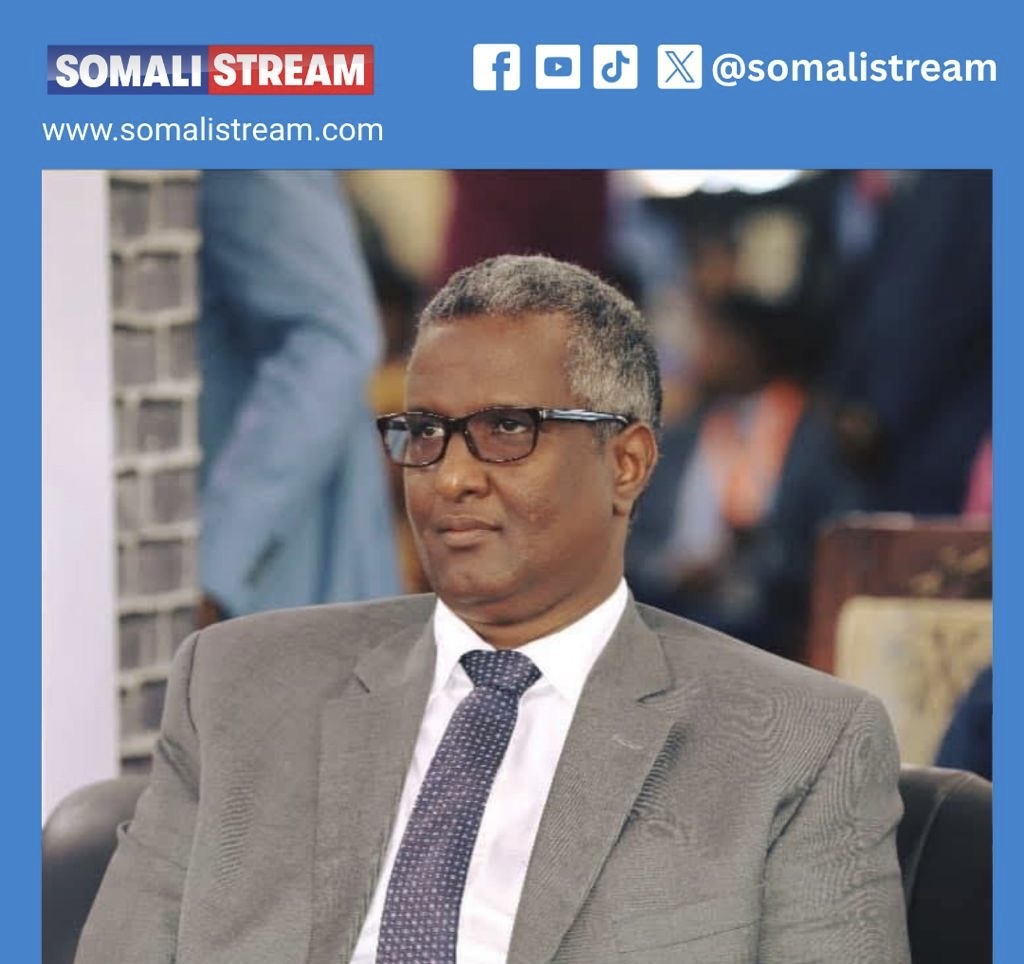
Abdirahman Abdishakur Warsame
In politics, few opponents are as relentless as one’s own record.
Across Somalia today, speeches delivered by President Hassan Sheikh during his years in opposition are resurfacing with force. In those addresses, he warned against the unilateral decision-making, exclusion, mandate extensions, constitutional violations, and elections designed without broad consensus, processes vulnerable to capture by a single political will.
Those words once strengthened your moral standing; today, they serve as evidence against you. What we are witnessing is no longer an ordinary political dispute, but a question of integrity. Disagreement is natural in any democracy. However, when the principles you once championed seem inconsistent with your current actions, the conversation changes. It ceases to be about differing policies and becomes a matter of credibility and moral responsibility.
Somalia remains a nation recovering from prolonged conflict. Trust is fragile. State institutions are still consolidating. In such an environment, the most valuable political capital is not force or manoeuvre, it is credibility. Leadership that aligns word and deed becomes the anchor of stability.
When that alignment is questioned, confidence begins to thin.
Another signal is emerging, not in what is said, but in what is not said. Many of the President’s long-standing friends have not mounted a vigorous, persuasive defence of the current political direction. Publicly, they speak cautiously. Privately, concerns are voiced about the risks ahead, particularly as the constitutional mandate approaches its conclusion.
Silence in politics is rarely neutral. It often reflects uncertainty about sustainability. A seasoned leader recognises such moments as warnings, not betrayals and responds with recalibration, consultation and reassurance. The absence of that response deepens unease.
Meanwhile, those who defend the President most aggressively often lack political stature or persuasive authority. Their rhetoric is energetic but unconvincing. It does not resonate broadly within Somali society or among international partners.
There is a widespread perception that many of these defenders are motivated less by national vision or ideological conviction than by access to office and material advantage. Defence grounded in patronage rather than principle does not strengthen legitimacy. It weakens it.
Political defence that carries weight must rest on credibility, strategic coherence and moral standing. Without these, advocacy becomes noise — and noise does not stabilise governance.
The Stakes of Legitimacy
The core issue is not a matter of short-term tactics; it is a question of institutional foundations. When a presidential mandate expires under dispute, the problem is not merely procedural — it strikes at the heart of legitimacy. And once legitimacy is placed in doubt, authority no longer rests on clear constitutional ground but enters a zone of uncertainty.
The implications reach far beyond internal political rivalry. Economic confidence begins to weaken as markets respond to instability and ambiguity. Financial assistance and budgetary support become subject to political conditions. Diplomatic engagement grows cautious, with international partners recalibrating their posture based on recognition and constitutional clarity.
At the same time, alliances constructed on temporary or interest-based arrangements start to fragment. Coalitions built around access, patronage, or proximity to power tend to hold only while stability is assured. When uncertainty rises and costs increase, those networks thin rapidly. Support does not disappear in a single moment — but it steadily contracts. Individuals and factions begin to hedge, reassess, and reposition.
In such circumstances, political initiative is lost. Negotiation no longer proceeds from a position of confidence and control; it becomes reactive, shaped by pressure rather than design. Options narrow. Concessions become more costly. The capacity to set the agenda diminishes.
Once legitimacy is publicly questioned, leverage inevitably declines. What remains may resemble authority in form, but it lacks the structural strength that only undisputed legitimacy can provide.
The Opportunity Still Available
Yet this moment is not foreclosed. While the mandate formally remains in force, the President retains recognised authority to convene dialogue, clarify electoral timelines and secure broad-based agreement. Acting within that window would demonstrate strategic foresight and reinforce institutional continuity.
There is precedent. Somalia has navigated difficult transitions before through negotiation and political maturity. Such steps are not signs of weakness; they are acts of stewardship. Three actions remain both possible and necessary:
Secure national agreement on a credible electoral timetable and framework. Establish electoral procedures and commissions through inclusive consensus. Take visible confidence-building measures that reduce suspicion and reassure stakeholders.These are not concessions. They are investments in stability.
A Familiar Crossroads
Somalia has witnessed what happens when consensus is delayed until after constitutional timelines expire. Political processes slip beyond the control of incumbents. Events begin to dictate outcomes rather than the reverse. The President stands at a similar crossroads today.
Pride and short-term manoeuvre offer the illusion of control. But durable authority rests on legitimacy, and legitimacy rests on consistency. History rarely remembers how long leaders held office. It remembers whether they preserved institutions and upheld the principles they once proclaimed.
Yesterday’s words need not haunt. They can guide. The choice remains between proactive statesmanship and reactive adjustment — between aligning present action with declared principle or allowing contradiction to define the moment. Opportunities still exist. The question is whether they will be seized before they narrow.
Abdirahman Abdishakur Warsame is a member of the Somali Federal Parliament, an opposition leader, the chairman of the Wadajir Party, and a presidential candidate in the forthcoming elections of 2026.