


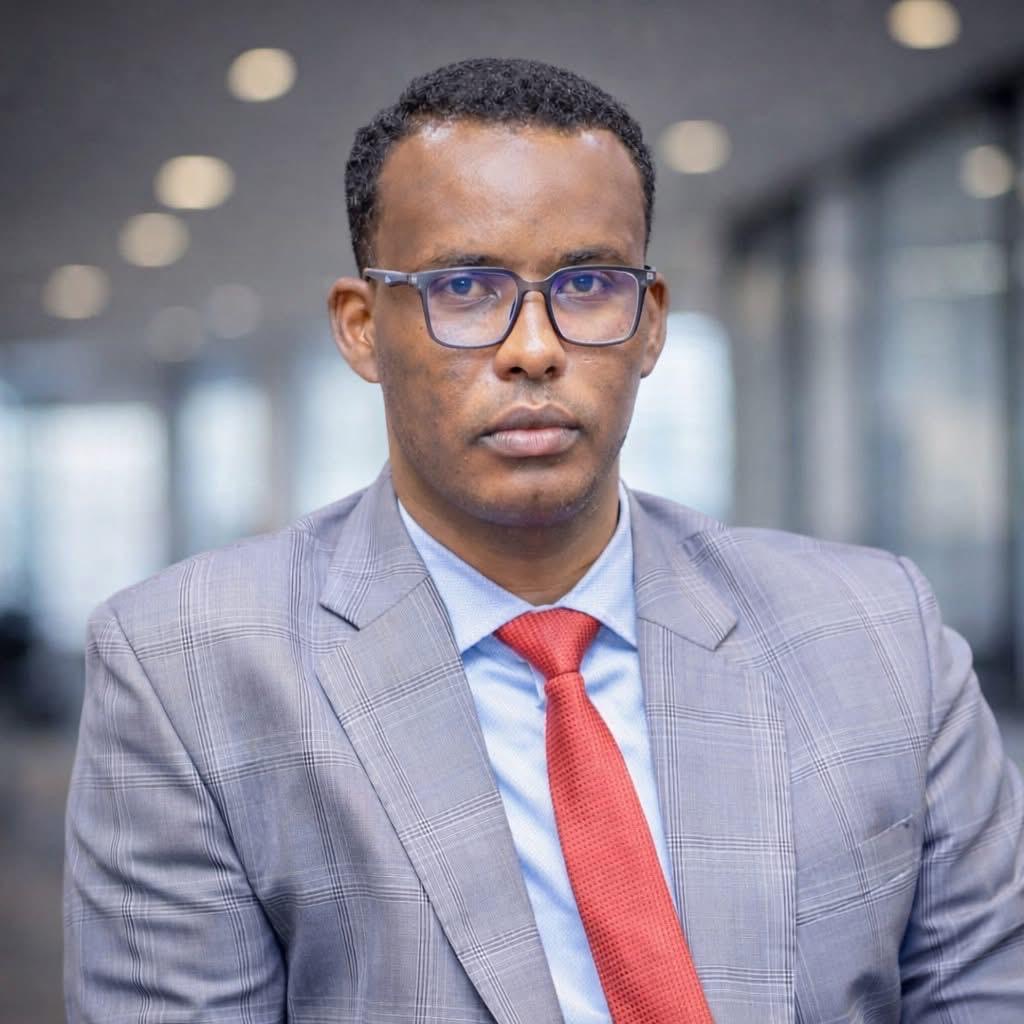
By: Ahmed Abdihadi
The American political scientist Murray Edelman once observed that one of the most difficult moments a politician faces is the moment when he no longer has anyone left to blame for the political crisis surrounding him. This observation raises an important question in Somalia’s current political moment: when political legitimacy expires, who becomes the scapegoat?
During his four years in office, Hassan Sheikh Mohamud maintained his hold on power through a set of political strategies designed to compensate for structural weaknesses within Somalia’s governing institutions. Accusations directed at his administration—ranging from nepotism and corruption to the conflation of family interests with state institutions—have been persistent. Yet his political survival has not been accidental. It has relied on a carefully constructed political architecture.
Patronage as the Core Strategy
The first pillar of this system has been the politics of patronage, a phenomenon widely observed across many African political systems.
Political actors joining the ruling coalition often lacked a shared ideological vision or coherent state-building agenda. Instead, loyalty was cultivated through political distribution: government posts, public contracts, land allocations, and privileged access to the presidency. In such an environment, political alignment becomes less about policy and more about access to resources.
Financial Networks and Institutional Leverage
A second mechanism involved the strategic use of financial channels within the state to neutralize potential opposition. Groups that could not be accommodated through positions or contracts were frequently absorbed through government funding streams.
The Banaadir Region in particular became an important node within this financial architecture. In the absence of strong institutional checks, local administrative mechanisms often functioned as instruments through which the broader patronage network could be maintained.
Clan Mobilization
A third dimension was the mobilization of clan sentiment. Political messaging increasingly framed the preservation of power as necessary to maintain clan influence in the capital.
This narrative resonated strongly among segments of the Hawiye clan, particularly among traditional elders, business elites, and former militia networks associated with the United Somali Congress. Through this framing, political loyalty was transformed from a question of governance performance into one of collective identity.
Institutional Management
Two additional mechanisms reinforced this system. First, ensuring that the leadership of the House of the People of Somalia remained politically satisfied through access to office and resources helped stabilize the governing coalition.
Second, the presidency maintained a prime minister whose political survival depended heavily on alignment with the executive.
At the same time, the administration invested considerable financial resources in shaping public perception through social media networks and conventional media platforms.
External and Structural Factors
Two broader political dynamics also indirectly strengthened the presidency.
First, the political confrontation initiated by Said Abdullahi Deni within Puntland fragmented segments of the region’s traditional political and intellectual elite. Rather than consolidating a national opposition front, the dispute consumed energy within Puntland itself, weakening potential coordination against the federal government.
Second, opposition figures in Mogadishu faced structural disadvantages compared to regional leaders such as Ahmed Mohamed Islam Madobe. Regional administrations control independent revenue streams—ports, customs, and taxation—which provide financial autonomy. Mogadishu-based opposition figures largely lack such economic foundations, limiting their ability to sustain long-term political challenges.
What Happens When Legitimacy Ends?
The central question now confronting Somalia’s presidency is whether this political system can continue functioning once formal political legitimacy expires.
Comparative political research on African regimes suggests that leaders who remain in power beyond constitutional limits usually depend on three conditions.
First, they must exercise overwhelming control over organized security forces, ensuring that no rival armed actor can challenge their authority.
Second, they require strong backing from a powerful external state with strategic interests in sustaining the regime.
Third, they must possess sufficient financial resources to maintain elite loyalty and co-opt potential rivals.
In Somalia, each of these conditions faces significant constraints.
Security institutions are led by actors who may resist being drawn into unconstitutional political struggles, while the country’s armed landscape remains fragmented, with multiple armed actors operating outside direct state control.
Economically, the federal government remains heavily dependent on external support—estimated at roughly seventy percent of public expenditure. Any disruption in international assistance could rapidly destabilize the political equilibrium.
Finally, speculation that Turkey might unconditionally sustain the current leadership through strategic investments—particularly in energy and infrastructure—misreads how international partnerships typically function. External powers tend to support institutional stability, not the indefinite survival of individual leaders.
A foreign partner may help sustain a political system, but it rarely anchors the long-term survival of a politician whose authority rests primarily on personal networks rather than durable institutions.
The Scapegoat Problem
This brings Somalia back to Edelman’s dilemma. Political systems built on patronage, identity mobilization, and elite distribution often function effectively—until the moment legitimacy erodes.
When that moment arrives, the coalition that once sustained power frequently begins searching for a new political scapegoat.
The question facing Somalia’s leadership is therefore not only whether its governing coalition can survive the erosion of legitimacy. It is whether, when the system begins to fracture, the blame will fall on external actors, rival politicians, or ultimately on the very leadership that once held the coalition together.