


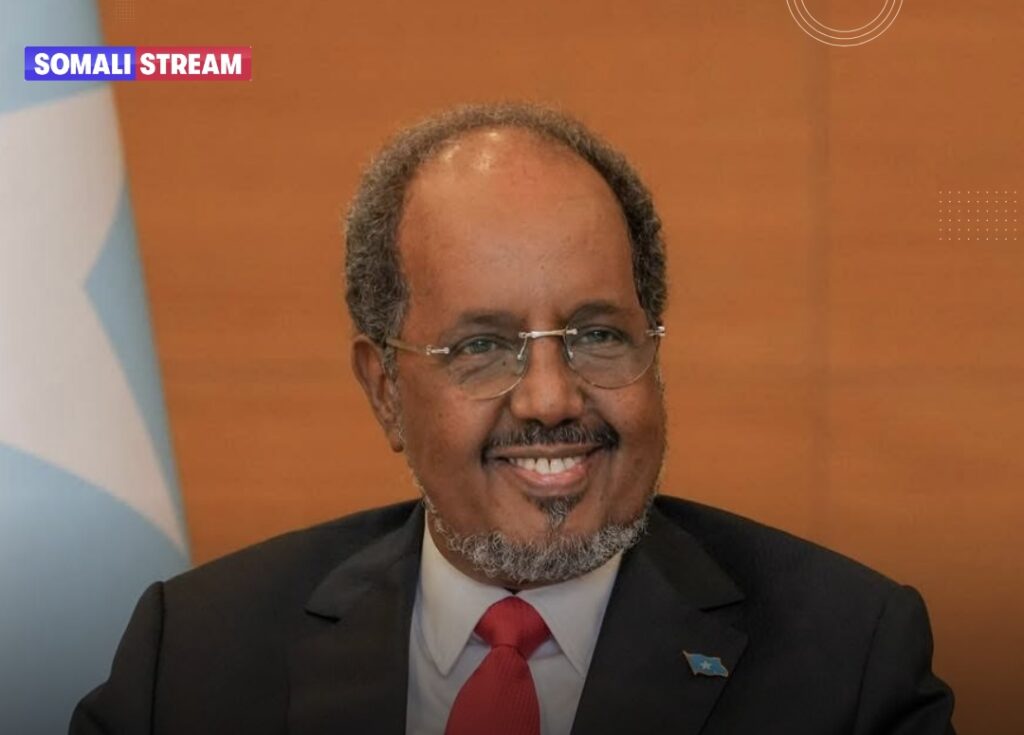
Hassan Sheikh Mohamud delivered one of the most combative speeches of his presidency, sharply attacking Somalia’s political opposition for resisting the country’s newly finalized constitution and accusing rival politicians of putting personal power ahead of national stability.
In a lengthy address marking what he called the end of Somalia’s decades-long political transition, the Somali president framed his critics not as legitimate dissenters but as political actors unwilling to accept limits on their authority.
The constitution is a social contract that restrains the politician who leads the country,” Mohamud said. “Many who aspire to lead want there to be no limits, no constitution to restrain them.”
The speech quickly evolved into a sweeping indictment of Somalia’s political opposition, whom the president accused of sabotaging the constitutional process after previously supporting it.
“Politicians Who Refuse to End”
Mohamud repeatedly suggested that certain opposition figures were motivated less by constitutional concerns than by a desire to keep Somalia’s governance system vague and negotiable.
“We must have a place where we end,” he said. “But some politicians keep banging their heads against walls and clinging to private interests.”
In unusually direct language for Somali politics, the president questioned the credibility of politicians who once promised to complete the constitution but now oppose its adoption.
“Those who stood with me and promised the Somali people we would complete the constitution, some of them today oppose it. Where will we end up if we are those politicians?”
The criticism appeared aimed at a group of opposition leaders and regional power brokers who argue the constitutional changes could consolidate power in Mogadishu and alter the balance between the federal government and Somalia’s member states.
“Artificial Agreements” and Backroom Politics
A central theme of the president’s speech was his rejection of what he described as Somalia’s long tradition of elite political bargaining outside formal law.
Mohamud argued that Somali politics had too often been driven by informal agreements among elites rather than constitutional rules.
“We do not want artificial agreements where people gather and decide the fate of the nation outside the constitution,” he said.
According to the president, opponents of the constitutional changes are essentially defending a political culture built on personal alliances and ad-hoc deals rather than institutional governance.
He warned that Somalia could not continue operating in what he called a “legal vacuum.”
A Direct Appeal to the Somali Public
The president also tried to turn the political confrontation into a broader national question, urging ordinary Somalis to defend the constitution against attempts to undermine it. “Do not allow the constitution to be set aside so individuals negotiate the nation’s fate,” Mohamud said.
By framing the issue as the people versus political elites, the president appeared to be attempting to build public pressure on opposition figures who continue to challenge the constitutional process.
The speech marks a clear escalation in Somalia’s political tensions.
The new constitution is intended to end the country’s long transitional period that began after the collapse of the Somali state in 1991. But opposition argues the process remains incomplete and that key stakeholders were not adequately consulted.
Opposition leaders have warned that pushing the constitutional changes forward without broader consensus could deepen political divisions.
Mohamud, however, made clear he believes the debate is finished. “The sun that set yesterday cannot rise again,” he said. “Transition is over.”
The president’s aggressive tone suggests he is prepared to confront his critics directly as Somalia moves toward broader reforms, including plans for one-person, one-vote elections.
But the strategy carries risks
By casting the opposition as self-interested obstructionists, Mohamud may energize supporters who want stronger central institutions. At the same time, the rhetoric could harden resistance among regional leaders and political rivals who already fear losing influence under the new constitutional order.
What is clear after the speech is that the constitutional debate in Somalia is no longer just legal or procedural. It has become a defining political battle over who shapes the country’s future.