


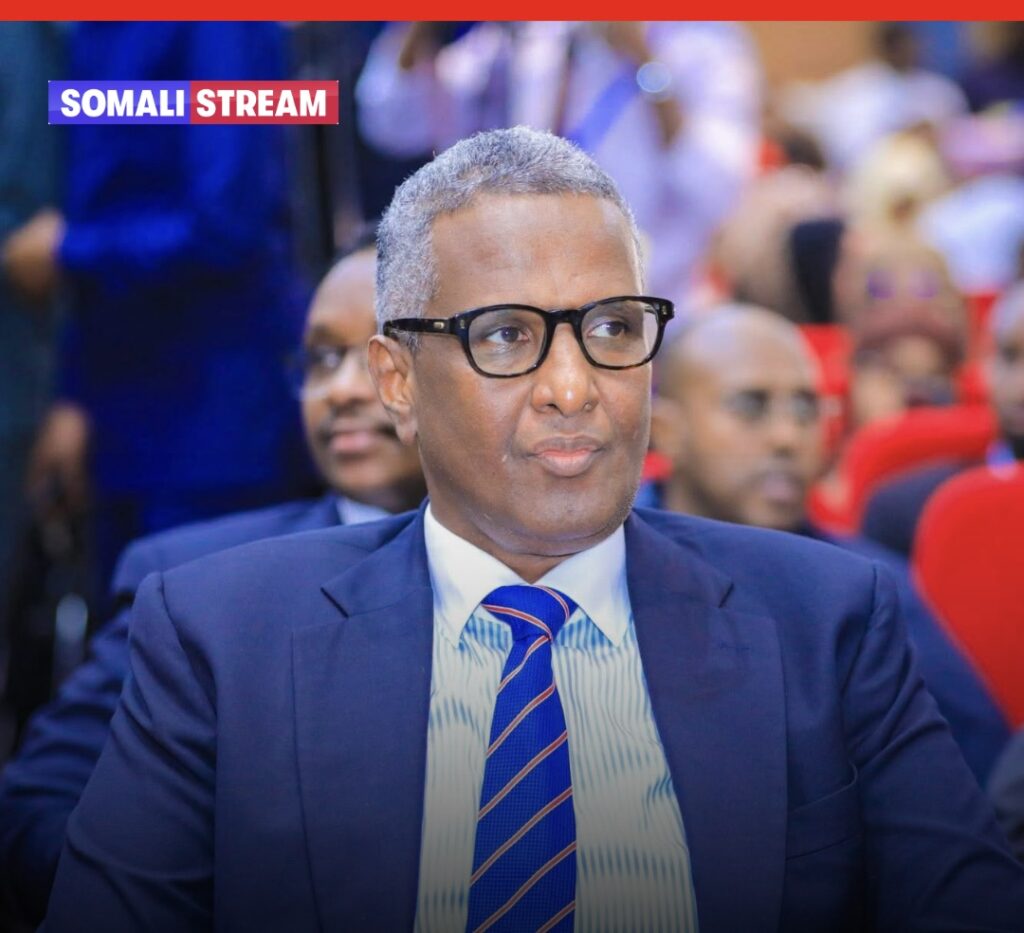
Abdirahman Abdishakur Warsame
In fragile states, constitutions are not ordinary laws; they are political settlements. They emerge not from moments of strength, but from moments of vulnerability. They codify compromise among competing identities, distribute power to prevent domination, and establish predictable pathways for peaceful political contestation. In Somalia, the constitutional order was not drafted in comfort. It was forged after collapse, conflict, and mistrust. Its imperfections are evident. Its necessity is undeniable.
Since 2000, Somalia’s recovery has rested on four interlocking pillars: federalism, power-sharing, parliamentary democracy, and periodic elections. These arrangements have not produced an ideal state. They have produced something more fundamental: equilibrium. They have restrained excess, prevented monopolization of power, and sustained a fragile but functioning political order.
That equilibrium may be negative in its limitations, but it is stabilizing in its effects.
To alter these pillars unilaterally without procedural rigour, without federal consensus, without broad political agreement, and without meaningful public consultation, is not reform guided by constitutional prudence. It is an act of political risk-taking.
And Somalia is not in a condition to absorb such risk.
Reform and the Conditions of Legitimacy
No serious actor argues that Somalia’s constitutional framework is complete. Ambiguities remain, institutional weaknesses persist, electoral mechanisms require strengthening, reform is not only legitimate it is necessary.
However, constitutional reform derives legitimacy not merely from its objectives, but from its process. In federations especially, the method of amendment determines the durability of the outcome. Constitutions require constraints, inclusion, and credible ratification. When those constraints are bypassed, the resulting text may carry formal legality but lack political authority.
If amendments are pursued amid polarization, federal-state mistrust, and electoral uncertainty, the process inevitably reflects political expediency rather than constitutional reason. When incumbents redesign electoral rules without broad agreement, the appearance of neutrality dissolves. When foundational provisions are altered during rivalry, suspicion becomes structural.
A constitution born in mistrust does not resolve mistrust; it entrenches it.
The Federal Compact at Risk
Somalia is not a consolidated nation-state; it is a negotiated federation. Its unity depends on continuing accommodation among federal member states and diverse political communities. Federalism is not an inconvenience to be overcome; it is the mechanism that holds the state together.
In such a system, unilateral amendment by the center risks destabilizing the very compact that sustains national cohesion. It may deepen federal resistance, invite political non-recognition, weaken cooperative governance, and encourage centrifugal tendencies.
In federations, the constitution must remain a negotiated settlement, not a majoritarian instrument.
Procedural legitimacy in such contexts is not cosmetic; it is existential. Power gained through procedural shortcuts carries a long-term cost in stability and trust.
Unity, Security, and the Electoral Question
The timing of this constitutional acceleration compounds its danger. Somalia confronts economic strain, humanitarian pressure, and persistent security threats. National energy should be directed toward cohesion and institutional consolidation. Instead, constitutional confrontation absorbs political capital.
Unity in Somalia has never been automatic; it has been constructed through dialogue and compromise. When foundational rules are altered without consensus, polarization intensifies, federal cooperation weakens.m political discourse hardens, institutional trust erodes.
These consequences are not confined to politics. The fight against al-Shabab depends on coordination among federal and state authorities, public legitimacy, and international confidence. A divided political order weakens each of these pillars. Terrorism thrives where authority is contested and governance appears unstable.
Elections, too, are placed at risk. Elections are not mere procedural milestones. They are moments of renewalacts through which trust between citizens and the state is reaffirmed. Democracy cannot be installed through unilateral redesign. It must mature through consensus, patience, and institutional discipline.
When electoral systems are reshaped without broad agreement, suspicion overshadows participation. Legitimacy becomes contested before ballots are cast.
Leadership and Constitutional Restraint
Statesmanship in fragile democracies requires restraint. It demands humility before complexity and discipline before ambition. Difficult national challenges must be addressed at the lowest possible cost to integrity, inclusion, and institutional coherence.
Reform driven by personal conviction rather than collective deliberation risks substituting vision for viability. Confidence is not capacity. Boldness is not legitimacy. A leader may believe deeply in his intentions, yet good intentions cannot substitute for procedural fidelity.
Too often, what is presented as decisive action appears instead as performative strength designed to signal momentum rather than secure durable settlement. But constitutional reform is not theater. It is architecture. And architecture requires patience, consultation, and structural soundness. Hope is not a strategy. Acceleration is not reform.
A leader’s foundation must rest on historical awareness, legal discipline, and moral restraint. Without philosophical depth, activism can become shallow focused on immediate visibility rather than enduring consequence.
Shared Constitutional Responsibility
The responsibility to defend constitutional order does not rest solely with opposition parties or federal member states. It is a national obligation.
Traditional elders, religious scholars, civil society leaders, intellectuals, and business communities share custodianship of the constitutional compact. Silence in moments of procedural erosion is not neutrality; it is abdication. A constitution belongs to the people collectively, not to any single officeholder.
International partners, too, bear responsibility. Somalia’s stabilization has depended heavily on diplomatic, financial, and security support. Private caution is insufficient when foundational rules are at stake. Public commitment to inclusive process and procedural integrity reinforces sovereignty by strengthening institutions rather than personalities.
Clarity encourages restraint. Ambiguity invites overreach.
The Consequence of Miscalculation
If unilateral constitutional amendment proceeds despite federal rejection and broad political concern, responsibility will be clear.
Polarization will deepen. Federal trust will weaken. Electoral agreement will become more elusive. Gains made in peace-building and institutional recovery will erode. And in Somalia, political chaos is not an abstraction—it is the environment in which extremism flourishes.
A constitution amended without broad consent may satisfy formal requirements, yet remain politically contested. Contested constitutions weaken fragile states.
Somalia does not require dramatic constitutional acceleration. It requires negotiated reform, disciplined procedure, and collective stewardship of its federal settlement. In fragile federations, legitimacy is not a luxury. It is survival.