


By Mohamed Dubo
In a world where supply chains are no longer designed purely for efficiency but for survival, geography is quietly regaining its power. As multinationals spread operations across multiple hubs to hedge against geopolitical shocks, countries once seen as peripheral may find themselves increasingly relevant. Perched along one of the busiest maritime corridors linking Asia, Africa, the Gulf and Europe, Somalia could benefit from this slow redrawing of the global investment map—if it can translate strategic location into predictable institutions, reliable infrastructure and a climate that convinces cautious capital to stay.
Global foreign direct investment has struggled to regain momentum since the disruptions of the COVID-19 pandemic. Supply chains fractured, shipping costs surged and multinational companies began questioning the logic of production systems built entirely around efficiency. That uncertainty deepened after the Russian-Ukraine war, which politicised energy markets and forced businesses to rethink geopolitical risk. Now the escalating war in the Middle East threatens to further slow global investment.
Yet the war’s most lasting impact may not be a collapse in global capital flows. Rather, it may accelerate a structural shift already under way: the reorganisation of international production around resilience instead of pure efficiency. In that reorganisation, geography matters. And Somalia is one of the few places that sit closer to the emerging fault lines of global trade.
For decades multinational companies optimised supply chains with ruthless logic. Production went where labour was cheapest, logistics smoothest and regulations most predictable. Transport links spanning Asia, Europe and the Middle East allowed manufacturers to stretch supply networks across continents. The Gulf became one of the most important logistical crossroads in this system, hosting ports, financial centres and distribution hubs that connected global markets.
But the past five years have exposed how fragile such tightly integrated systems can be. The pandemic paralysed shipping networks. The Ukraine war revealed how quickly geopolitical tensions can reshape commodity markets. Now the widening security crisis across parts of the Middle East threatens maritime routes and investment confidence in a region long considered the beating heart of global logistics.
As a result, multinational firms are quietly rewriting their playbooks. Inventory buffers are increasing. Supply chains are being shortened or duplicated. Energy reliability and political alignment now rank alongside labour costs in corporate investment decisions. Instead of concentrating production and logistics in a handful of global hubs, companies are experimenting with regional networks that spread risk across multiple locations.
This shift does not imply the sudden decline of Gulf business centres. Major cities in the Middle East such as Dubai, Muscat and Riyadh remain among the world’s most sophisticated commercial environments, offering deep capital markets, strong infrastructure and favourable regulatory regimes. But the next phase of global investment may look different. Rather than relying exclusively on a single Gulf city as a regional headquarters and logistical base, firms are increasingly considering “dual-hub”or even “multi-hub” strategies.
In practice this means complementing Gulf operations with additional nodes elsewhere along key trade corridors. Those secondary locations may host warehousing, light manufacturing, logistics coordination or specialised processing industries. The aim is simple: maintain access to Gulf markets while ensuring business continuity should geopolitical shocks disrupt any single location.
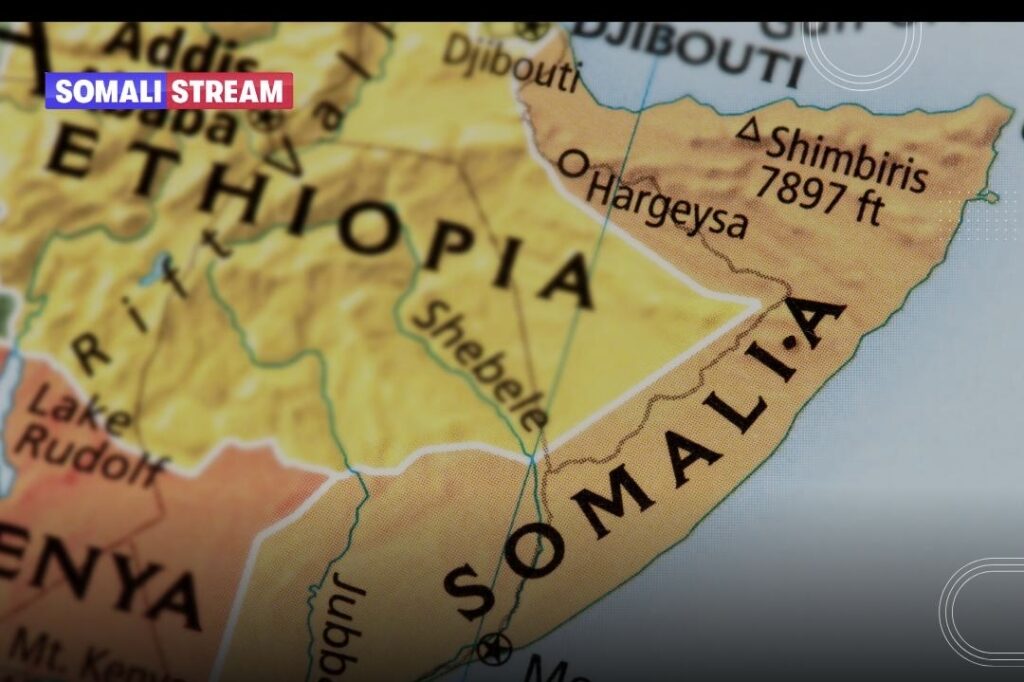
Here Somalia’s geography becomes unusually relevant. Few countries occupy such a strategic maritime position. Stretching along more than 3,000 kilometres of coastline, Somalia sits directly on shipping routes linking the Indian Ocean to the Red Sea and the Mediterranean. Maritime traffic moving between Europe, Asia and the Gulf passes close to its shores before entering the narrow Bab el-Mandeb strait.
In times of fragmented supply chains, such proximity matters. Companies seeking alternative logistics or distribution points along these routes may find Somalia difficult to ignore.
The country’s commercial ties with the Gulf reinforces this geographic advantage. For generations Somali traders have maintained dense commercial networks across the Arabian Peninsula. Livestock exports, remittance flows and maritime commerce bind Somalia’s economy closely to Gulf markets. Those relationships provide informal but powerful commercial bridges that could ease the expansion of formal investment should companies look for complementary locations outside the Gulf.
Cost considerations also play a role. Labour costs in Somalia remain far below those of many established manufacturing centres. While infrastructure challenges remain significant, the basic economics of light industry—particularly agro-processing, fisheries and logistics services—could become attractive if supply chains continue shifting toward regional diversification.
None of this suggests Somalia is about to become a global manufacturing powerhouse. Investors are cautious humans. Political stability, legal predictability and reliable infrastructure remain decisive factors in any investment decision. Somalia’s progress in rebuilding national institutions in the last decade has been gradual and uneven.
Yet history suggests that shifts in global trade often create opportunities for unexpected and sometimes unwelcome players. Countries positioned along critical maritime corridors frequently benefit when geopolitical tensions force businesses to rethink established routes and hubs. Singapore’s rise during the Cold War and the growth of Gulf ports in the late twentieth century both reflect this dynamic.
The current upheaval in the Middle East could generate a smaller but similar opening for Somalia. Not a flood of capital, perhaps, but a gradual expansion of logistics facilities, port upgrades, fisheries investment and agro-industrial ventures aimed at servicing regional trade networks.
Whether that opportunity materialises depends less on global geopolitics than on domestic reform. Investors will not commit serious capital without predictable regulations, improved transport links and reliable electricity supply. Somalia has made commendable progress on the regulatory regorms and continues, albeit slowly, to address transport links and reliable electricity to power its growth.
Strengthening port governance, expanding energy infrastructure and reinforcing the rule of law would do more to attract investment than any temporary shift in global politics.
Still, the broader pattern is becoming clear. The world’s investment map is being redrawn. The age of frictionless globalisation is giving way to a more cautious system built around resilience, redundancy and geopolitical balance.
Wars have always reshaped economic geography. The Middle East conflict is unlikely to destroy global investment flows outright. But it may redirect them—quietly nudging capital toward new nodes along the world’s busiest trade routes.
Somalia, perched at the crossroads of those routes, may find itself closer to the centre of the map than it has been for decades.
Mohamed Dubo is the Director of SOMINVEST, with extensive experience in Strategic Communications, Investment Promotion & Diplomacy.