


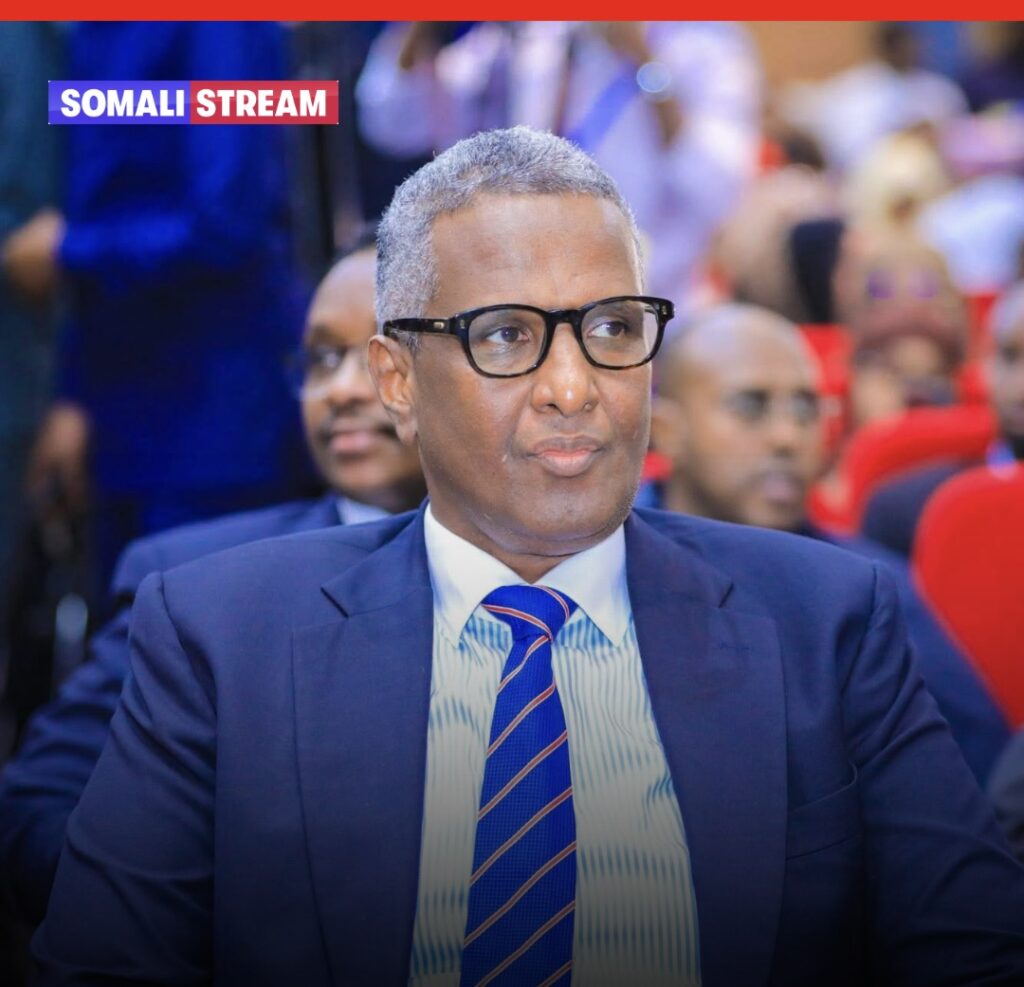
By Abdirahman Abdishakur Warsame
President Hassan Sheikh Mohamud has announced a call for dialogue between his government and the Future Council of Somalia — the main umbrella opposition bringing together the leadership of Puntland and Jubaland, as well as the Somali Salvation Council. The Future Council has accepted the invitation, and a meeting is scheduled for 1 February. Technical teams from both sides are already working to prepare and facilitate the talks, including addressing potential obstacles to the conference, such as the arrest warrant issued by the federal government against the President of Jubaland.
Yet, and despite this formal gesture toward dialogue, the President’s actions continue to contradict its spirit. The same administration calling for talks is pressing ahead with the very measures that ignited the current political crisis — most notably, the unilateral amendment of the Constitution, including changes to four constitutional chapters.
The President frequently argues that the opposition — most of whom were candidates in the 2022 elections, myself included — had pledged to review the Constitution. This claim is only partially true and deeply misleading. What was pledged was constitutional review, not constitutional replacement.
From the standpoint of constitutional law, particularly in fragile countries emerging from prolonged civil conflict, it is well established that constitutions often leave certain provisions — especially those governing the distribution, allocation, and exercise of power, resources, and revenues — deliberately imprecise. This ambiguity is not a defect; it is a stabilizing mechanism. It allows competing political forces to negotiate and reach consensus first, after which any agreed constitutional settlement is presented to the public for approval through a referendum.
Crucially, the Somali Provisional Constitution itself provides a clear and binding procedure for constitutional amendments under Article 132. That procedure has been blatantly violated.
The President, together with the Speakers of both Houses breached the constitutional amendment process by altering the Founding Principles enshrined in Chapter 1 of the Constitution. These are not technical or marginal provisions; they form the constitutional bedrock of the Somali state.
The amendment process was conducted without transparency and without meaningful public participation. In particular, the authorities failed to:
1- Inform the public or provide adequate opportunity for public debate;
2- Consult citizens in a meaningful way;
3- Allow the public to submit comments and proposals to the joint constitutional committee; and
4- Engage Federal Member State legislatures or incorporate their harmonized submissions, despite the fact that the amendments directly affect Federal Member State powers and interests.
The exclusion of key stakeholders is undeniable. Puntland and Jubaland formally boycotted the process, as did leading opposition figures from the Somali Salvation Council. Meanwhile, the remaining three Federal Member States were operating with expired mandates, further undermining the legitimacy of the entire exercise.
Moreover, the Federal Parliament did not lawfully adopt the proposed amendments. The process failed to meet the constitutional requirements of:
• a two-thirds (2/3) majority of existing members in the House of the People; and
• final approval by at least two-thirds (2/3) of existing members in the Upper House.
Despite this, the Speaker publicly claimed that all members of both Houses voted in favour of the amendments, with no rejections and no abstentions. This claim is demonstrably false. The Speaker misrepresented both the quorum and the voting results, misleading the public and further invalidating the process.
With only three months remaining in his term, the President faces rejection from Puntland and Jubaland, as well as from the Mogadishu-based opposition Salvation Forum. Importantly, all these actors have repeatedly stated their willingness to engage in good-faith dialogue with the President and his team. Yet instead of confidence-building and creating a conducive environment for negotiations, the President has chosen escalation and polarization.
The underlying objective of this approach is clear: securing a term extension. This also explains the President’s opposition to elections in South West State, Galmudug, and Hirshabelle after their mandates expired. Extension of the presidential term has become the central driver of the current constitutional confrontation.
All of this is unfolding at a moment of exceptional national vulnerability: deep political fragmentation and mutual delegitimization; stalled prospects for dialogue between Somalia and Somaliland — further complicated by the Israel recognition issue; severe regional and global geopolitical shifts reshaping the international order on which Somalia has depended upon; devastating drought and economic hardship; the encirclement of the capital by Al-Shabaab; ongoing ISIS/Daesh fighting in Puntland; and a federal mandate with only three months remaining. In such circumstances, pursuing divisive constitutional gerrymandering is profoundly irresponsible.
Taken together, these actions demonstrate that the call for dialogue is not made in good faith. It is not aimed at reconciliation or consensus, but at manufacturing political consent and cover for unilateral decisions and a potential term-extension.
Nevertheless, the opposition remains committed to engaging in dialogue in a spirit of reconciliation and national responsibility. It will not, however, be passive or complicit in tactics designed to impose a term extension. Extension is a red line which must and cannot be crossed.
This moment therefore demands wider engagement beyond the political elites. The Somali people must assert their role as the ultimate source of constitutional authority. The business community, academia, religious scholars, civil society organizations, and professional associations must speak out clearly and publicly.
The international community, too, must recognize that the era of quiet, private messaging has passed. What is required now is public, principled pressure on the President to halt his unilateral, divisive, and polarising actions and to return the country to a lawful, inclusive, and consensual constitutional process.
There is no greater danger facing Somalia than the prospect of governing without legitimacy after May 15. This is the most urgent and critical challenge confronting the nation today.
To conclude, a final, binding and consensual national framework for the upcoming vote before the mandate of the incumbent government expires is not optional: it is essential to preserving the constitutional order, political stability, and the future of the Somali state.