


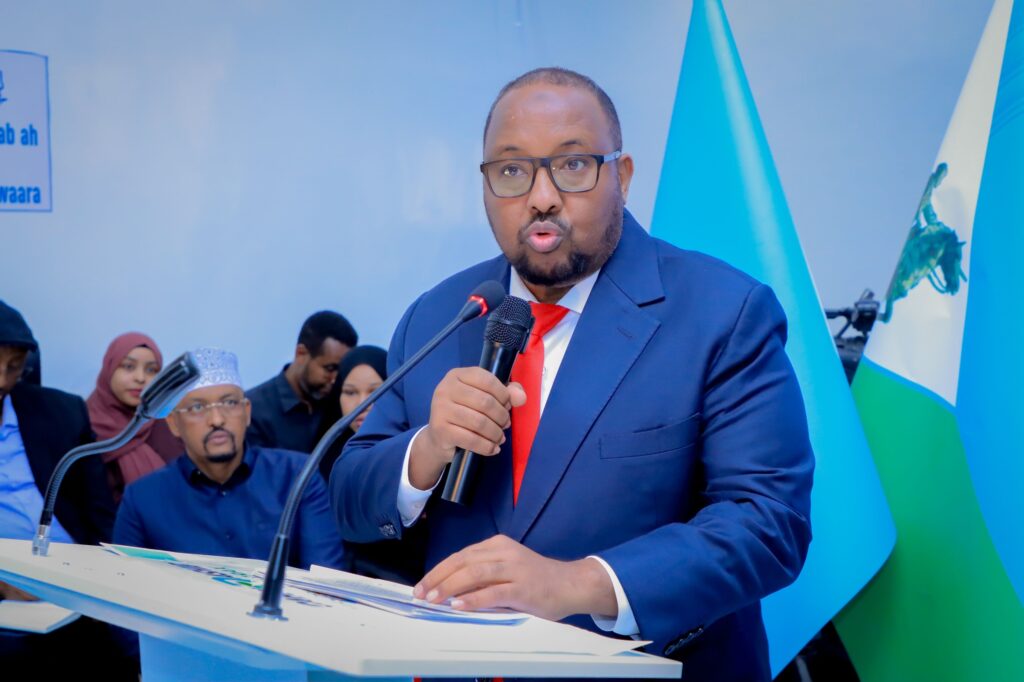
In a city that has, in the recent years, seen more bullets than ballots, the recently concluded presidential election of the newly declared North East Federal Member State in Las Anod, turned into a political drama that few expected. Out of it came a new name, a man many had underestimated, but now echoing across Somalia’s political halls, Abdikadir Ahmed Aw-Ali, known simply as Firdhiye.
Once viewed as a mere interim figurehead of SSC-Khatumo during uncertain days of conflict and transition, Firdhiye has now become the first elected President of the North East State, a shocking victory few predicted, and fewer understood rising from relative obscurity to national recognition.
How did this quiet, untested figure beat veteran politicians and well-known power brokers?
After weeks of investigation and interviews before, during and after the elections, Somali Stream can exclusively reveal the four major forces behind his ascent to the region’s top seat, a powerful blend of federal alliance, political boldness, strategic venue control, and well-deployed resources.
1. Firdhiye and Mogadishu: A Symbiotic Power Play
At first, Firdhiye’s presence in Somali politics raised eyebrows. He was not a career politician. He was not a former general or tribal heavyweight. He had no previous state office. He was, to many, a political gamble.
But it was a gamble the Federal Government of Somalia’s leadership in Mogadishu was willing to take.
After taking over SSC-Khatumo leadership during a tense interim period, Firdhiye realized early on that his administration needed legitimacy and recognition to survive. That recognition would only come by aligning with the centre, thousands of miles in Mogadishu.
In a time when regions like Puntland and Jubaland kept their distance from President Hassan Sheikh Mohamud, Firdhiye extended his hand. What followed was not just a handshake, but a mutually beneficial partnership and Presidency!
He was invited to the National Consultative Council sittings, proudly seated among established leaders of other Federal Member States. He later joined the President’s party, Justice and Solidarity Party (JSP), signalling ideological unity. He became useful to Villa Somalia, a trusted ally where others had become adversaries. In return, the Federal Government offered platforms, resources, and political cover. Firdhiye was no longer isolated. He was now the bridge between the people of North East and the corridors of federal power. And in the history of Somali politics, being part of the federal tent is often the difference between noise and leadership.
2. A Political Masterstroke: Incorporating Sanaag
While rivals were content to campaign in the familiar lands of Sool and Cayn, Firdhiye went further, literally.
He stretched the reach of the North East administration to include Sanaag, a region often politically neglected but numerically vital. His decision to identify and appoint Abdirashid Yusuf Jibril “Abwaan” a strategic, behind-the-scenes political operator, as Deputy President and Sanaag coordinator, was a bold but brilliant move.
Abwaan did more than represent a region; he orchestrated delegate selection, shaped parliamentary structures, and organized the campaign. In the end, it was votes from Sanaag, not Sool or Cayn, that filled Firdhiye’s presidency ballot papers.
The opposition, by ignoring Abdirashid Yusuf Jibril ‘Abwaan’s growing influence and underestimating his grassroots work, made a fatal political miscalculation that shall haunt them for long. They lost Sanaag, and with it, the seat of the presidency.
Firdhiye’s opponents failed not due to a lack of ambition, but because they missed the shift in the battlefield. The game was no longer about slogans and soundtracks, it was about delegate math, coalition building, and silent deals.
3. Jidbaale: The hall that produced a President
In sports, it’s called “home advantage.” In politics, it’s called “venue control.”
The presidential vote took place in Jidbaale Hall, located in Las Anod. On paper, it was a public venue. In practice, it was a Firdhiye stronghold.
While the opposition expected neutrality, Firdhiye’s camp treated Jidbaale as part of the campaign strategy. Their supporters dominated the space, controlling both the atmosphere and logistics. Delegates loyal to him moved freely. Campaign whispers travelled without interruption. Posters, placards, and messaging were visible, the psychological tone was set. Jidbaale turned to Liverpool’s Anfield in a Champions League knock-out night.
Meanwhile, opposition candidates, including Abdirisak Khalif, were forced to split their limited team between campaigning and enhancing their security. The Federal Government’s silent presence in the area, combined with pre-arranged plans, gave the ruling camp a massive upper hand. In closed indirect parliamentary votes like these, physical presence and psychological control matter. That’s why elections aren’t just about ideas, they’re about the room.
4. Power, Positions, and Promises
While vision and message are important, resources often decide Somali elections. And here, again, Firdhiye held the upper hand. His alliance with the Federal Government allowed him access to government-backed support machinery, not only financially, but through state institutions.
Parliamentarians backing him were reportedly pledged diplomatic passports, increased financial allowances, and potential federal positions in the coming months. His campaign, in contrast to the opposition, was better funded, more organized, and better connected.
Opposition groups may have spent from personal accounts or local backers, but they couldn’t compete with the combination of federal goodwill and structured incentives that Firdhiye’s camp had mastered.
Even those initially neutral were persuaded through guarantees of representation in the new regional cabinet or federal favours post-election. Whether these promises will be fulfilled is still uncertain, but their impact was already felt when it mattered most: during the vote.
Conclusion: A Strategic Victory
Firdhiye didn’t win because he was the loudest. He won because he was the most prepared. He built alliances where others hesitated, made inclusive moves others avoided, controlled the space others ignored and used resources others couldn’t access.
In a region freshly emerging from conflict and seeking structure, his victory wasn’t a miracle, it was methodical.
Now, the real work begins. Can he govern with the same skill he used to win? Can he unify a region fragmented by decades of marginalization and neglect? Only time, and leadership, will tell.
But one thing is clear: Firdhiye is no longer an interim experiment. He’s a political force to watch for the next 5 years and beyond.