


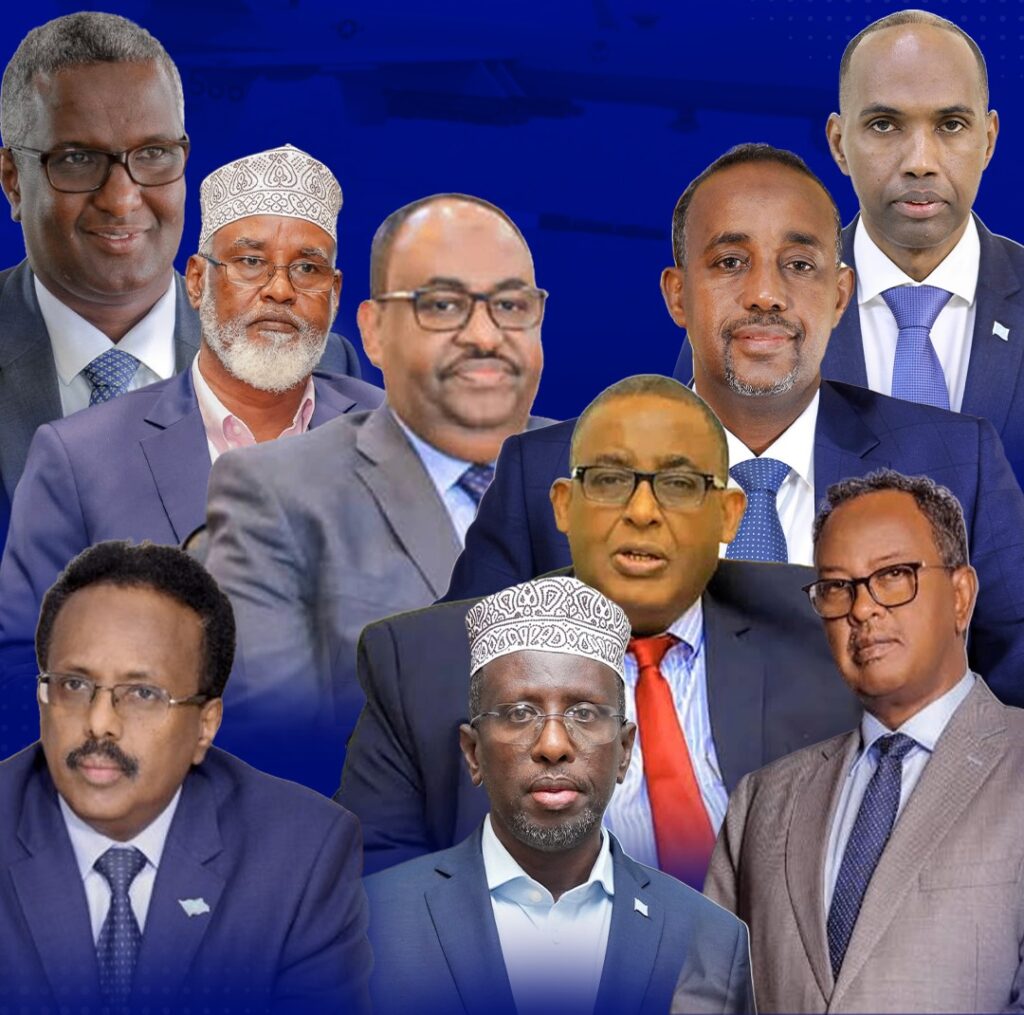
Somalia’s former presidents and prominent opposition figures have condemned a reported drone strike on the residence of General Mahad Abdirahman Adan, the former commander of the Somali Custodial Corps, in Doolow in the southern Gedo region, portraying the incident as a potentially grave escalation in the country’s increasingly fraught political and security environment.
General Mahad, a former head of Somalia’s Custodial Corps and a member of the country’s 11th Federal Parliament, was reportedly injured in the attack, according to statements issued by former presidents and opposition leaders.
The circumstances surrounding the strike, including its perpetrator, intended target and operational authorisation, have not been independently established.
Former President Mohamed Abdullahi Farmaajo accused the administration of outgoing President Hassan Sheikh Mohamud of deliberately targeting General Mahad because of his political position, describing the reported strike as an assault not only on an individual but also on Somalia’s broader state-building and reconciliation efforts.
“This horrific attack on the residence of General Mahad Abdirahman Adan, who served the Somali nation for a long time, is an assault on state-building and the efforts to reconcile the Somali people,” Farmaajo said. He described the attack as “an act of brutality that we must reject with one united voice”.
Farmaajo called for an immediate and independent investigation, saying political disputes in South West State should be addressed through dialogue and reconciliation rather than what he described as “political assassination”. “The problems facing South West State are political and require dialogue and reconciliation,” he said. “Their solution cannot come through political assassination.” His intervention places the reported attack at the centre of a broader political confrontation over governance, security and the use of state institutions in Somalia. The allegations, however, remain claims made by a political opponent of the government and have not been independently verified.
Former President Sharif Sheikh Ahmed issued a separate statement dated 4 September, condemning what he described as an organised criminal operation aimed at eliminating General Mahad.
“This is an organised criminal act intended to eliminate the former commander of the Somali Custodial Corps, General Mahad Abdirahman Adan,” Sharif said.
He characterised the reported airstrike as part of what he called a broader pattern of political plots by the “expired-term” administration of Hassan Sheikh Mohamud, and accused the authorities of attempting to mislead the public after the alleged objective of the strike failed.
Sharif also warned of the wider consequences for Somalia’s fragile political settlement and security institutions.
“I warn against the continuation of such actions, which create deep wounds within society and undermine the confidence and support of international partners for rebuilding the country’s security institutions,” he said. The former president further urged national security institutions to remain outside political disputes, warning that Somalia had reached a particularly dangerous stage.
“It is imperative that the national security institutions do not, in any way, become involved in the complicated political affairs,” Sharif said.
The criticism was reinforced by a coalition of opposition figures, including former Prime Minister Abdi Farah Shirdon, former President Abdikarim Hussein Guled, former Deputy Prime Minister Mohamed Abukar Islow (Duale), former Puntland Parliament Speaker Abdirizak Khalif Ahmed, former Planning Minister and Xaqsoor Party chairman Abdi Aynte, and Fahad Yasin, a former National Security Adviser and former intelligence chief. In a joint statement issued under the banner of the Xaqsoor Alliance and Haybad Qaran Union, the coalition condemned the reported attack on General Mahad’s residence in Doolow and described it as a serious threat to Somalia’s political stability and national cohesion.
The coalition accused the government of using the country’s military capabilities to target opposition figures. The attack, it said, was “a sign of the misguided conduct” of the outgoing administration, which the coalition accused of using the national military “to target opposition politicians”. The coalition warned that the reported use of force against political opponents could further weaken national cohesion and Somalia’s fragile state institutions. “This attack also poses a major threat to the unity and cohesion of the Somali people and to the country’s emerging statehood,” the coalition said. It called on the government to abandon actions that could further divide Somali society. “The outgoing administration must desist from such misguided actions that could further drive the Somali people apart,” the coalition said.
The competing narratives surrounding the incident underscore the growing intersection between Somalia’s political contestation and its security architecture.
For Somalia’s international partners, the episode also raises questions about civilian protection, political accountability, the rule of law and safeguards against the politicisation of security institutions. The reported strike comes as political tensions surrounding South West State remain particularly acute. Opposition figures have argued that the dispute is fundamentally political and should therefore be resolved through negotiated settlement and reconciliation.
Farmaajo echoed that position, arguing that political differences cannot be resolved through the elimination or physical targeting of political opponents.
The statements from the former presidents and opposition coalition represent some of the strongest public condemnation yet of the reported Doolow strike, but key facts remain unresolved.
For Somalia, however, the political stakes are already clear. The former presidents and opposition leaders are framing the incident not simply as an attack on one former security commander, but as a test of whether political disputes can be managed through institutions, dialogue and the rule of law rather than through the coercive power of the state.