


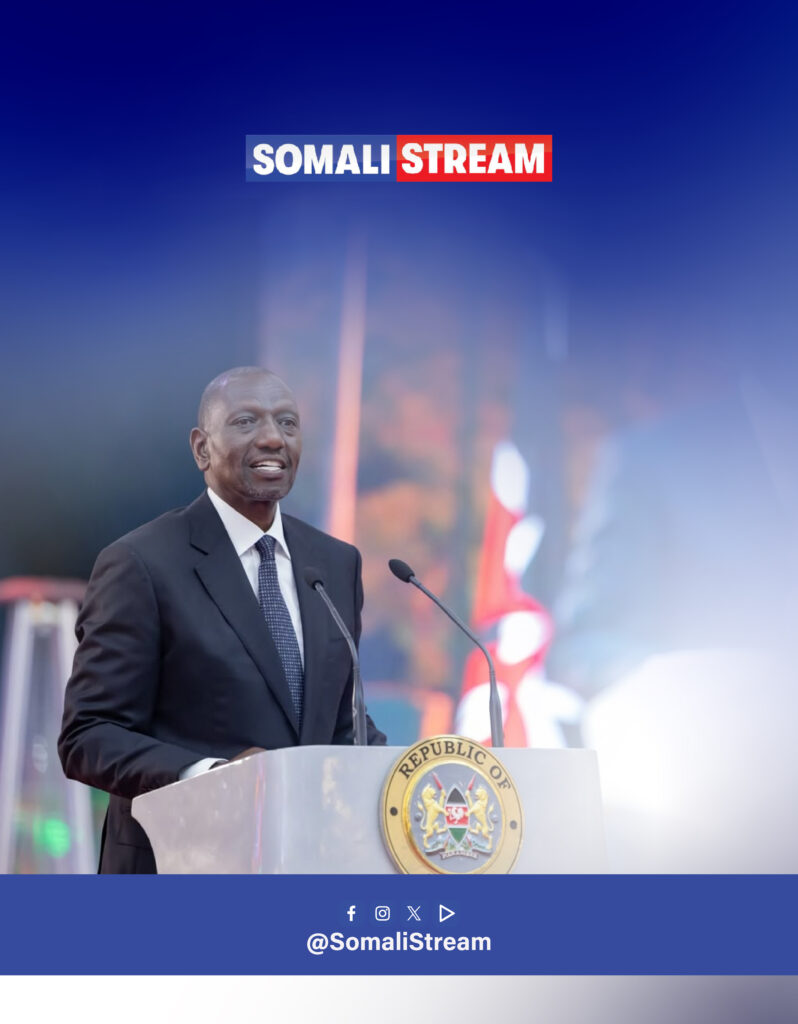
There are leaders who simply govern a country, and there are leaders who want to transform it. President William Ruto, in my view, belongs to the second category. I do not know President Ruto personally, but I have followed his public speeches, political journey and vision for Kenya with great interest. What I see is a leader who believes that Kenya can become fundamentally different from what it is today.
This is why I have chosen the title, “President Ruto Is the Lee Kuan Yew of Africa.” I do not mean that Kenya is Singapore or that Ruto has already achieved what Lee Kuan Yew achieved. That would be premature. My argument is that Ruto shares something important with the former Prime Minister of Singapore. Both leaders have demonstrated an ambition to transform their countries and to challenge the assumption that a nation’s current circumstances must determine its future.
Lee Kuan Yew is one of the few leaders in modern history who demonstrated that seemingly impossible things could become possible. When Singapore became independent, it was a small country with limited natural resources and enormous challenges. Yet, under Lee’s leadership, Singapore transformed itself into one of the world’s most prosperous, efficient and globally connected countries. His greatest achievement was not simply economic growth. It was the creation of a new national trajectory.
When I listen to President Ruto’s speeches, I often hear a similar language of transformation. Since his election, the word “transformation” has become one of the most frequently repeated words in his political vocabulary. I have followed and reviewed a large number of his official speeches and public addresses, and the consistency of this language is striking. In politics, words matter. When a leader repeatedly returns to the same idea, it often tells us something about how that leader understands his or her mission.
Reform, Reform, Reform
For Ruto, transformation is not simply about building roads or launching government programmes. His vision is broader. He speaks about transforming agriculture, healthcare, education, housing, digital technology, the economy and Kenya’s position in the global system. His Bottom Up Economic Transformation Agenda reflects this ambition to change the structure of the Kenyan economy and create opportunities for ordinary citizens.
Some of these ambitions are already visible in projects and reforms being implemented across Kenya. The Affordable Housing Programme is perhaps one of the clearest examples. The programme is designed not only to address the housing deficit but also to replace informal settlements with decent housing while creating jobs across the construction sector. The government’s broader Nairobi River regeneration programme is also linked to the construction of affordable housing in reclaimed areas. The idea is to address housing, urban renewal and employment as interconnected challenges rather than treating them separately.
The Social Health Authority, or SHA, is another major component of this transformation agenda. The goal is to move Kenya toward universal health coverage and expand access to healthcare. Whether the system ultimately delivers on its full promise will depend on implementation and accountability, but the ambition is significant. It represents an attempt to rethink how healthcare is financed and accessed by ordinary Kenyans.
The same ambition can be seen in Kenya’s infrastructure and cultural development. The construction of Talanta Sports City is intended to give Kenya a modern, 60,000-seat sporting facility and strengthen the country’s capacity to host major international events. At Bomas of Kenya, the government is pursuing the development of a new international convention complex intended to position the facility as a major destination for global conferences and events. These are not simply construction projects. They reflect an attempt to strengthen Kenya’s position as a regional centre for sports, tourism, culture and international business. Similarly, the expansion of Kenya’s aviation infrastructure is another part of this larger vision. The government has announced plans to commence construction of a modern terminal at Jomo Kenyatta International Airport. For a country that wants to remain East Africa’s leading economic and diplomatic hub, expanding its international connectivity is strategically important. Kenya’s future competitiveness will depend not only on what happens inside its borders but also on how effectively it connects itself to the rest of the world.
There are also reforms that may appear less visible but are important from a state-building perspective. The government’s efforts to make national identification more accessible, including waiving certain ID processing and replacement charges, can be seen as part of a broader effort to expand access to essential public services and formal citizenship documentation. For marginalised communities and regions that have historically faced difficulties accessing government services, equal access to national identification can have significant consequences for participation in the formal economy and public life.
This reminds me of the philosophy behind Lee Kuan Yew’s leadership. Lee understood that transforming a country required more than political speeches. It required institutions, discipline, long term planning, capable public servants and a clear national direction. This is where President Ruto’s real test begins. His language of transformation is powerful, but the success of his presidency will ultimately depend on whether that language produces lasting results.
I believe Ruto understands this challenge. Kenya does not lack ideas, strategies or policy documents. Like many African countries, its biggest challenge has often been implementation. The question is whether the government can turn ambitious plans into institutions that work, an economy that creates jobs, public services that deliver and a state that is capable of executing its policies effectively.
This is also why I believe Ruto’s ambition extends beyond Kenya. In recent years, he has increasingly positioned himself as a voice for Africa in global affairs. He has spoken about reforming the international financial system, improving Africa’s position in global decision making and creating relationships based on equal partnership rather than dependency.
This is an important conversation for Africa. For decades, the continent has often been treated primarily as a recipient of aid and development assistance. The future should be different. African countries should increasingly negotiate with the world as partners in trade, investment, technology, climate action and global governance. Ruto has made this argument more prominently than many African leaders.
In this sense, I see another connection with Lee Kuan Yew. Lee understood that Singapore could not succeed by isolating itself from the world. It had to become globally connected, economically competitive and strategically important. Ruto appears to have a similar understanding of Kenya’s position. He wants Kenya to become not only a successful African country but also a country with a stronger voice in the world.
For The Record
My understanding of Ruto’s political personality has also been influenced by reading Aden Duale’s book, The Record. The book gave me a different perspective on the man behind the presidency. It presents a politician who understands the importance of friendship, loyalty, relationships and political networks. These qualities have clearly played a significant role in his long political journey.
Some may describe this as charisma politics, but politics is always partly about influence. Leaders must communicate, persuade and create a sense of direction. Ruto appears to understand the importance of political messaging and the power of repeating a vision until it becomes part of the national conversation. His repeated emphasis on transformation is an example of this.
However, admiration should not mean blind support. The comparison with Lee Kuan Yew must remain a challenge as much as it is a compliment. Lee’s legacy was built over decades of actual institutional and economic transformation. Ruto will ultimately be judged by what happens beyond speeches and political narratives.
Will the transformation agenda improve the daily lives of ordinary Kenyans? This is the question that history will ask.
I am not Kenyan. I am writing this as someone from neighbouring Somalia, a country whose political and institutional journey has been very different from Kenya’s. From where I stand, Kenya is fortunate to have a president who is thinking in terms of transformation and who has ambitions that extend beyond the next election cycle.
Kenyans may disagree with President Ruto’s policies, and they should. Democracy requires debate, criticism and accountability. But I believe it is also important to recognise ambition when we see it. Ruto has presented himself as a leader who wants to change the trajectory of his country and strengthen Africa’s position in the world.
Hassan Mudane is a young aspiring political leader and the Founding Director of BPoL Academy, a political leadership academy that aims to train and prepare the next generation of young leaders in Somalia. He holds a Master’s degree in International Relations from Istanbul Ticaret University, Türkiye. You can reach him via mudanep5@gmail.com