


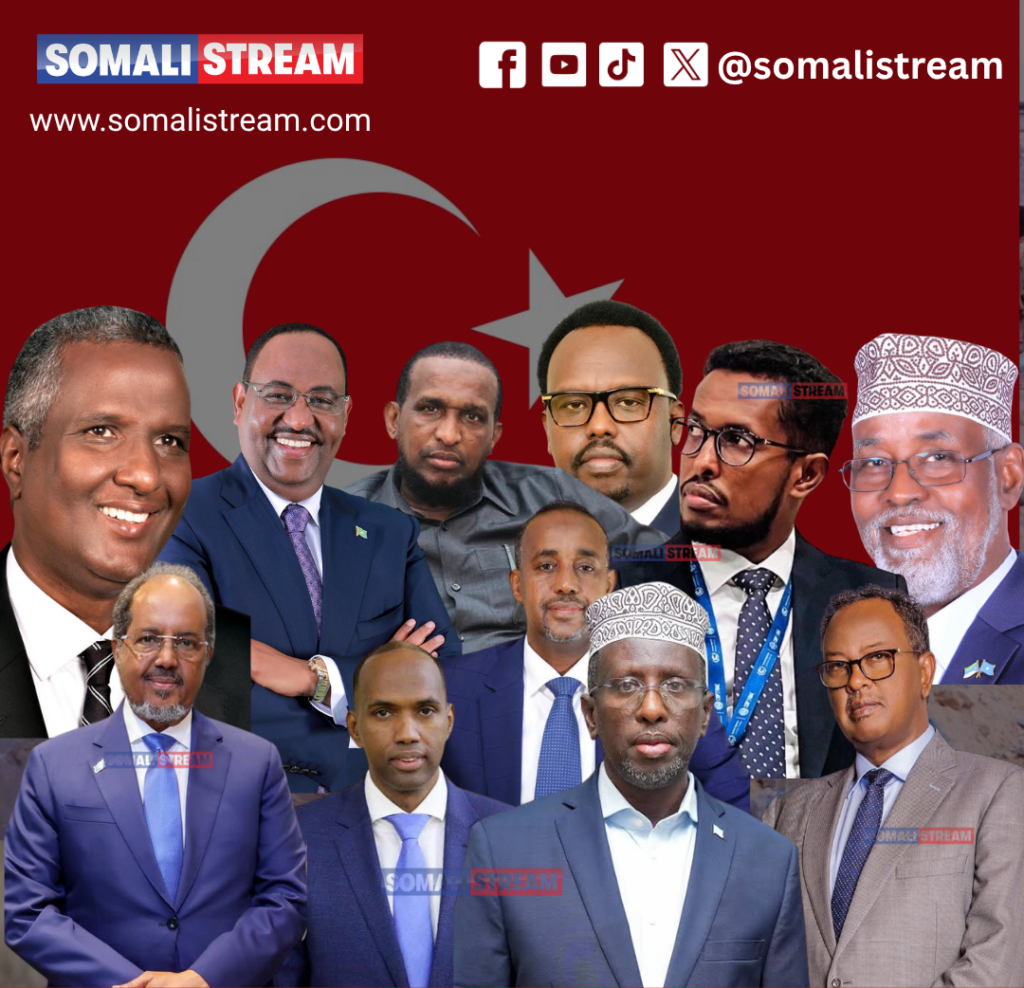
As Somalia edges closer to a pivotal political transition, Türkiye has quietly but decisively emerged as one of the most trusted mediators working to prevent instability and preserve national cohesion in the Horn of Africa nation.
Behind closed diplomatic doors in Mogadishu, Ankara has intensified reconciliation efforts between Somalia’s Federal Government and opposition political actors, positioning itself not as a partisan actor, but as a stabilizing force seeking dialogue over division, negotiation over confrontation, and peace over political turmoil. With the clock rapidly ticking on the tenure of outgoing Somali President Hassan Sheikh Mohamud, concerns over electoral tensions, political fragmentation, and security uncertainty have increasingly dominated political discourse across Somalia. In response, Türkiye has once again stepped into a delicate mediation role aimed at ensuring that Somalia does not slide back into political strife, institutional paralysis, or violence.
Türkiye’s involvement in Somalia is neither sudden nor opportunistic. Since the historic 2011 visit by Turkish President Recep Tayyip Erdoğan to Mogadishu, as the first non-African leader to visit Somalia in decades at the height of humanitarian catastrophe — Ankara has steadily deepened its political, humanitarian, economic, and security engagement with Somalia. What began as humanitarian diplomacy has evolved into one of Türkiye’s most significant foreign policy partnerships in Africa.
Yet perhaps the most consequential aspect of Türkiye’s Somalia policy today is its insistence on political neutrality.
Unlike many foreign actors accused by Somali stakeholders of backing specific factions or personalities, Türkiye has carefully cultivated relations across Somalia’s deeply fragmented political spectrum. Ankara’s diplomatic approach has enabled it to earn the confidence of both the incumbent administration and opposition groups, including the Somalia Future Council and the Somali Salvation Group, at a time when mistrust between political actors remains dangerously high.
Even though much of the diplomatic engagement has remained away from the public spotlight, multiple political sources indicate that Turkish officials have been conducting intensive shuttle diplomacy behind the scenes. The Turkish Embassy in Mogadishu has reportedly engaged all major political stakeholders without aligning itself with any particular faction, reinforcing Ankara’s image as a credible and impartial mediator.
Somali Stream has exclusively learnt that Türkiye is among the principal facilitators behind the high-level gathering between the Somali Federal Government and opposition politicians held in Mogadishu on 13 and 14 May 2026. The meetings, described by insiders as “highly sensitive and consequential,” were aimed at reducing political tensions, rebuilding trust, and laying the groundwork for peaceful consensus ahead of Somalia’s crucial electoral processes.
The mediation effort comes at a particularly fragile moment for Somalia.
As expectations surrounding elections intensify, fears have grown that unresolved disputes over constitutional arrangements, electoral mechanisms, and political representation could trigger instability in a country still battling the persistent threat of Al-Shabaab insurgency, economic hardship, and fragile state institutions. Diplomatic observers note that any political breakdown in Mogadishu could quickly reverberate across the wider Horn of Africa region.
Türkiye appears determined to prevent such a scenario.
Senior diplomatic sources familiar with the negotiations say Ankara has deliberately maintained equal communication channels with both Villa Somalia and opposition leaders, stressing that Türkiye’s priority is not the political survival of any individual leader, but rather the preservation of Somalia’s stability, sovereignty, and state-building gains achieved over the past decade.
Despite previous accusations from some Somali politicians alleging that Turkish authorities were favoring President Hassan Sheikh Mohamud, Turkish officials have strongly rejected claims of political interference or partisan alignment. Ankara has repeatedly emphasized that it does not endorse individuals or political camps, insisting instead that Somalia as a nation — and the Somali people collectively — remain its primary concern.
Turkish officials have privately and publicly communicated a consistent message: Somalia is considered a brotherly nation, and all Somali political actors are viewed as partners in the pursuit of peace and national unity. According to diplomatic sources, Ankara has maintained that “Somalia matters more than any individual politician,” underscoring its long-term strategic commitment to the Somali state rather than transient political administrations.
This approach has significantly strengthened Türkiye’s credibility among ordinary Somalis and political stakeholders alike.
For years, skepticism had persisted among sections of the Somali opposition who feared that Türkiye’s extensive investments and security cooperation with Mogadishu could eventually translate into political favoritism. However, Ankara’s current mediation posture appears to have eased many of those fears, with several opposition figures reportedly welcoming Turkish involvement in reconciliation talks.
Importantly, Türkiye has also sought to clearly separate its military and defense cooperation from Somalia’s domestic political contests.
Turkish authorities have repeatedly stressed that defense assistance provided to Somalia including military training, counterterrorism support, and institutional security cooperation, is aimed exclusively at helping Somalia combat extremist threats and strengthen national stability. Ankara has warned against attempts to politicize or misuse Turkish-backed security structures for internal political rivalries.
Officials maintain that Türkiye’s security partnership is intended to support Somalia’s broader state-building agenda: improving political stability, facilitating reconciliation among competing actors, enhancing institutional capacity, and ultimately improving the welfare of the Somali people.
Türkiye’s expanding room for maneuver in Somali politics stems largely from the unique continuity of its engagement over the years. From the administration of former President Sheikh Sharif Sheikh Ahmed to that of former President Mohamed Abdullahi Farmaajo and now President Hassan Sheikh Mohamud, Ankara has consistently maintained working relations with successive Somali leaders regardless of political orientation.
President Erdoğan himself has hosted and held talks with multiple Somali leaders over the years, reinforcing Türkiye’s image as a long-term strategic partner rather than a transactional actor tied to any single administration.
This continuity now appears to be paying diplomatic dividends.
Somali Political observers argue that Türkiye’s balanced engagement with both government and opposition actors gives it a rare level of access and influence in Somalia’s highly polarized political landscape. Unlike external actors perceived as advancing geopolitical competition, Türkiye is increasingly seen by many Somalis as a partner invested in stability, reconciliation, and institutional continuity.
Somalia remains at a critical crossroads where political miscalculation could undermine years of fragile progress in security, governance, and economic recovery. The memories of previous electoral crises, delayed transitions, and constitutional disputes remain fresh. Against this backdrop, Türkiye’s mediation initiative is not merely diplomatic engagement, it represents an attempt to shield Somalia from another cycle of confrontation that could weaken state institutions and embolden extremist groups.
At the same time, Ankara’s role reflects Türkiye’s broader foreign policy ambitions in Africa and the Islamic world, where it has increasingly positioned itself as a diplomatic mediator capable of balancing strategic interests with humanitarian and political engagement.
The projects Türkiye continues to implement in Somalia from infrastructure development and humanitarian assistance to oil exploration agreements, defense cooperation, education, and economic partnerships, are all deeply tied to Somalia’s long-term stability. Turkish officials appear keenly aware that sustainable partnerships can only thrive in an environment of political consensus and institutional legitimacy. For many Somalis, the latest revelations surrounding Türkiye’s mediation efforts have brought renewed reassurance that Ankara’s partnership with Somalia transcends individual presidencies or political cycles. There is growing confidence that Turkish-backed projects and bilateral cooperation will continue regardless of who ultimately occupies Villa Somalia after the transition.
As Somalia navigates one of the most sensitive political moments in its recent history, Türkiye’s quiet diplomacy may ultimately prove decisive in determining whether the country moves toward peaceful political reconciliation or renewed uncertainty. In a region often shaped by geopolitical rivalry and competing foreign agendas, Ankara is attempting to project a different message: that diplomacy, neutrality, and dialogue remain essential tools for preserving fragile peace. And for Somalia, a nation still rebuilding from decades of conflict, that message may carry profound significance.